
Machine · Pelletizing systems
Pelletizing Systems: 7 Methods Compared
Seven pelletizing methods, and the wrong one costs more than the extruder difference: PVC needs air, PET needs water on the strand, high filler needs a die face, TPE needs underwater. A reference pelletizing systems page from Kerke.
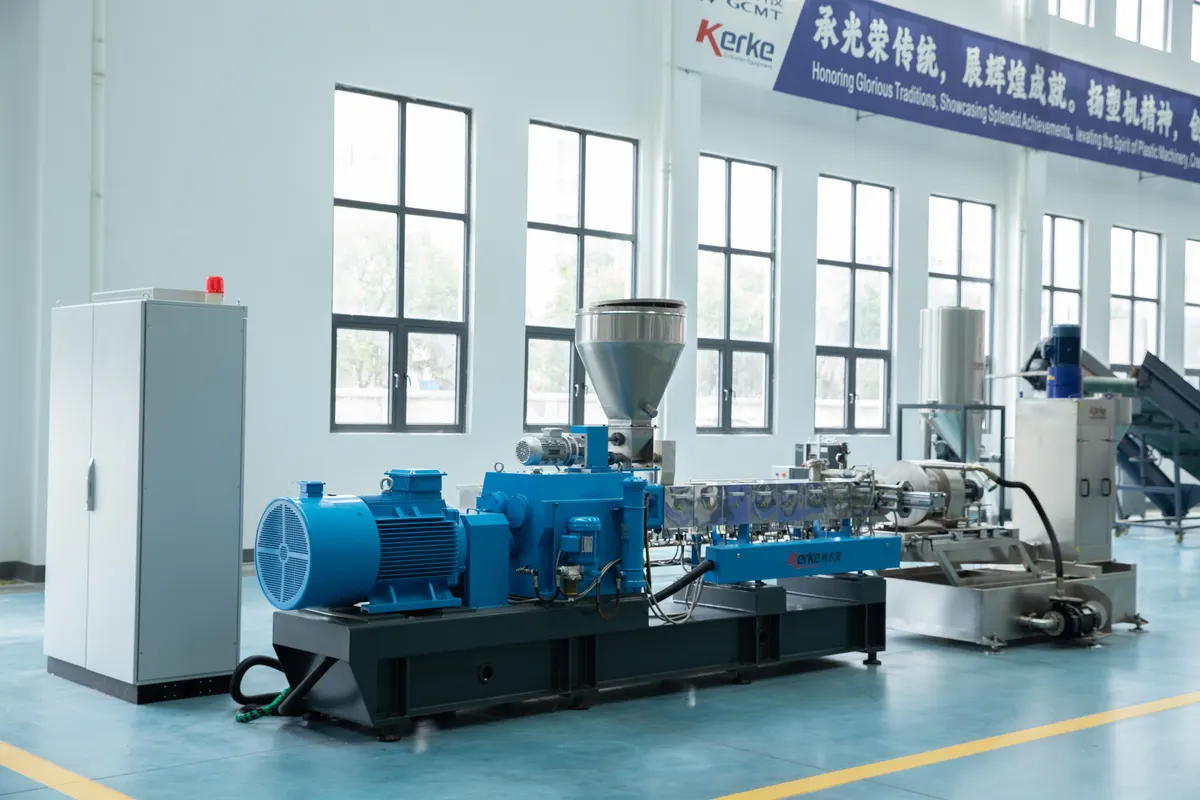 Pelletizing systems — workshop photo 1, Kerke workshop, Nanjing
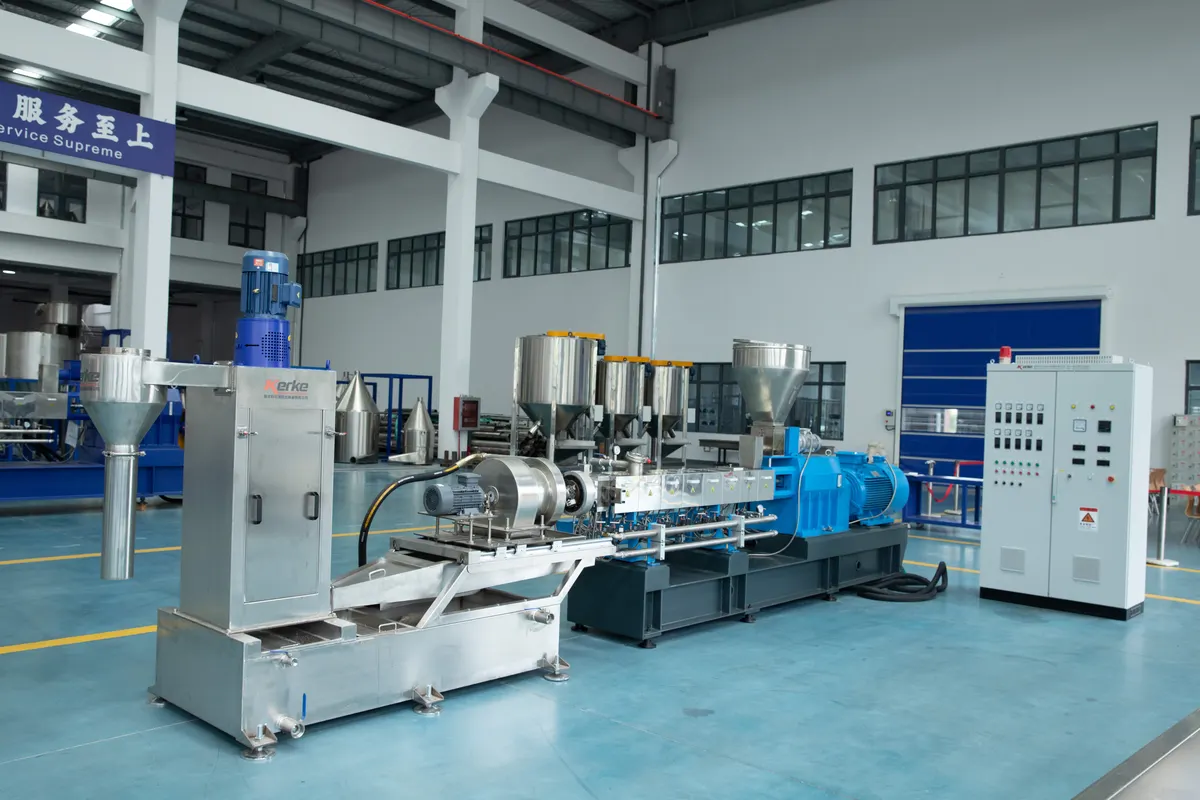 Pelletizing systems — workshop photo 2, Kerke workshop, Nanjing
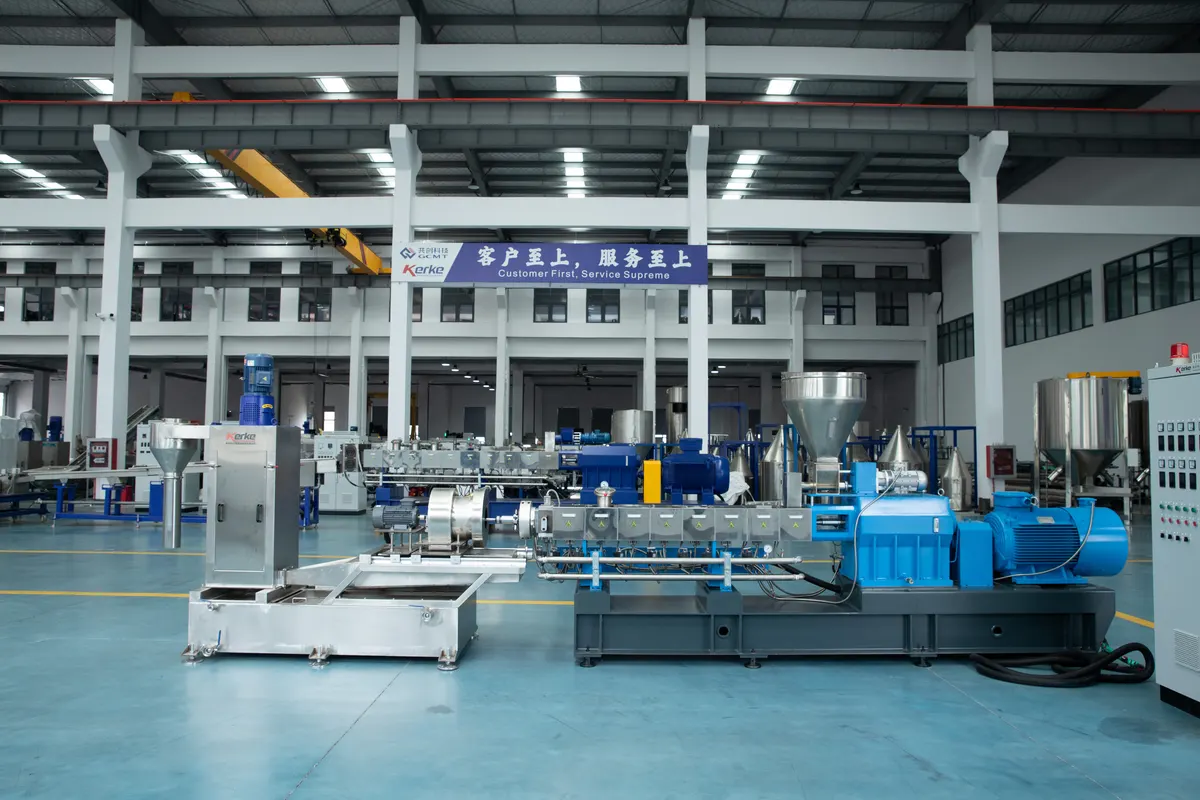 Pelletizing systems — workshop photo 3, Kerke workshop, Nanjing
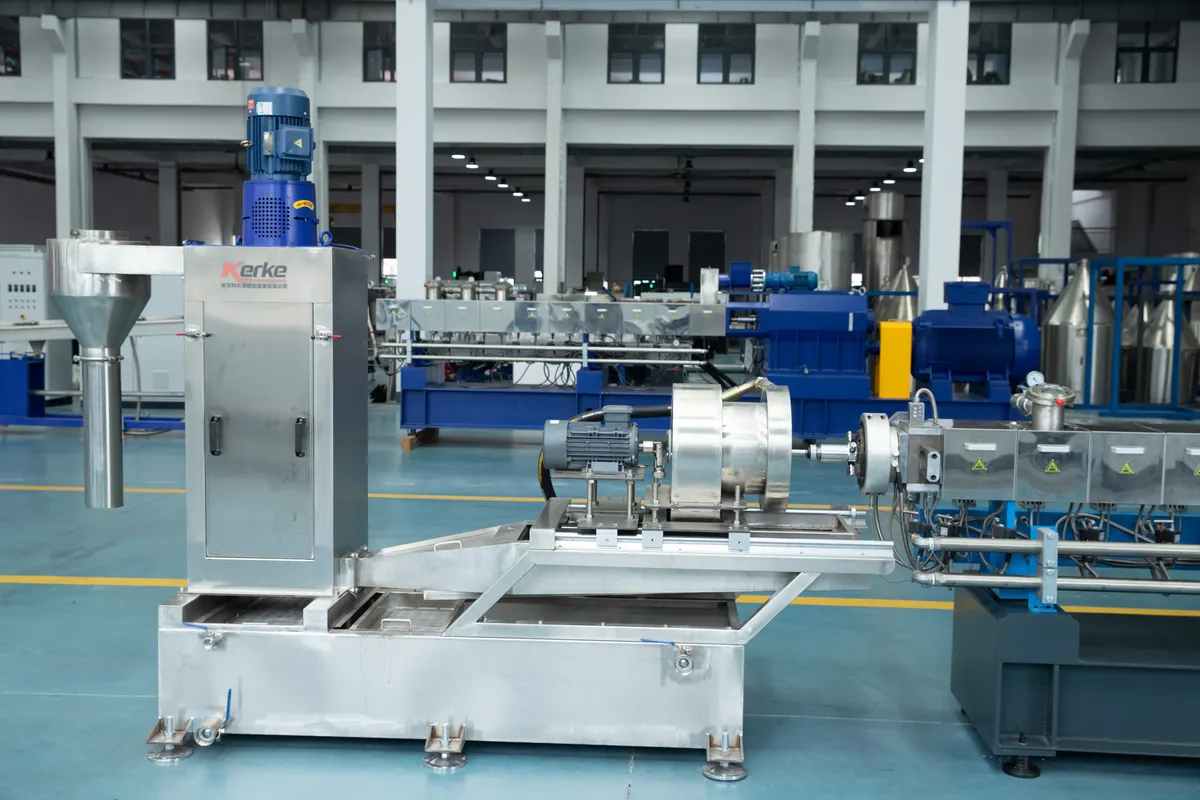 Pelletizing systems — workshop photo 4, Kerke workshop, Nanjing
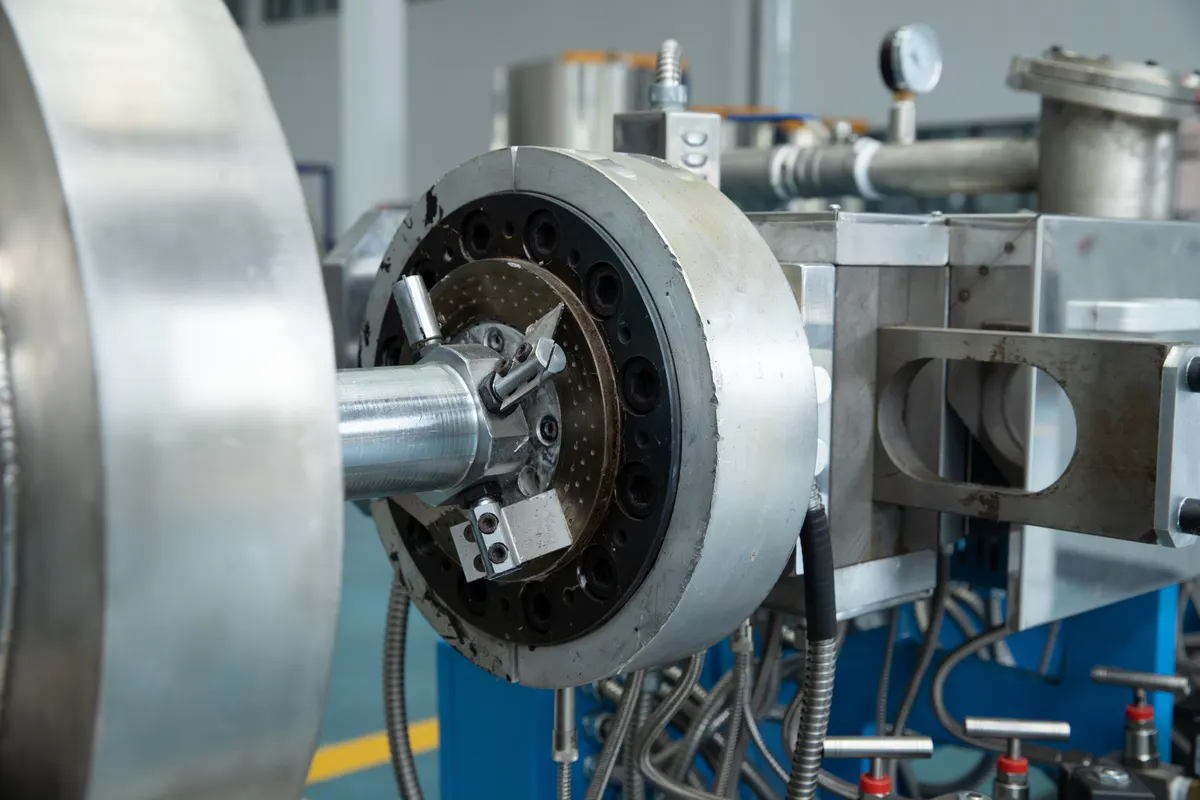 Pelletizing systems — workshop photo 5, Kerke workshop, Nanjing
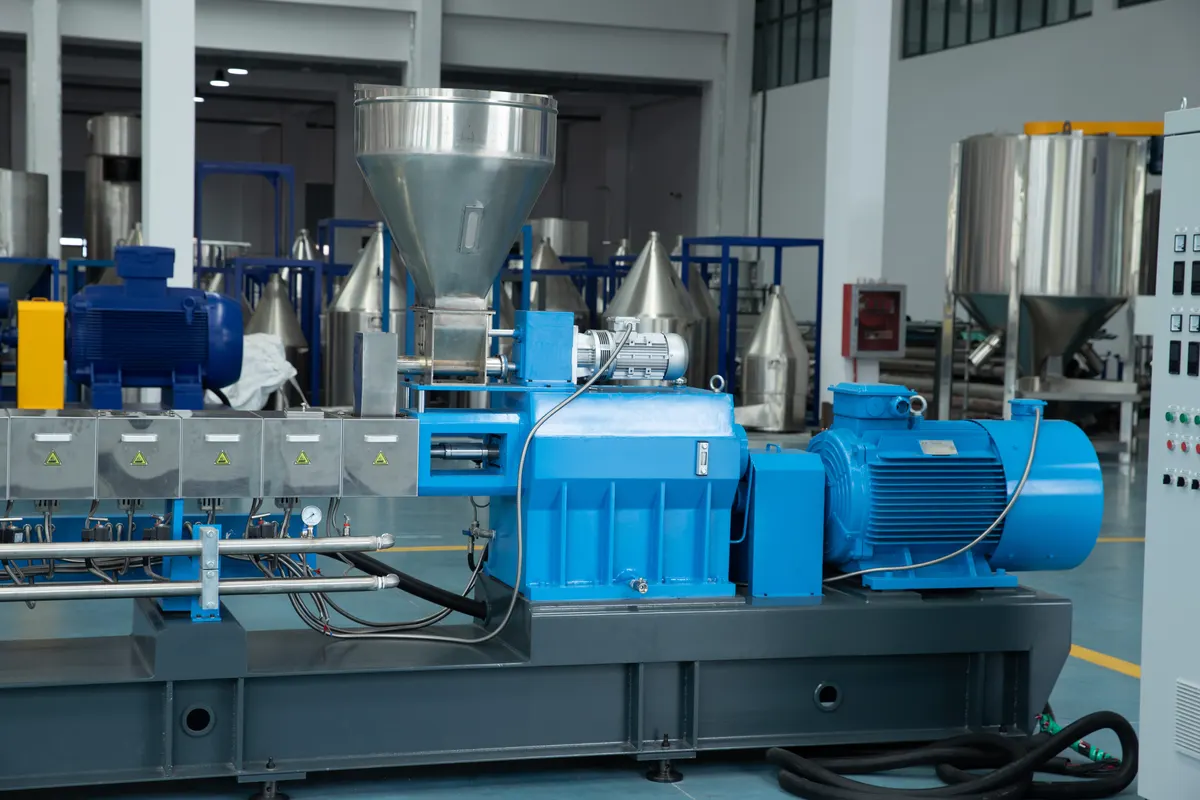 Pelletizing systems — workshop photo 6, Kerke workshop, Nanjing
Quick answer
Seven pelletizing methods cover every product we sell: water-cooled strand, air-cooled strand, water-ring strand, water ring hot die-face, air-cooled hot die-face, underwater hot die-face and spray drying. The choice follows the material — PVC and HFFR must be air-cooled, TPE and hot melt must be underwater, filler masterbatch is normally water ring.
Workshop photos and a running video — shot on our own lines, not stock images.
Parameter table
| Method | Best for | Output range | Watch out |
|---|---|---|---|
| Water-cooled strand | Filler/colour masterbatch, engineering plastics | 100–2,000 kg/h | Floor space, strand breakage at high filler |
| Air-cooled strand | PLA, starch blends, moisture-sensitive polymers | 100–800 kg/h | Slow cooling, longer line |
| Water ring strand | PET, PA, high-temperature polymers | 300–2,000 kg/h | Water temperature control |
| Water ring hot die-face | Filler/black masterbatch, PE/PP | 200–2,000 kg/h | Die hole blockage at high filler |
| Air-cooled hot die-face | PVC, HFFR/LSZH, XLPE, WPC | 100–1,500 kg/h | Air flow uniformity, dust |
| Underwater hot die-face | TPE/TPU, hot melt, EPP, compounds needing round pellets | 200–2,000 kg/h | Water temperature and flow; die freeze-off on start-up |
| Spray drying | PET with high water carry-over, sticky products | 300–1,500 kg/h | Energy cost |
Reference output measured on the stated material family; subject to a material trial. Motor and torque values are per machine, not per screw shaft.
The three rules we use
- If water causes hydrolysis, cool with air. PVC, HFFR, XLPE and WPC all fall here. Water cooling gives black specks or voids.
- If the pellet must be round and free-flowing, go underwater. TPE, TPU, hot melt and EPP block in a bag when strand-cut.
- If the melt is highly filled, prefer hot die-face. Strands break at 85% CaCO3; cutting at the die avoids the problem entirely.
Capacity is set by the die, not the cutter
Die hole count and diameter determine output per revolution. A pelletizer rated "2,000 kg/h" with a 40-hole die cannot deliver that on a 3 mm pellet — check the die, not the label.
What this machine is normally bought for
Filler Masterbatch Extruder Line
Filler masterbatch is sold by the tonne, so the line is judged on two numbers only: how much powder it can swallow, an…
PVC Compounding Line
PVC is heat-sensitive and water-sensitive at the same time, which rules out both long residence time and water contact…
TPE / TPU / TPR Elastomer Line
Elastomer compounding is dominated by oil: SEBS takes 100–300 phr, and injecting it all at once makes the screw slip i…
PET Bottle Flake Recycling & Pelletizing Line
PET is judged on one number after pelletizing: intrinsic viscosity. Water and heat destroy it, so drying, low-shear sc…
FAQ
Which pelletizing method should I choose?
Follow the polymer first: water-cooled strand below 50% filler and for PET; water ring at 70–85% filler; air-cooled hot face for PVC, HFFR and WPC; underwater for TPE/TPU and EPP beads.
What is the difference between water ring and underwater?
Water ring cuts at the die face with water sprayed at an angle, so pellets are cooled in a ring of water and leave with 8–12% moisture. Underwater cuts in a full water chamber at higher pressure and gives rounder, denser pellets — necessary for elastomers and bead products.
Can I change method later?
The pelletizer is a module. If the die and the discharge are designed for it, a strand line can become a water-ring line in two days.
Where these numbers come from
Screw diameters, speeds, motor ratings, torque and reference output come from the Kerke parameter table and the product master data sheet, and are cross-checked against commissioning records. Where a catalogue value and a trial value disagree, the trial value is the one we quote.
Reviewed by the Kerke process team, Nanjing. Page updated 6 November 2026.
Send 25–50 kg — we return pellets, a video and a report with the parameters we used, in 3–7 days.
Pelletizing systems — the short version
Note on pelletizing systems: what separates one machine from another is torque class, L/D and the wear package matched to your material, not the build standard. Shortlist from the tables, then confirm the choice on a trial with your own powder.
Related on this site: Extrusion lines by application · Extruder selection guide · free extrusion line quotation · Wikipedia: Twin-screw extruder