
Pelletizing · Water-Ring Strand Pelletizing (PET)
Water-Ring Strand Pelletizing (PET): How Kerke Builds It
A flowing water ring or trough locks strand temperature for PET, PA and other high-temperature polymers — uniform cylinders with low dust and intrinsic viscosity preserved for bottle-grade PET.
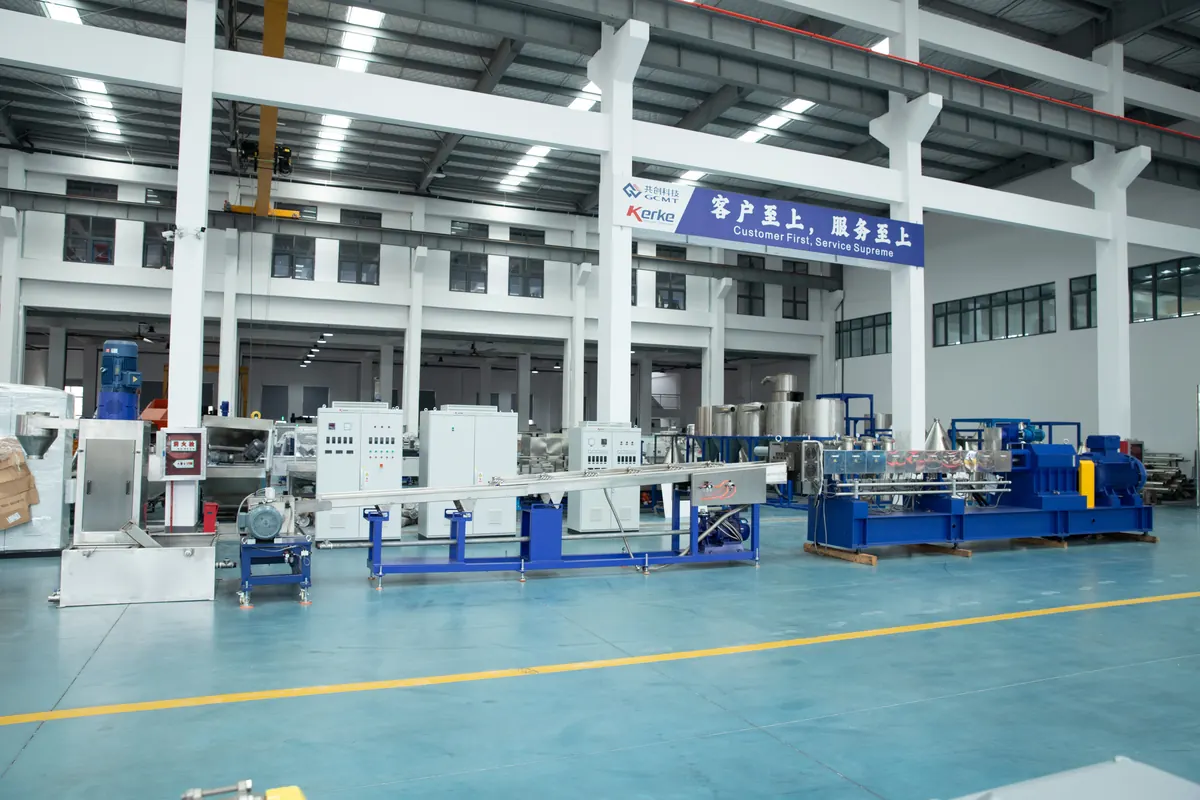 Water-Ring Strand Pelletizing (PET) — workshop photo 1, Kerke workshop, Nanjing
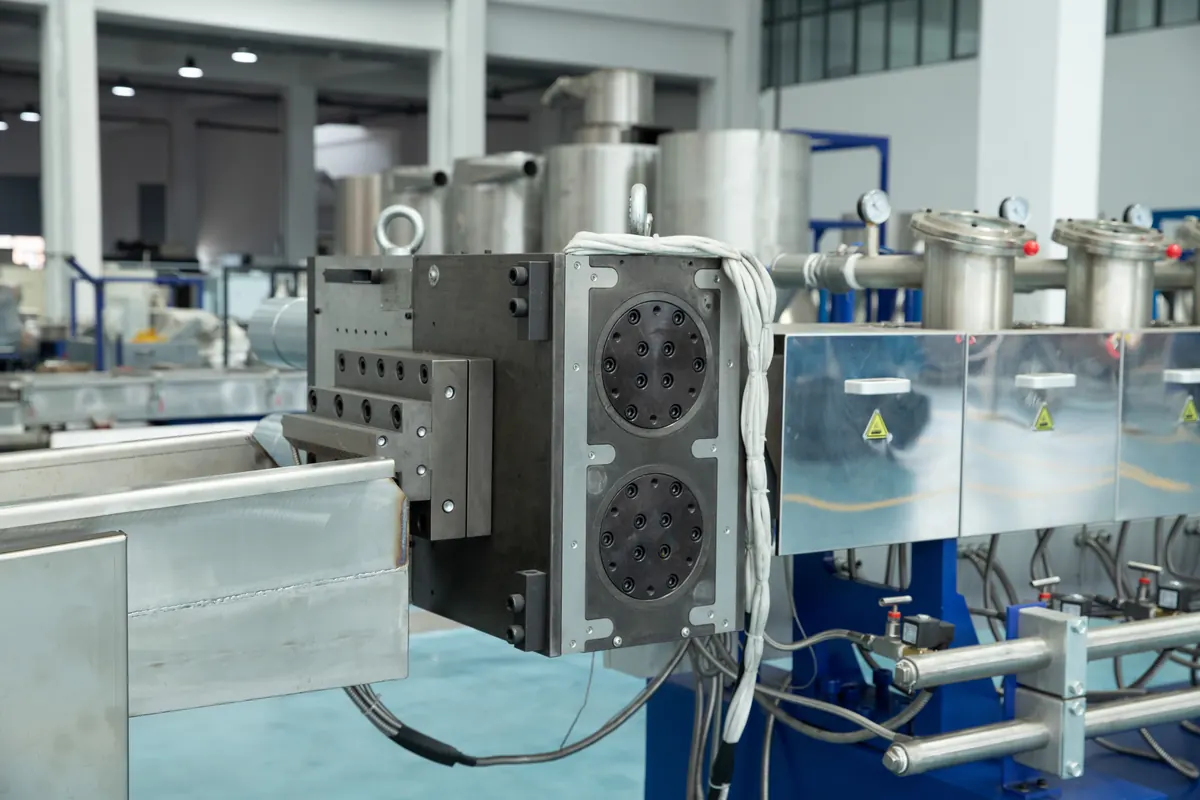 Water-Ring Strand Pelletizing (PET) — workshop photo 2, Kerke workshop, Nanjing
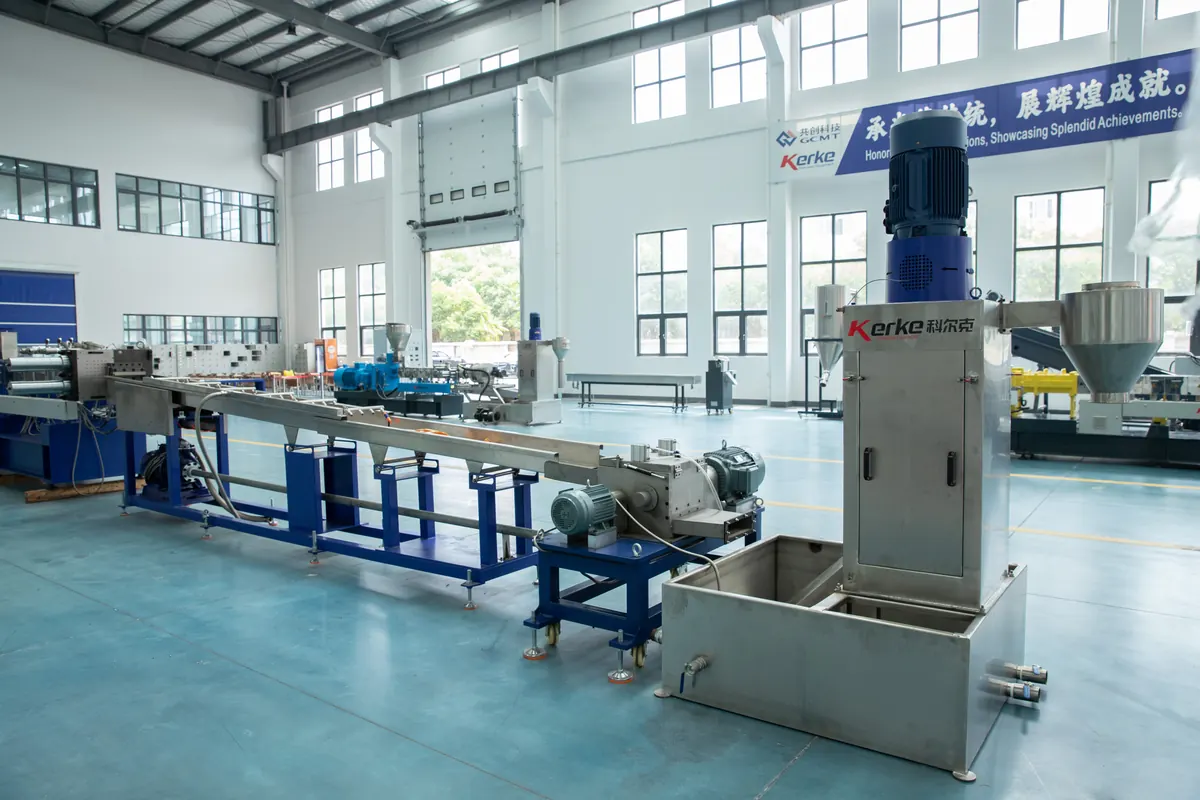 Water-Ring Strand Pelletizing (PET) — workshop photo 3, Kerke workshop, Nanjing
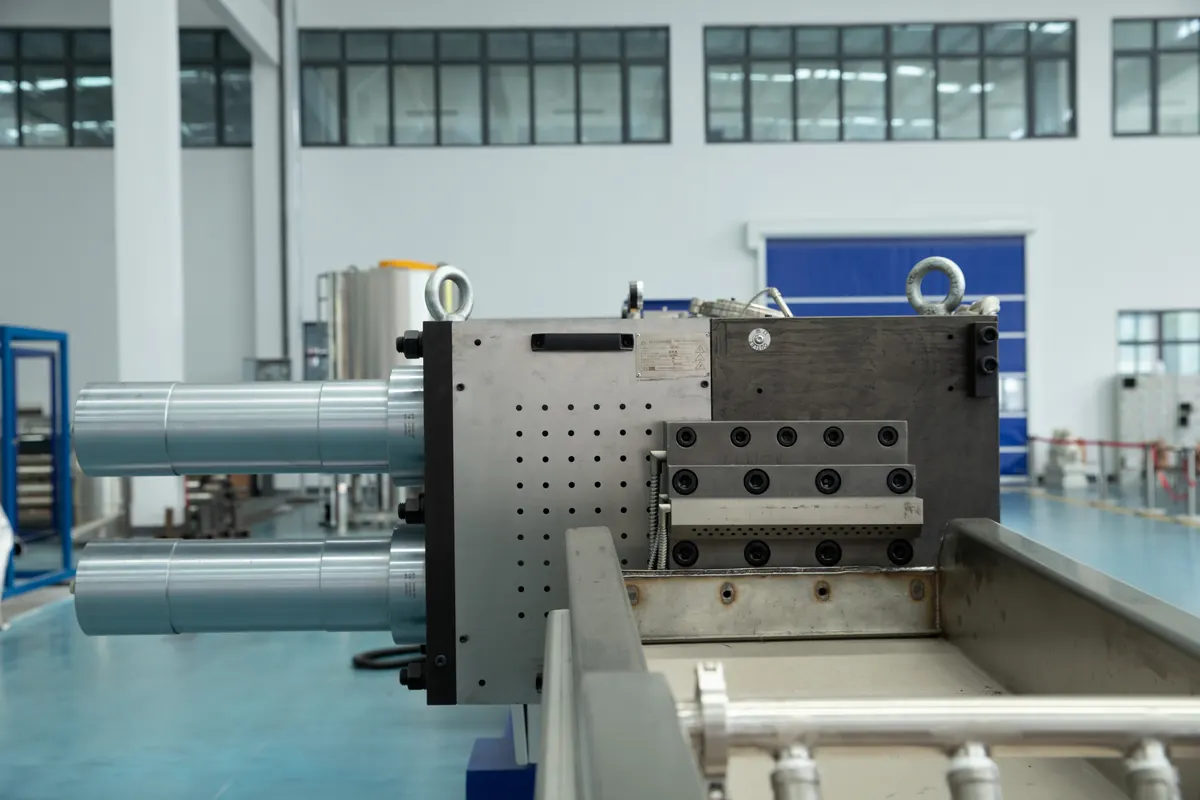 Water-Ring Strand Pelletizing (PET) — workshop photo 4, Kerke workshop, Nanjing
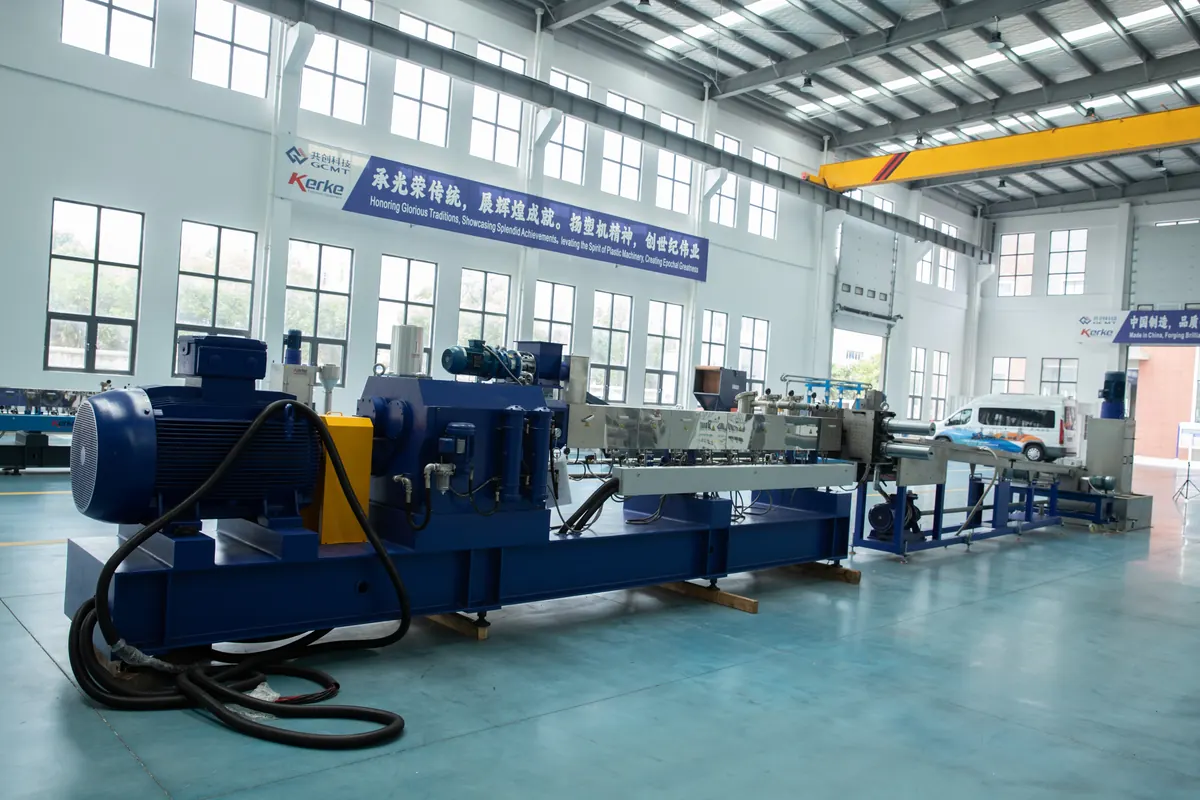 Water-Ring Strand Pelletizing (PET) — workshop photo 5, Kerke workshop, Nanjing
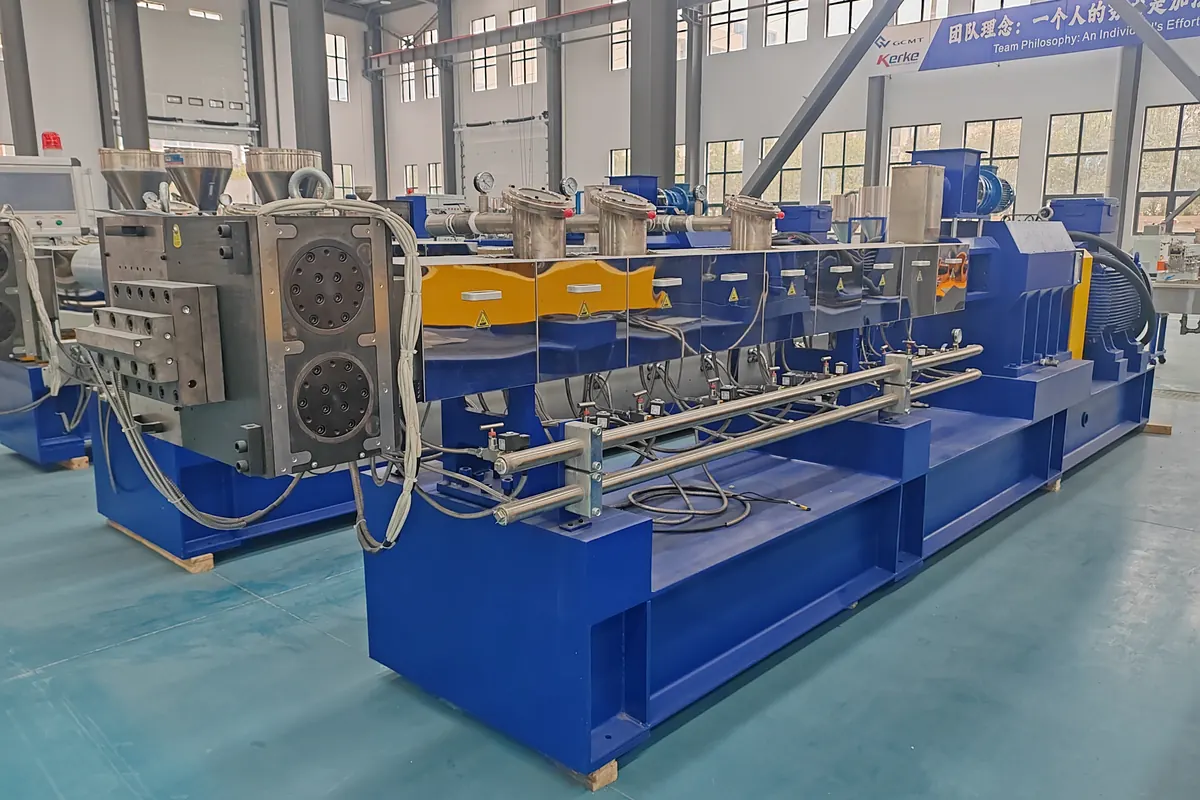 Water-Ring Strand Pelletizing (PET) — workshop photo 6, Kerke workshop, Nanjing
Quick answer
Water-ring strand pelletizing cools PET and PA strands in a temperature-controlled water ring or trough before dry cutting. The point is IV control: bottle-grade PET loses intrinsic viscosity if strands cool too slowly or sit in hot water. Flowing, thermostatted water plus immediate drying keeps IV loss inside the specification.
Workshop photos — shot on our own lines in Nanjing, not stock images.
How the water-ring strand pelletizing (pet) line works
- Strands leave a PET-optimised die with a strand count matched to the output.
- A thermostatted water ring/trough with strong flow quenches the strands within seconds.
- Water temperature is held in a narrow band — usually 28–33 °C for bottle-grade PET.
- Air knife and vacuum wiper strip surface water before the cutter.
- Pellets are screened, and optionally crystallized and dried downstream to target moisture.
Where this method wins
This is the PET specialist: bottle flake and sheet-grade pelletizing where intrinsic viscosity must survive the pelletizing step, PA compounding at high output, and any high-temperature polymer where slow air cooling would leave strands semi-molten at the cutter. Where pellets must be perfectly round instead, that is underwater pelletizing — different machine.
Reference data
| Item | Value |
|---|---|
| Best for | PET bottle flake/sheet, PA, high-temperature polymers |
| Output range | 300–2,000 kg/h |
| Pellet shape | Cylinder, low dust, IV-critical |
| Watch out | Water temperature control, IV loss on start-up |
Reference output measured on the stated material family; subject to a material trial. Die hole count sets the capacity ceiling — check the die, not the label.
Selection notes from our floor
The two numbers that decide PET quality are water temperature and residence time. We commission the ring at 30 °C with flow tuned so strands are below 60 °C before the cutter. On start-up, dump the first strands — the IV loss is concentrated in the transition material.
FAQ
How much IV is lost in pelletizing?
On a tuned line, 0.01–0.02 dL/g from pelletizing alone. The bigger losses happen upstream in devolatilization if vacuum or residence time is wrong — that is where we look first.
Can this line take bottle flake with labels?
Flake should be pre-washed. Label fragments blind the die and break strands; the strand line tolerates far less contamination than a hot-face pelletizer.
Water ring or underwater for PET?
Strand for sheet and bottle grades where cylinder pellets are accepted and IV matters most; underwater when the customer needs round, dust-free pellets for spinning or foaming grades.
Where these numbers come from
Output ranges, pellet shapes and watch-outs come from Kerke commissioning records and the pelletizing systems parameter table. Where a catalogue value and a trial value disagree, the trial value is the one we quote.
Reviewed by the Kerke process team, Nanjing. Page updated 11 November 2026.
Send 25–50 kg — we return pellets, a video and a report with the parameters we used, in 3–7 days.
Water-Ring Strand Pelletizing (PET) — the short version
For PET and other IV-sensitive polyesters, the water-ring line cuts strands hot against a rotating ring and quenches them in seconds, holding intrinsic-viscosity loss to a minimum without a separate crystallizer step.
Related on this site: Pelletizing systems (all 7 methods) · Pelletizing methods compared · free extrusion line quotation