
Application · Cable Compound
HFFR Cable Compound Line for 50–60% Metal Hydroxide Filling
HFFR compound carries 50–60% metal hydroxide, which starts decomposing around 180 °C. The line has to disperse it thoroughly while keeping the melt below the point where it releases water. A reference hffr cable compound page from Kerke.
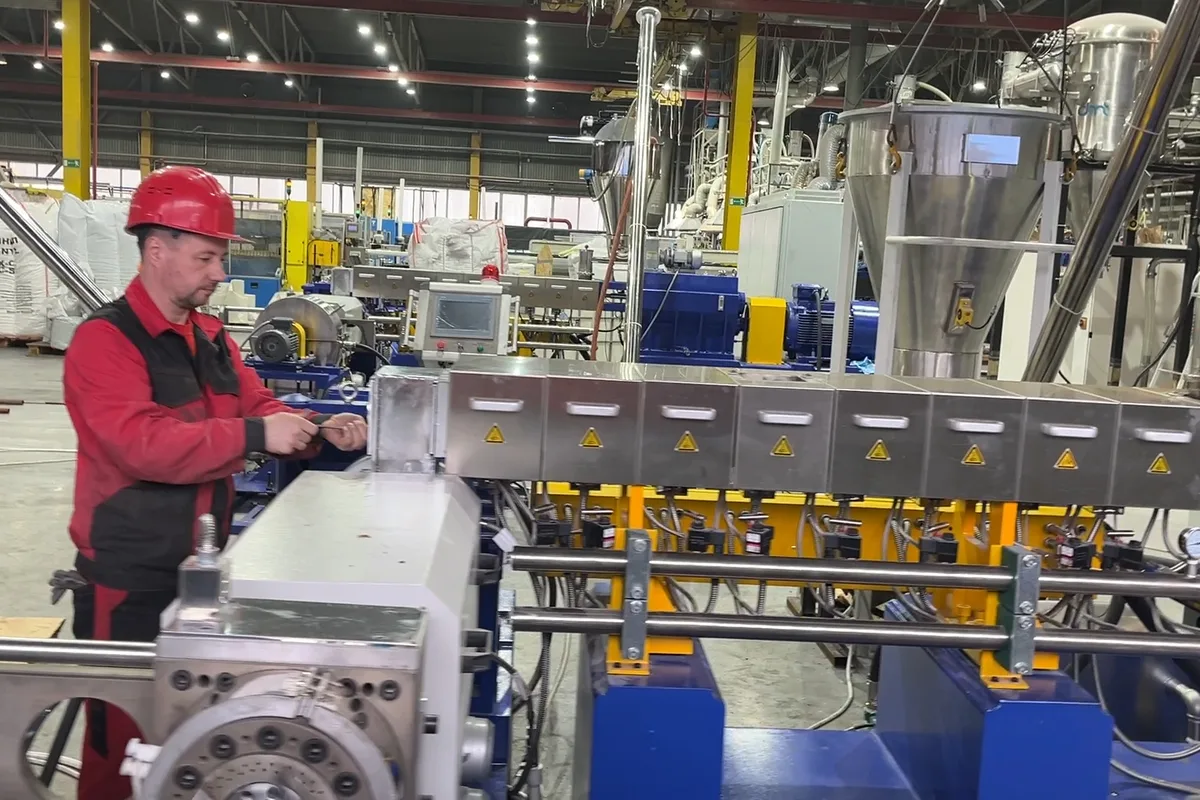 HFFR Cable Compound — workshop photo 1, Kerke workshop, Nanjing
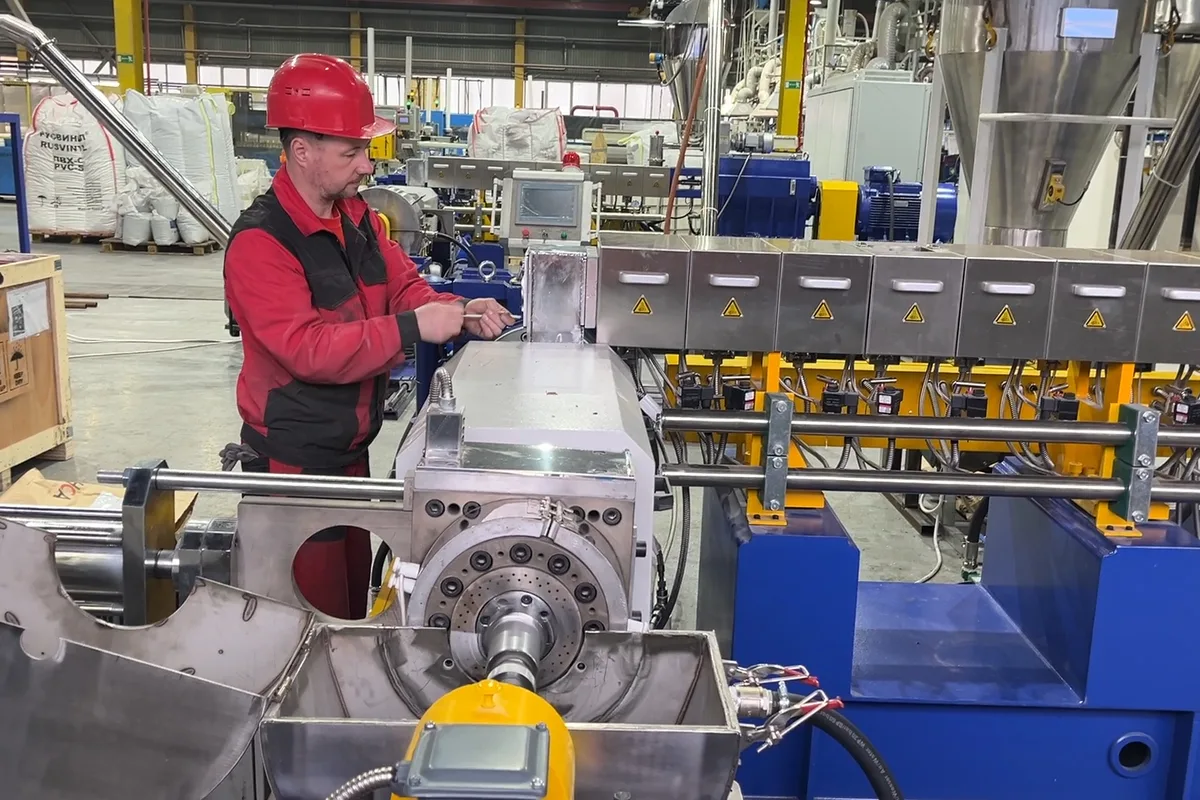 HFFR Cable Compound — workshop photo 2, Kerke workshop, Nanjing
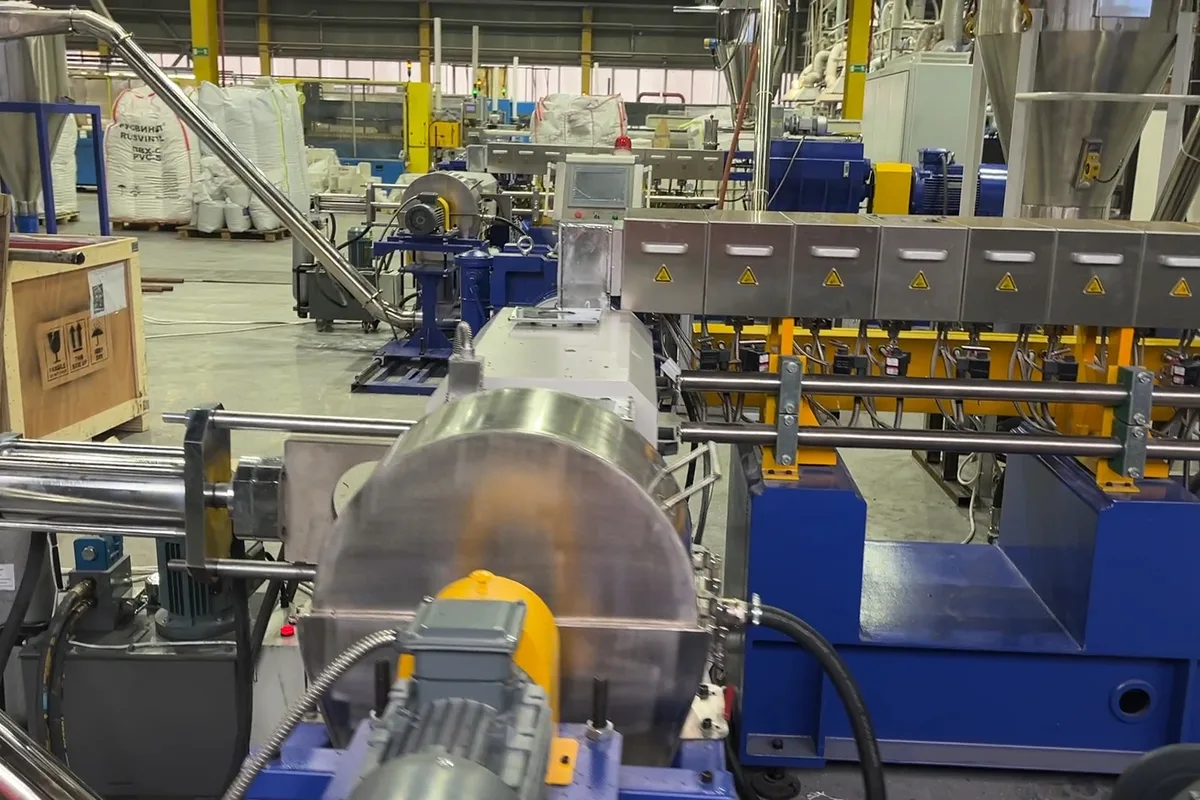 HFFR Cable Compound — workshop photo 3, Kerke workshop, Nanjing
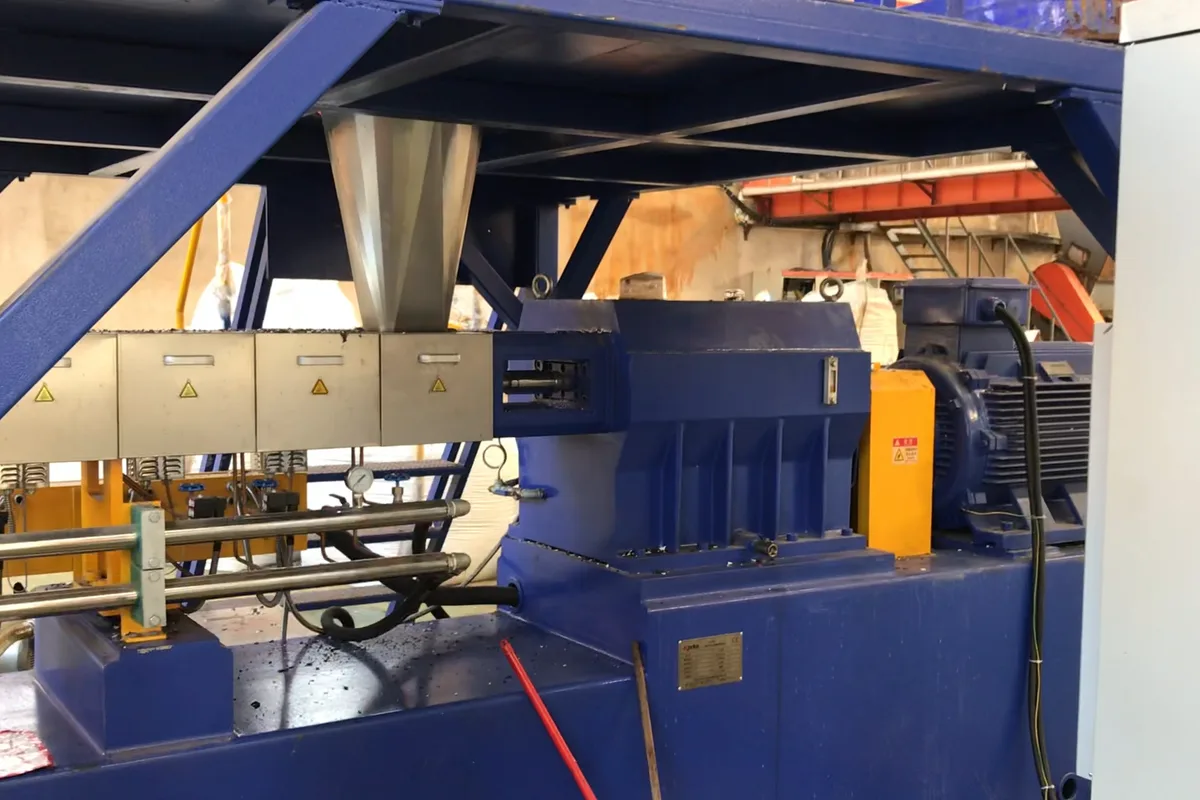 HFFR Cable Compound — workshop photo 4, Kerke workshop, Nanjing
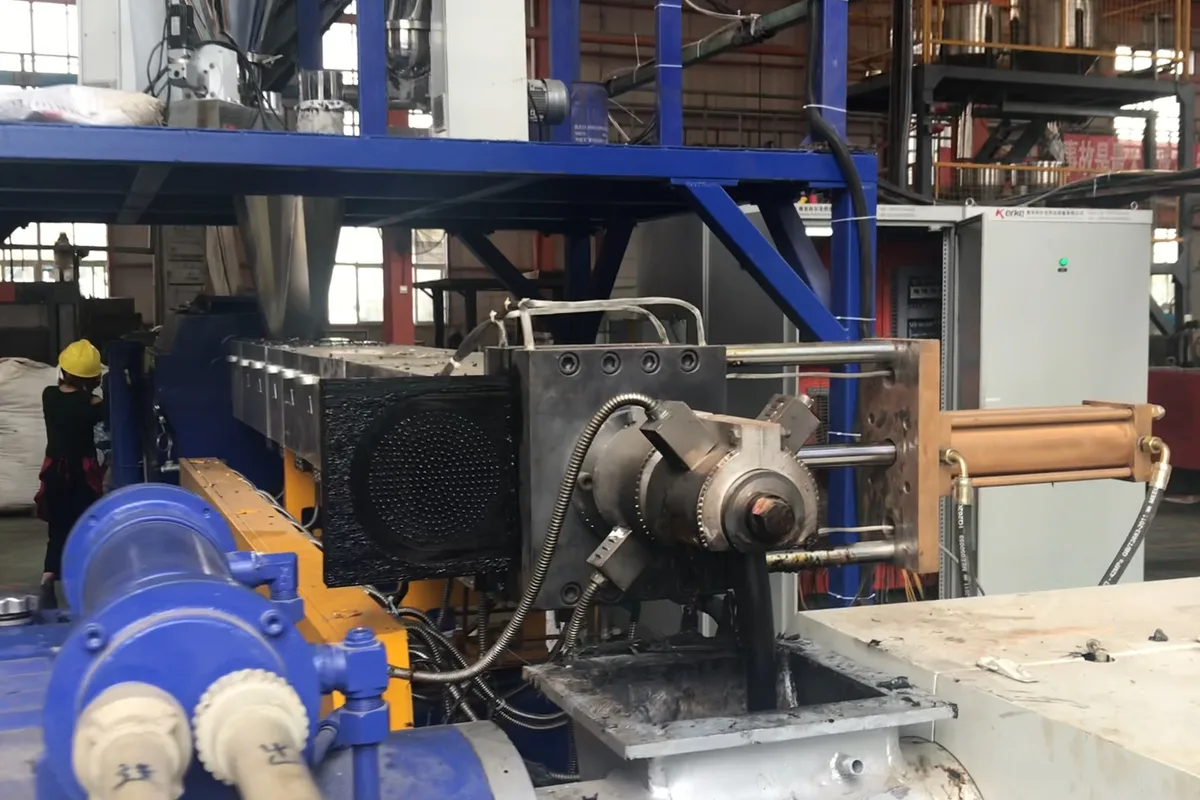 HFFR Cable Compound — workshop photo 5, Kerke workshop, Nanjing
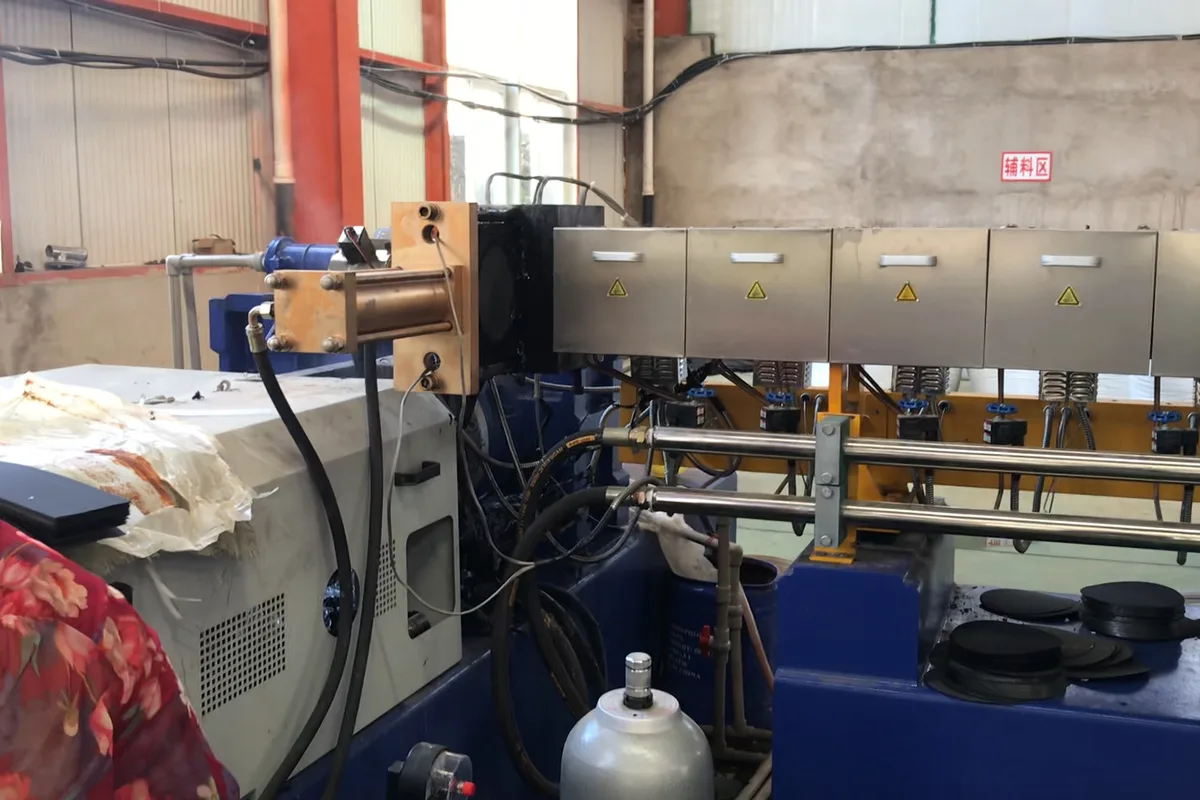 HFFR Cable Compound — workshop photo 6, Kerke workshop, Nanjing
Quick answer
HFFR/LSZH cable compound carries 55–70% aluminium hydroxide or magnesium hydroxide, which is why it runs on a two-stage KTE/SE line with air-cooled hot die-face pelletizing and L/D 40–48 in the first stage. Output 300–1,500 kg/h.
Workshop photos and a running video — shot on our own lines, not stock images.
What sets the limit
EVA/PE carrier is melted, ATH or MDH is fed downstream and dispersed at low shear to avoid filler degradation above 180 °C, then the melt is devolatilized and pelletized with air cooling.
| Parameter | Value / range |
|---|---|
| Filling | 55–70% ATH / MDH |
| Configuration | Two-stage KTE/SE (single-stage not recommended) |
| L/D | 40–48 |
| Pelletizing | Air-cooled hot die-face |
| Output (reference) | 300–1,500 kg/h |
| Model | KTE/SE-75/180, KTE/SE-95/200 |
Output figures for an HFFR cable compound line are measured on the reference material stated above. Mineral loading and die pressure requirements move output by ±15% — that is why every quotation we issue is tied to a trial report.
Process flow, step by step
- FeedingLoss-in-weight dosing of polymer and filler; side feeder or liquid injection where the formulation needs it.
- Melting and dispersingScrew geometry with 45°/90° kneading blocks; barrel profile set by the polymer.
- DevolatilizationVacuum vent at −0.06 to −0.09 MPa removes moisture and volatiles before the die.
- Pressure build-upThrottle or discharge section stabilises die pressure; a melt pump where gauge control matters.
- Pelletizing and packingAir-cooled hot die-face; then centrifugal dryer, vibrating screen and bagging.
Equipment configuration
| Stage | Equipment | Why this choice |
|---|---|---|
| Main machine | Two-Stage Extruder KTE/SE | Architecture follows the filling level and the mixing duty, not the required tonnage. |
| Screw geometry | Building-block elements, W6Mo5Cr4V2, bimetallic liner | Wear package for abrasive filler; mixing blocks only where dispersion demands them. |
| Feeding | Loss-in-weight feeder, side feeder where needed | Recipe accuracy: ±0.5% short term on the weighed component. |
| Pelletizing | Pelletizing system | Chosen by polymer and filler ceiling — water contact is the deciding column. |
| Downstream | Centrifugal dryer, vibrating screen, bagging | Fines below 2% and moisture below the specification of your downstream process. |
Output by model
| Configuration | Stage 1 (twin screw) | Stage 2 (single screw) | Output (kg/h) | Typical product |
|---|---|---|---|---|
| KTE-50B / SE-120 | 50.5 mm | 120 mm | 300–500 | Colour / filler masterbatch |
| KTE-65B / SE-150 | 62.4 mm | 150 mm | 500–800 | Filler masterbatch 85%, PVC |
| KTE-75B / SE-180 | 71 mm | 180 mm | 700–1,200 | High filler 88–90%, HFFR |
| KTE-95B / SE-200 | 93 mm | 200 mm | 1,000–2,000 | High filler, cable compound |
Three mistakes that cost the most
1. ATH decomposes above ~200 °C releasing water
ATH decomposes above ~200 °C releasing water — the melt foams and the compound fails the flame test.
2. High filler plus high shear equals rapid screw wear; the wear package is not optional.
High filler plus high shear equals rapid screw wear; the wear package is not optional.
3. Wet ATH dosed straight into the melt
Wet ATH dosed straight into the melt — surface moisture flashes at the vent and the compound then fails the water-absorption test; dry the mineral first.
FAQ
Why not a single-stage twin screw?
Torque and die pressure. At 65% ATH the melt is a paste; a two-stage line keeps output stable and protects the gearbox.
Can the line also run PVC cable compound?
Yes, with a screw set change and cleaning. Many cable plants share the two-stage platform.
What output can you guarantee for this application?
The reference band is 300–1,500 kg/h, measured on the stated material. We quote a guaranteed figure only after a trial on your own material run on an HFFR cable compound line, because mineral filler type, crosslink demand and die pressure stability move output by ±15%.
Can we run our material before ordering?
Yes — for an HFFR cable compound line, send 25–50 kg of the cable compound; the report adds die pressure and melt temperature against line speed. You also receive pellets, a running video, and the temperatures, screw speed and feeder settings we used. The trial is free; you cover the freight.
What is the delivery time?
30–45 working days for standard configurations of an HFFR cable compound line, 45–70 for custom screw geometry and ODM work — melt pumps and screen changers are quoted with the line. Voltage and frequency are built for the destination country.
Where these numbers come from
Parameters on this page (an HFFR cable compound line) are taken from the Kerke product parameter table and the product master data sheet, and cross-checked against commissioning records for cable compound lines built in the last few seasons. Formulations and temperature windows are typical industry values for cable compounds, not a recommendation for your specific compound — every figure marked reference must be confirmed on a material trial before it becomes a contractual number.
Reviewed by the Kerke process team, Nanjing. Page updated 6 November 2026.
Send 25–50 kg for a trial of an HFFR cable compound line on our lab extruder: pellets, running video and a capacity report back in 3–7 days — the report tracks melt temperature against the hydroxide or crosslink ceiling.
HFFR cable compound — the short version
Note on hffr cable compound: the numbers above are reference ranges from Kerke's own trial runs, not catalogue promises. Screw geometry, wear package and pelletizing method are set on the trial bench first, so the output you compare is the output you get. If your grade is not in the tables, send it — the closest configuration is usually a change of screw set, not a different machine.
Related on this site: Machine range: KTE-50B to 135D · Pelletizing methods compared · quotation and free trial · Wikipedia: Masterbatch
Bottom line. HFFR compound carries 50–60% metal hydroxide, which starts decomposing around 180 °C. Use the references above to shortlist, then let the material decide: a 25–50 kg lab trial settles filler ceiling, pellet shape and output before you commit to a line.