
Model · Two-stage KTE/SE
KTE-50B / SE-120 Two-Stage Extruder
The KTE-50B SE-120 two-stage extruder (also written KTE-50B / SE-120) pairs a 50.5 mm twin screw with a 120 mm single screw: 300–500 kg/h for colour and filler masterbatch where output stability beats peak tonnage.
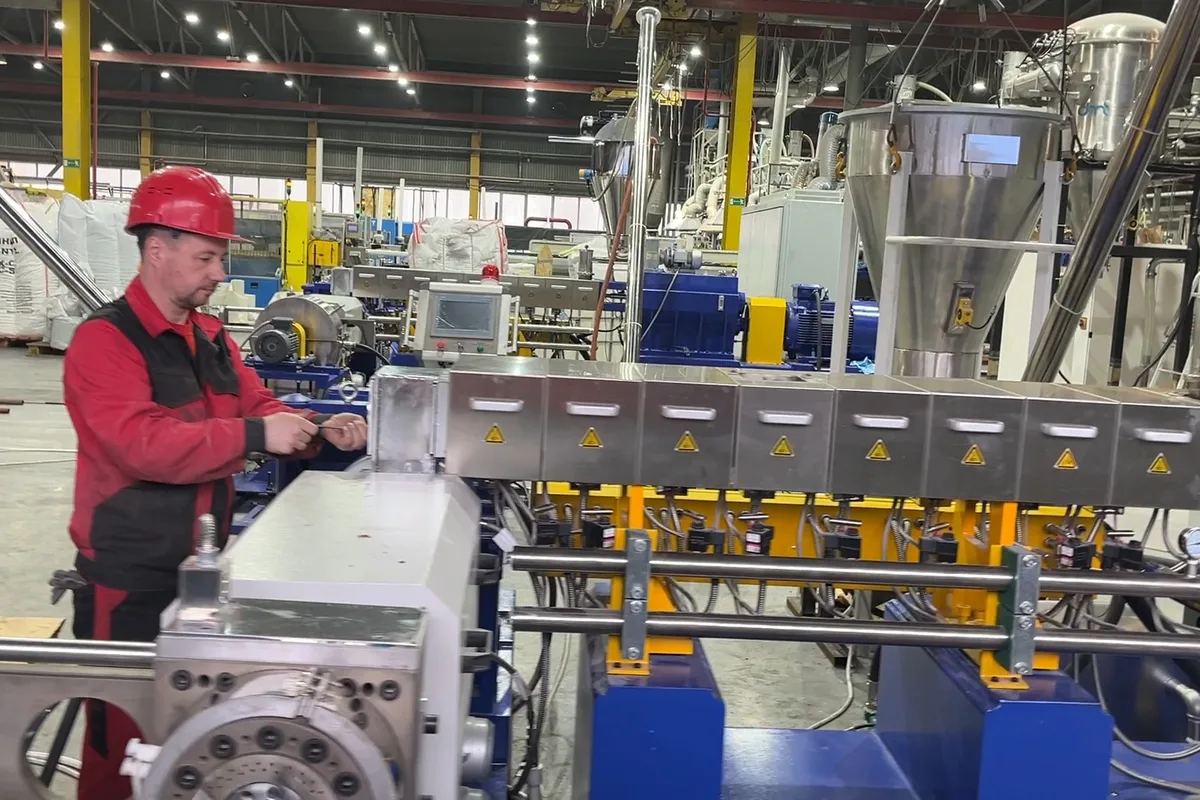 KTE-50B SE-120 two-stage extruder — workshop photo 1, Kerke workshop, Nanjing
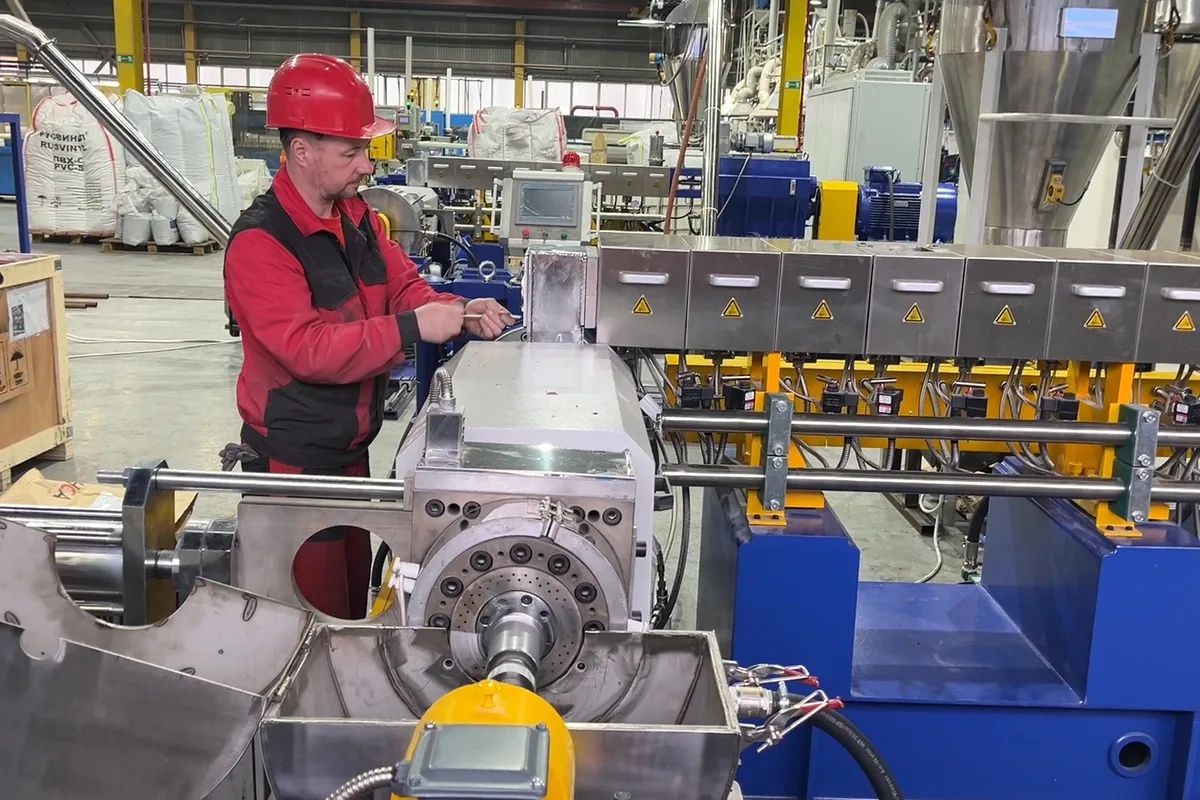 Two-stage KTE SE — workshop photo 2, Kerke workshop, Nanjing
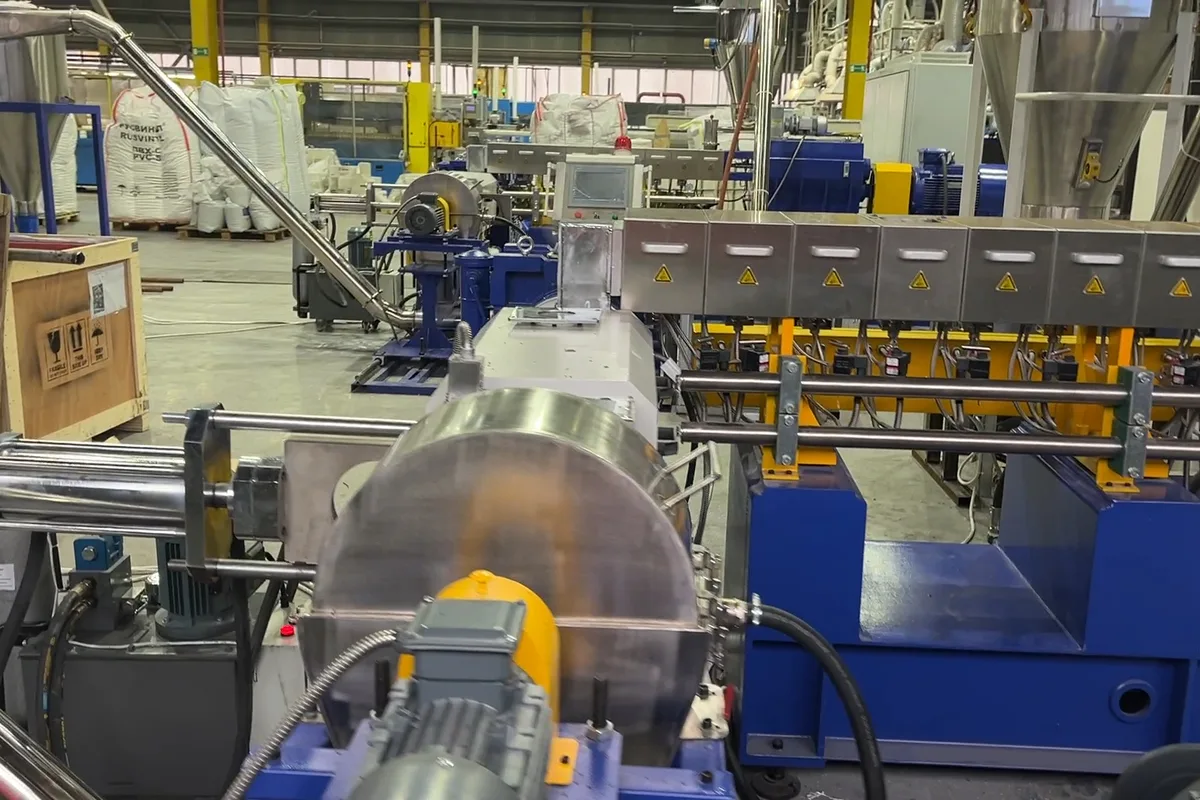 Two-stage KTE SE — workshop photo 3, Kerke workshop, Nanjing
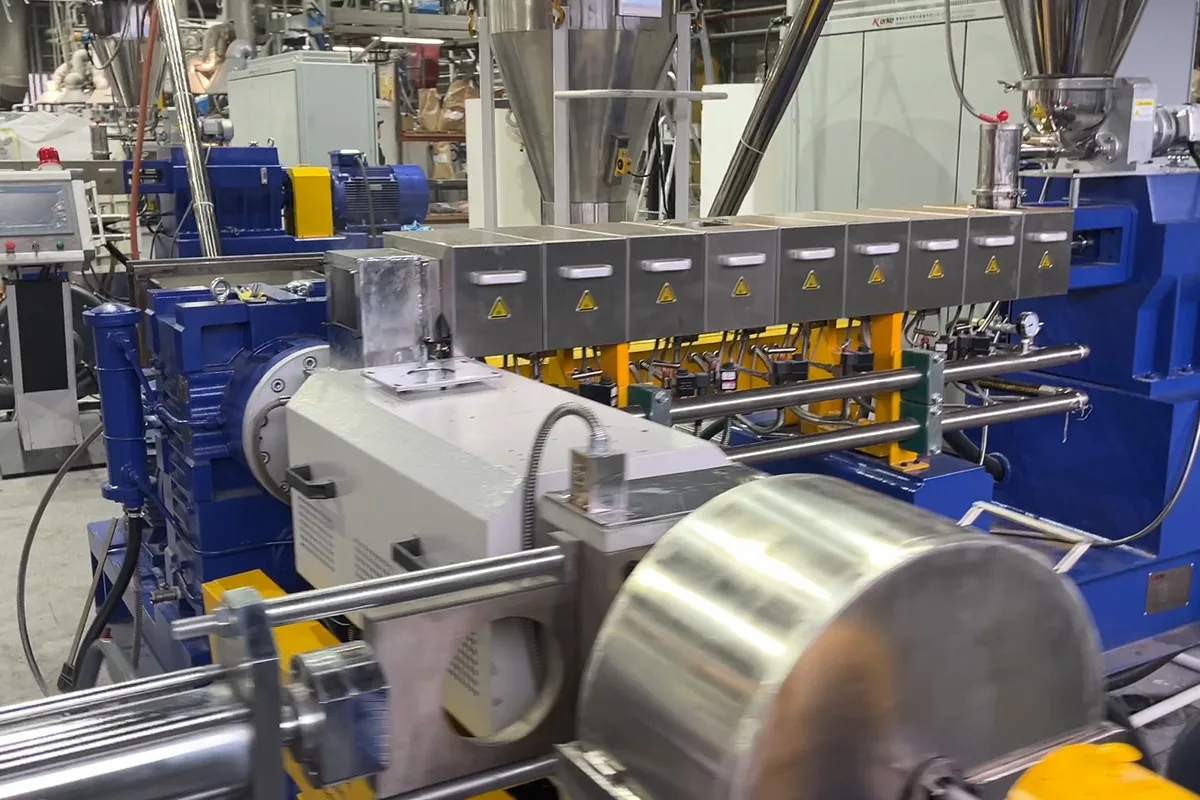 Two-stage KTE SE — workshop photo 4, Kerke workshop, Nanjing
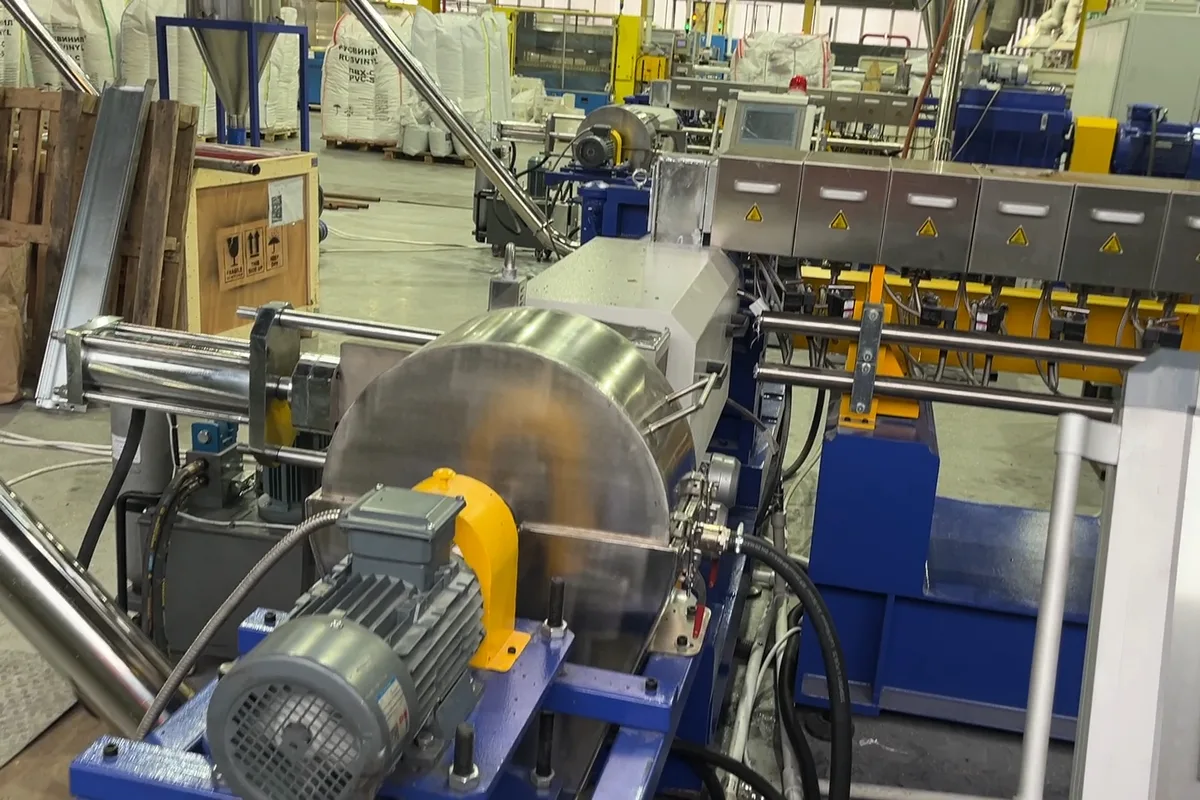 Two-stage KTE SE — workshop photo 5, Kerke workshop, Nanjing
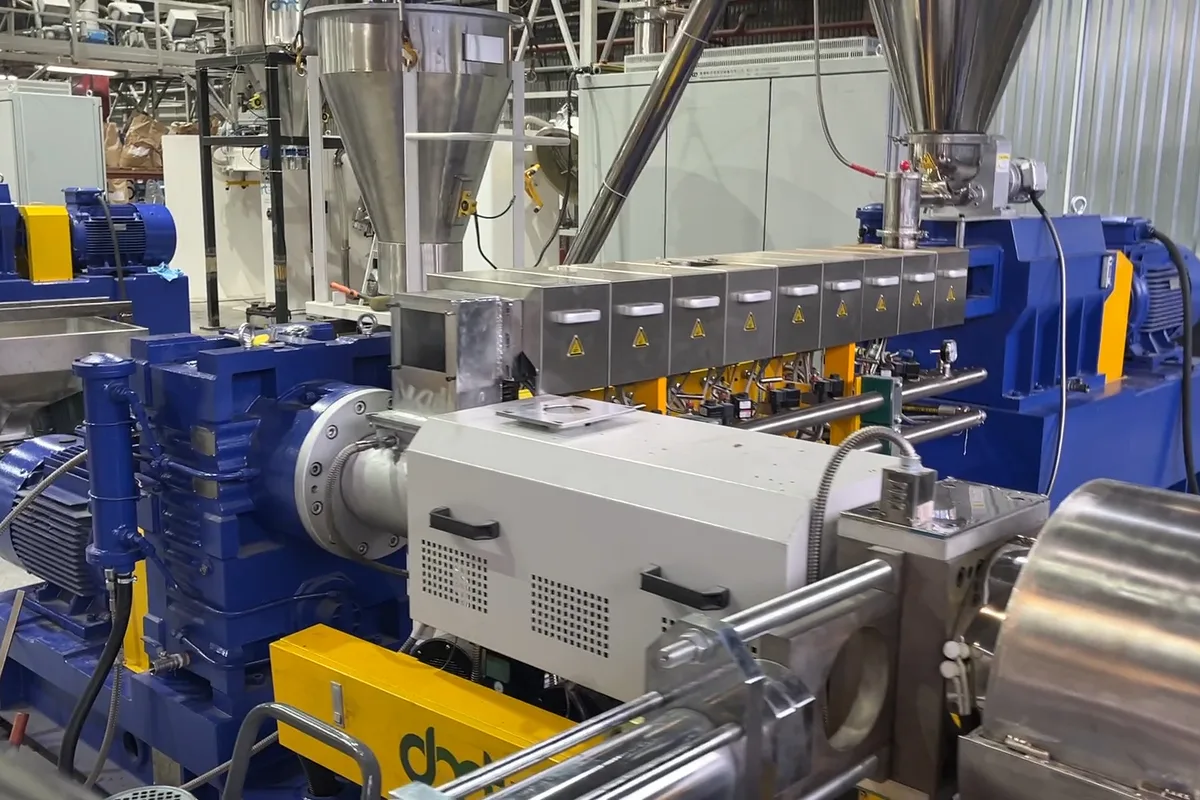 Two-stage KTE SE — workshop photo 6, Kerke workshop, Nanjing
Workshop photos and a running video — shot on our own lines, not stock images.
Parameters
| Configuration | Stage 1 (twin screw) | Stage 2 (single screw) | Output (kg/h) | Typical product |
|---|---|---|---|---|
| KTE-50B / SE-120 | 50.5 mm | 120 mm | 300–500 | Colour / filler masterbatch |
Reference output measured on the stated material family; subject to a material trial. Motor and torque values are per machine, not per screw shaft.
Where it fits in the range
Entry point of the two-stage family: the KTE-65B / SE-150 (500–800 kg/h), KTE-75B / SE-180 (700–1,200 kg/h) and KTE-95B / SE-200 (1,000–2,000 kg/h) follow with the same architecture. If the duty stays below 85% filler, a single twin screw such as the KTE-65B is the simpler machine.
What it runs
Duties: colour masterbatch at high pigment loading, filler masterbatch toward 80–85%, small PVC compound batches where low-shear finishing matters after gelling, and HFFR trials scaling up from the lab.
Color Masterbatch Extruder Line
Colour masterbatch is a dispersion business with a cleaning problem attached: the same line has to make 20% pigment di…
High Filler Masterbatch Line
Above 85% the melt stops behaving like a polymer. Output no longer follows screw speed, and the machine that held 82% …
Configuration options
The two stages are ordered as one line but do different jobs, and the quotation reflects that: stage one gets the mixing geometry and the wear package, stage two gets a deep-flighted low-shear screw built only to meter and pressurize. Options that matter on a KTE-50B / SE-120 line: vacuum degree on the twin screw vent (−0.06 to −0.09 MPa), water-ring versus air-cooled hot-face pelletizing on the SE stage, and whether the SE discharge runs at fixed speed or follows the twin screw through a gravimetric loop.
FAQ
Why a two-stage line at only 300–500 kg/h?
Because the limit is not tonnage but pressure: when viscosity climbs (85%+ filler, PVC), one machine doing both mixing and pumping loses output. The SE-120 stage exists only to pump, and the line holds its number.
Can the SE stage be added to an existing KTE-50B later?
Often yes — if floor space and the control cabinet allow, the SE discharge stage retrofits to an existing twin screw installation. It is cheaper than replacing the gearbox and keeps the machine you know.
What pelletizing suits this combination?
Water ring for filler masterbatch, air-cooled hot face for PVC and HFFR, strand where pellet shape is sold. The pelletizer hangs on the SE stage die, so it is chosen by polymer, not by the twin screw.
Where these numbers come from
Parameters come from the Kerke parameter table and product master data sheet, cross-checked against commissioning records for the same model and duty. Where a catalogue value and a trial value disagree, the trial value is the one we quote.
Reviewed by the Kerke process team, Nanjing. Page updated 6 November 2026.
Send 25–50 kg — we return pellets, a video and a report with the parameters we used, in 3–7 days.
KTE-50B SE-120 two-stage extruder — the short version
Note on KTE-50B SE-120 two-stage extruder: what separates one machine from another is torque class, L/D and the wear package matched to your material, not the build standard. Shortlist from the tables, then confirm the choice on a trial with your own powder.
Planning an upgrade this quarter? Send the material and the target output — the configuration comes back within one working day.
Every quotation lists the wear package as a separate line, so its cost is visible from day one.
Questions are answered the same day, in English or Chinese.
Note on KTE-50B SE-120 two-stage extruder: the data on this page was last verified on our own test line in Nanjing.
Not sure which KTE-50B SE-120 two-stage extruder configuration fits? Describe the material and the pellet shape required — we answer with a recommendation, not a brochure.
A KTE-50B SE-120 two-stage extruder from Kerke ships with CE documentation, a test-run record and a recommended spare set.
Related on this site: Extrusion lines by application · Extruder selection guide · free extrusion line quotation · Wikipedia: Twin-screw extruder