Price & configuration
Twin Screw Extruder Price: what actually drives the number
The same 65 mm screw is quoted at three very different numbers: 2×720, 2×860 or 2×1,530 N·m of torque, 40D or 52D barrel, standard or bimetallic liner, strand or underwater pelletizing. Here is how the twin screw extruder price is built — and what to send us to get a real one.
- Quoted against your material and target kg/h, never against a catalogue page
- The price structure is broken down line by line: screw, barrel, drive, pelletizer, controls
- Every saving is written down with what it costs you in output or wear life
Get a costed configuration
Reply within one working day, in English or Chinese.
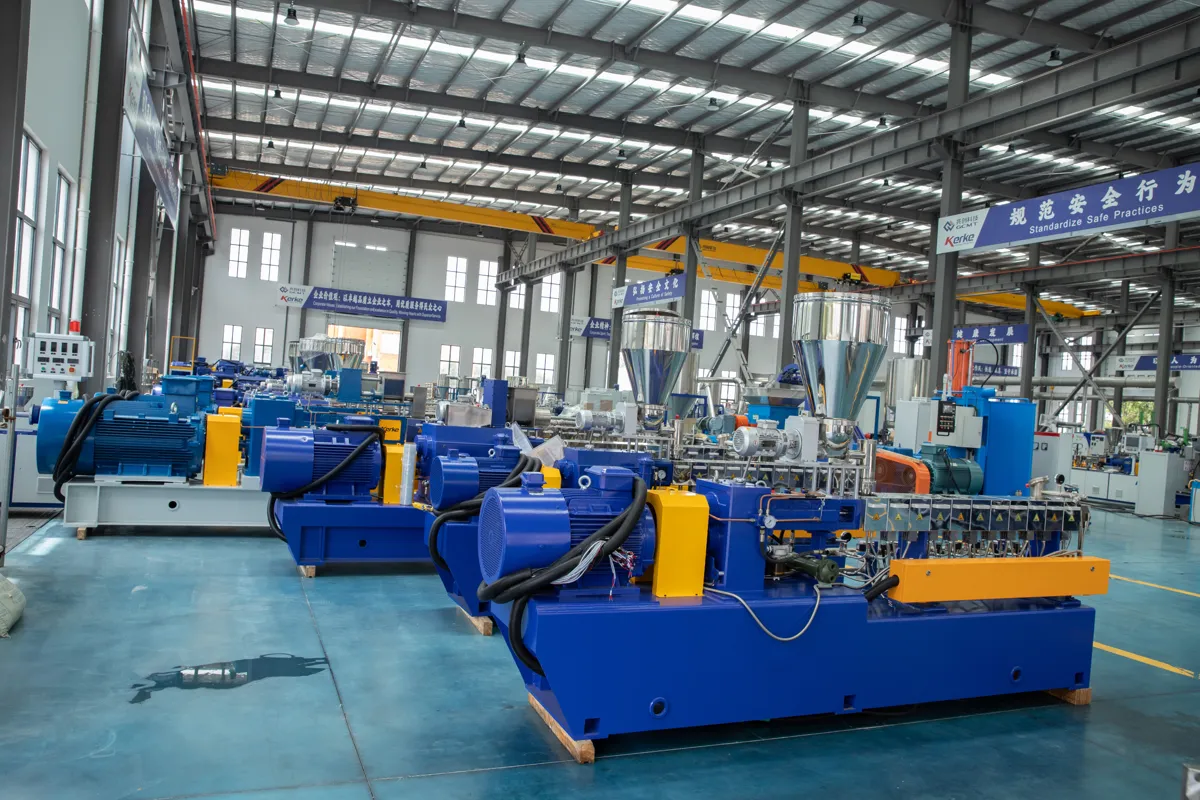
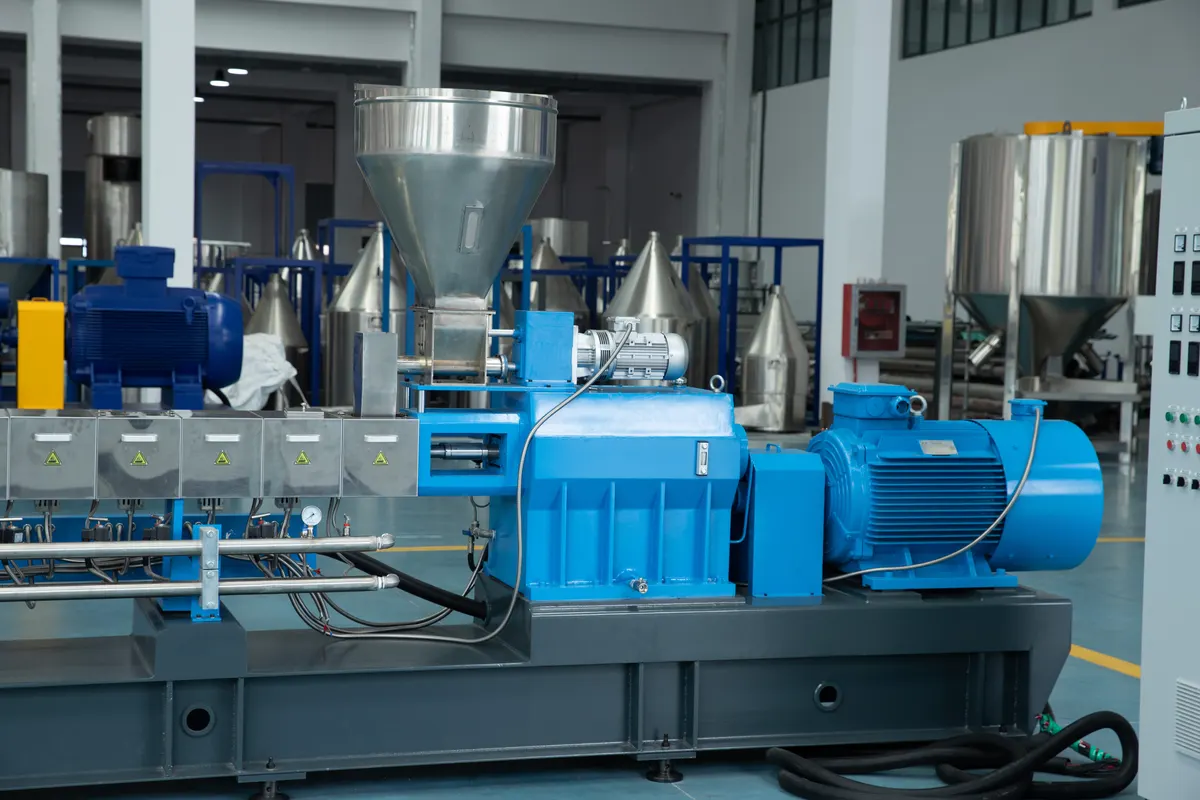
Four lines on the quotation decide the price
Buyers usually compare screw diameter. Diameter is the cheapest thing to compare and the least useful: it fixes the footprint, not the twin screw extruder price.
Torque class
A 65 mm screw exists as KTE-65, 65B and 65D with 2×720, 2×860 and 2×1,530 N·m. The gearbox and shaft step up with it — and so does the twin screw extruder price. Buying the 65 to save money is how a line ends up holding 84% filler instead of 88%.
L/D and barrel length
40D to 52D adds barrel sections, heating zones, a vacuum port and frame length. It buys dispersion and devolatilization; on colour masterbatch it is what separates a 20% pigment dispersion from streaks.
Wear package
CaCO₃ at 85%, talc and glass fibre eat a standard liner. Bimetallic liner plus PM screw elements is a quotation line, not a hidden upgrade — and it is 3–5× the liner life on abrasive duty.
- Extruder, die head and pelletizer in one scope
- Gravimetric feeder and liquid injection where the recipe needs it
- Control cabinet with recipe storage and data logging
- English manual, electrical drawings, spare parts list
- Test-run record from your own material
- Packing, plus loading supervision at the port
What moves the twin screw extruder price — and what it buys
| Driver | Effect on the quote | Effect on the line |
|---|---|---|
| Torque class 2×720 → 2×1,530 N·m | gearbox, shafts, bearings step up | holds 88% filler and high-viscosity melts |
| L/D 40 → 52 | longer barrel, more zones, vacuum | dispersion, devolatilization, colour change |
| Bimetallic liner + PM elements | wear package | 3–5× liner life on CaCO₃, talc, GF |
| Pelletizing: strand / water ring / underwater | die, cutter, water circuit, dryer | pellet shape, fines, downstream feeding |
| Gravimetric dosing + recipe control | weighing, controls | repeatability within ±0.5% |
Reference values, subject to material trial. Final parameters are set on your own material.
Questions buyers ask before the call
Can you send a price by email?
Yes — as a range, once we know the material, the filler or additive level, the target kg/h and the pellet shape required. A single number without those four inputs would be a guess, so we send the twin screw extruder price range with the assumptions written next to it.
Why is a Chinese twin screw cheaper than a European one?
Mostly drive and control hardware, labour cost and the scope of the wear package. We name the gearbox, motor and control hardware in the quotation so the comparison is like for like instead of brand against brand.
What is not included?
Foundation and civil works, installation travel and accommodation, local duties and taxes, and the commissioning material. All four are listed separately so there is no surprise after the deposit.
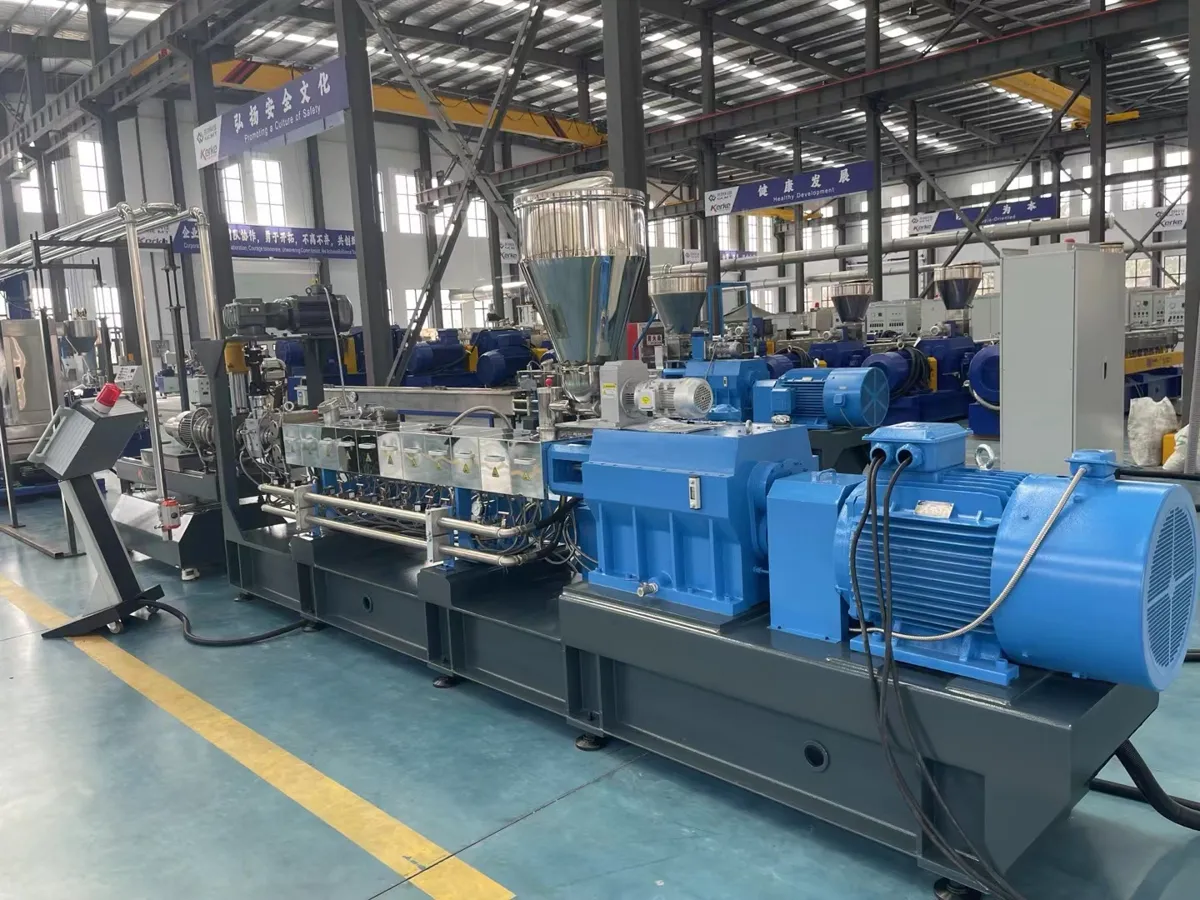
Send four numbers, get a costed configuration
Material, filler or additive level, target kg/h, pellet shape. That is enough for a configuration and a firm twin screw extruder price with the trade-offs written down — usually inside one working day.