PET recycling
PET Recycling Line: hold the IV, not just the output
Water and heat destroy IV. A line that hits its tonnage and loses 0.05 dL/g per pass is not a recycling line, it is a downgrade machine. Drying, screw design and vacuum decide which PET recycling line you bought.
- Flake drying to under 50 ppm moisture before the feed throat
- Low-shear screw geometry with a deep-flighted feed zone
- Melt filtration and vacuum devolatilization sized for flake bulk density
Get a costed configuration
Reply within one working day, in English or Chinese.
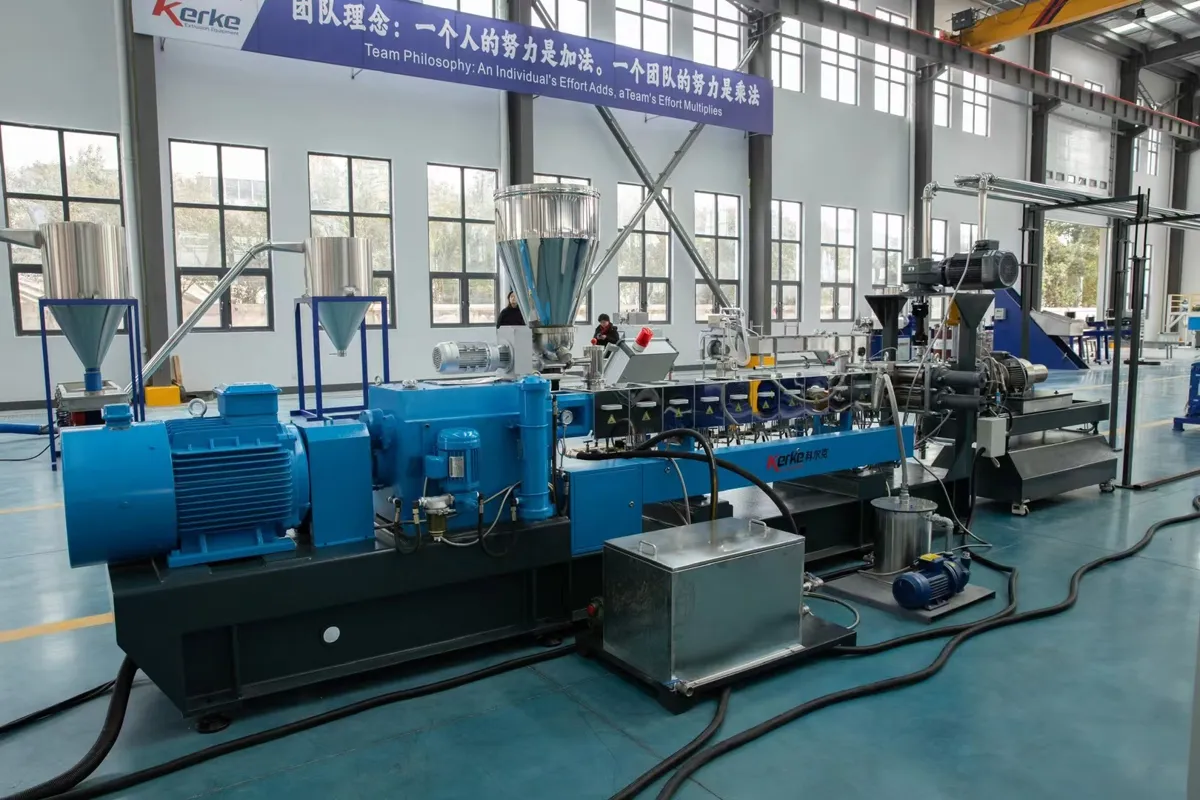
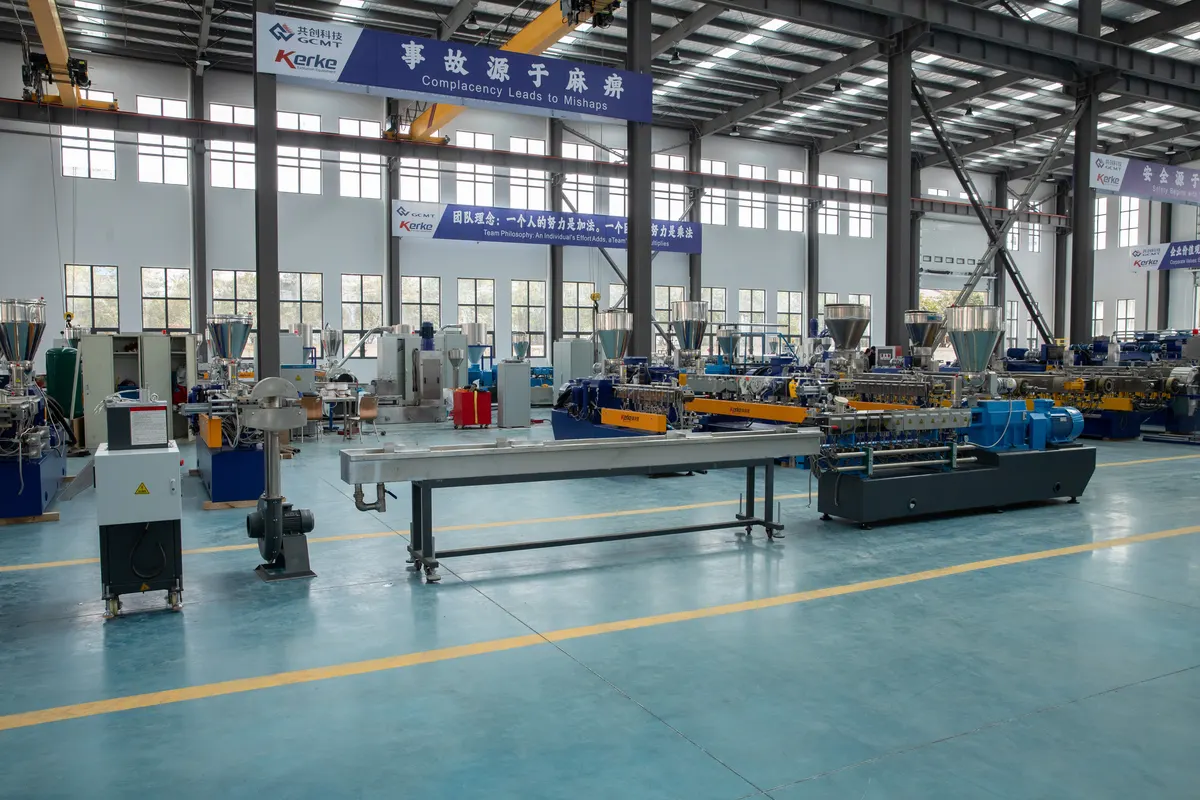
Where IV is lost, and how the line prevents it
Every pass through heat and shear costs viscosity. The line cannot add IV back, so the design target of a PET recycling line is to lose as little as possible per pass.
Moisture first
Hydrolysis starts the moment wet flake meets a hot barrel. Drying to under 50 ppm at 160 °C for 4–6 h is not optional; a hopper dryer sized two sizes too small is the most common cost-cutting mistake on a PET recycling line.
Shear, not just temperature
Deep-flighted feed and a low-shear mixing section keep the melt from over-working. High-shear screw geometry raises output on paper and destroys IV in practice.
Vacuum and filtration
Devolatilization at −0.06 to −0.09 MPa removes the volatiles that cause bubbles and acetaldehyde; filtration catches the paper, caps and PP flakes that arrive with every bale.
- Flake washing and drying duty confirmed
- Screw geometry for low-shear conveying
- Vacuum system and condenser sizing
- Melt filter with automatic screen changer
- Strand or underwater pelletizing for your downstream
- IV test report before and after the trial pass
Reference parameters — PET recycling line
| Parameter | Typical value | Note |
|---|---|---|
| Input | bottle flake, washed, bulk density 250–350 kg/m³ | film and strapping differ |
| Drying | 160 °C × 4–6 h, <50 ppm moisture | before the feed throat |
| Barrel temperature | 270–290 °C | set by IV target |
| Vacuum | −0.06 to −0.09 MPa | devolatilization zone |
| Filtration | 80–200 mesh | by downstream requirement |
| Output | 300–1,500 kg/h | reference, by screw diameter |
Reference values, subject to material trial. Final parameters are set on your own material.
Questions buyers ask before the call
How much IV do you lose per pass?
On washed bottle flake dried to under 50 ppm, a well-configured PET recycling line holds the loss near 0.02 dL/g and below on a single pass. We measure IV before and after the trial and put both numbers in the report instead of a promise.
Can the same line run film or strapping?
Film needs forced feeding and pre-compaction because of bulk density; strapping needs a different die and cooling. It is the same platform with a different feed section, and we quote it that way.
Do you supply the washing line?
We supply the pelletizing line and integrate with your washing line. Send the flake specification and moisture content; the dryer and feed section are sized from those numbers.
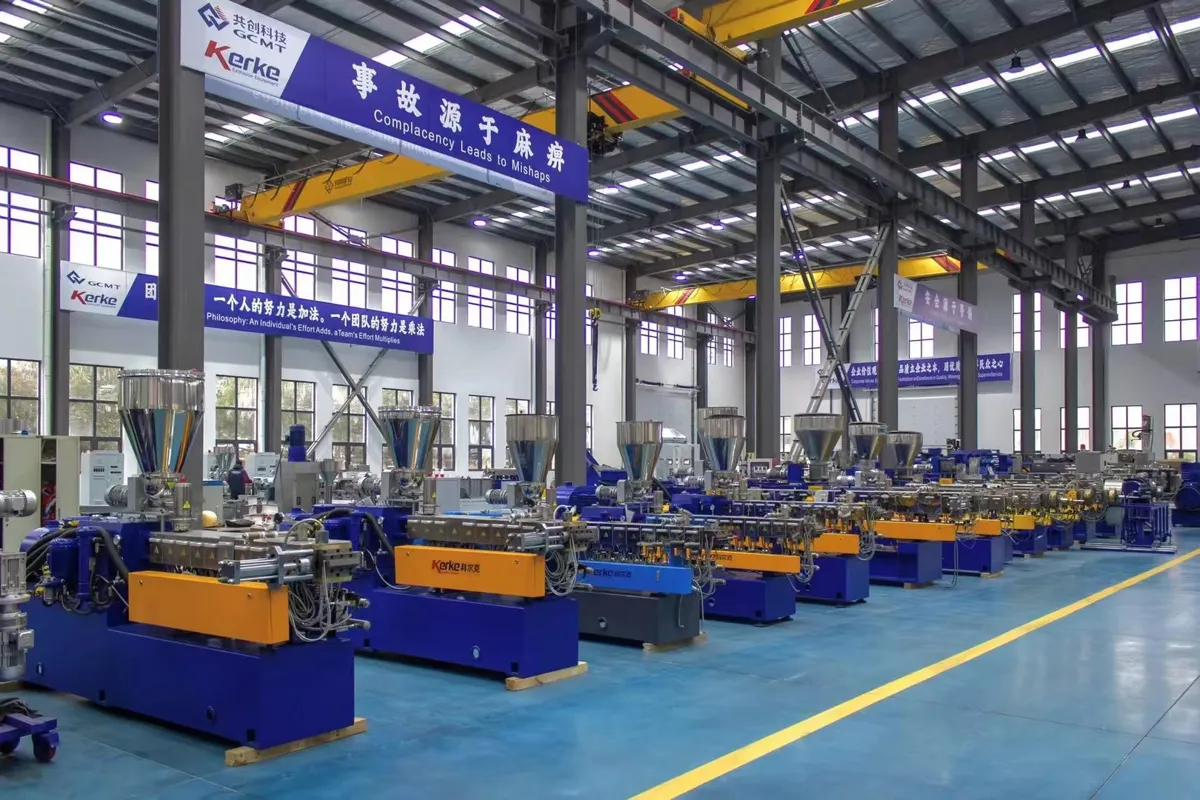
Send 25 kg of flake — get an IV number, not a promise
We run it, measure IV before and after, and send the report with the screw configuration we would quote for your PET recycling line.