
Pelletizing · Underwater Hot Die-Face Pelletizing
Underwater Hot Die-Face Pelletizing: How Kerke Builds It
Knives cutting inside a pressurized water chamber — perfectly round, dense pellets for TPE/TPU, hot melt adhesives, EPP beads and every product where shape is part of the spec.
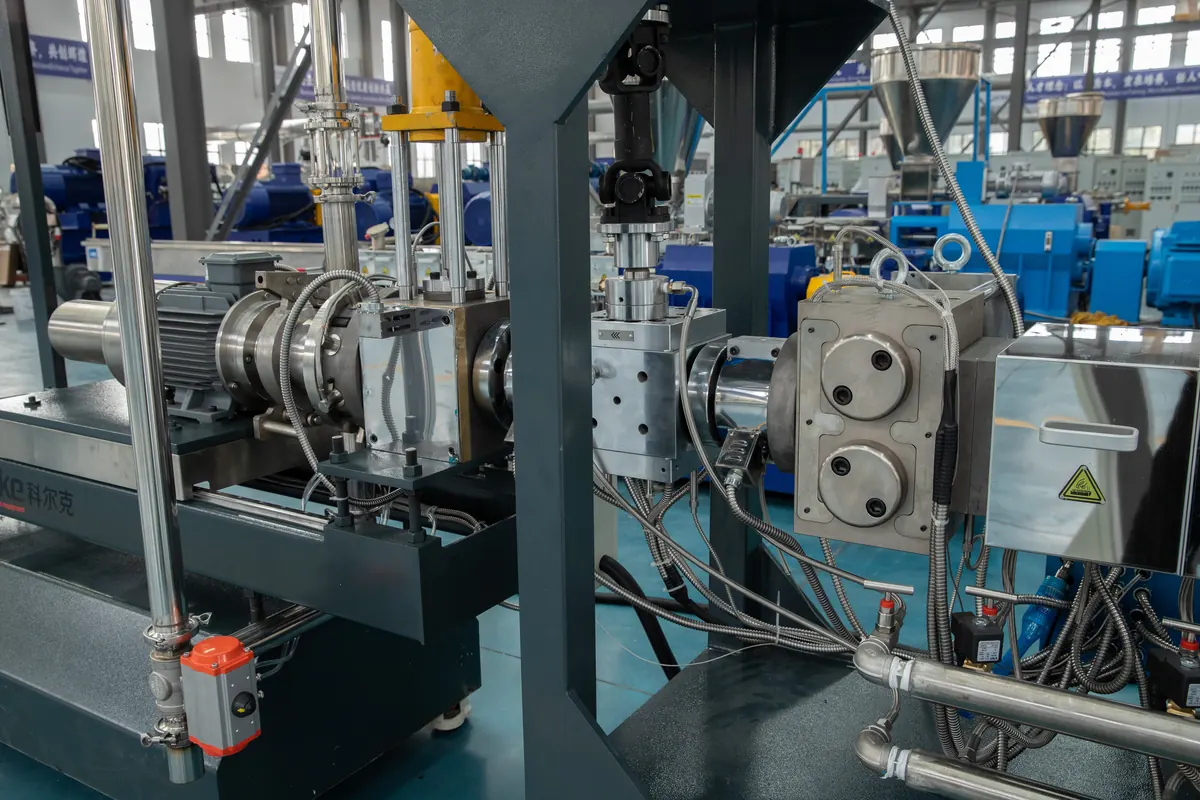 Underwater Hot Die-Face Pelletizing — workshop photo 1, Kerke workshop, Nanjing
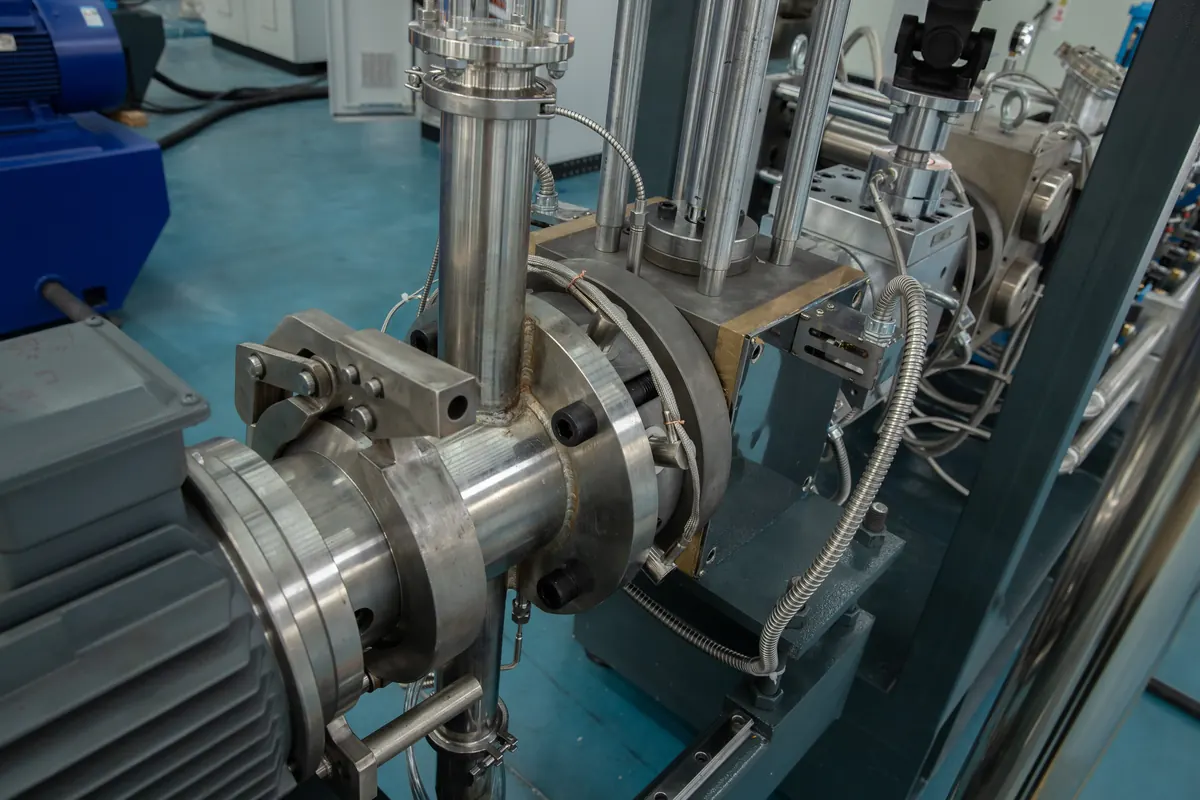 Underwater Hot Die-Face Pelletizing — workshop photo 2, Kerke workshop, Nanjing
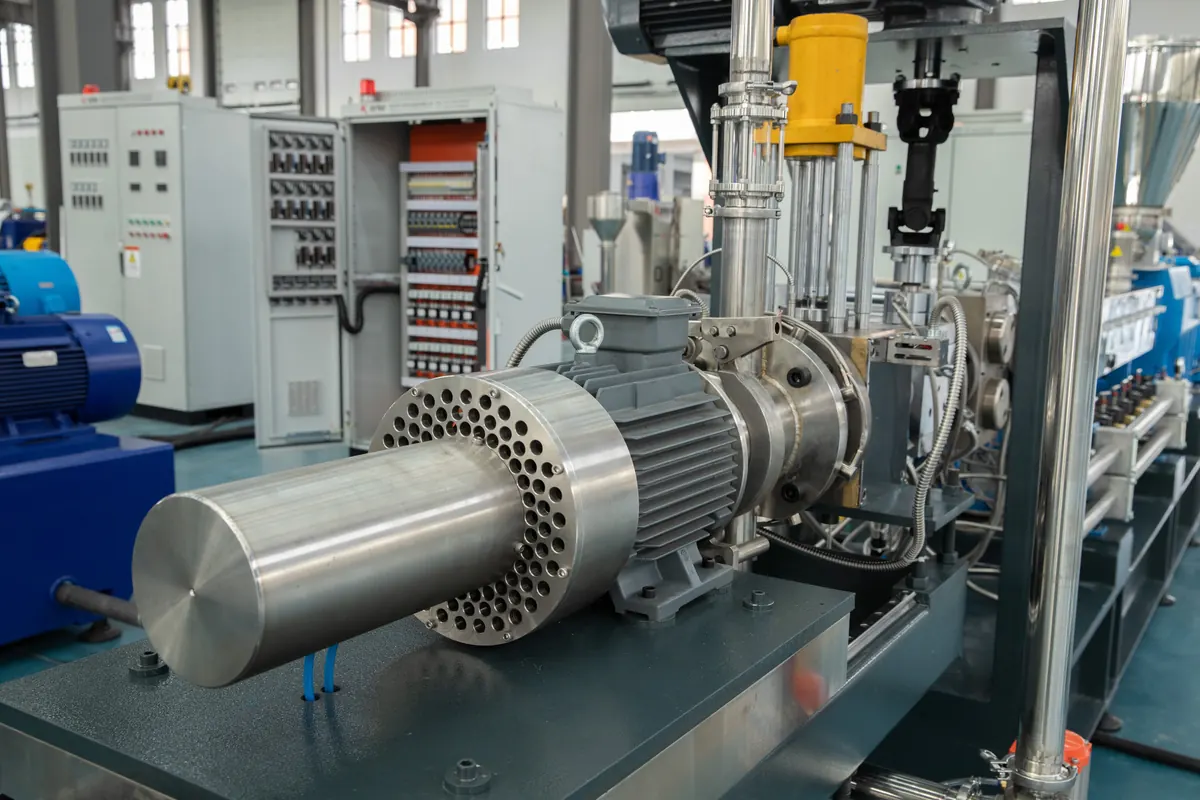 Underwater Hot Die-Face Pelletizing — workshop photo 3, Kerke workshop, Nanjing
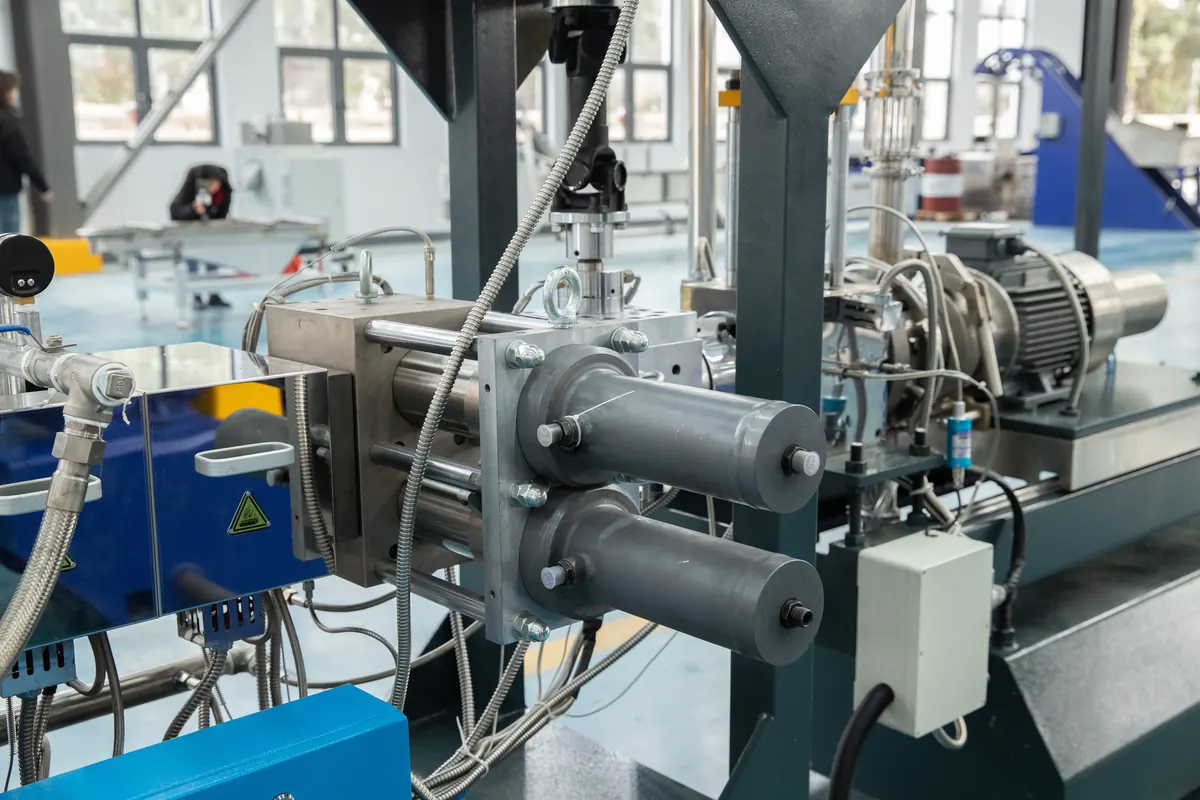 Underwater Hot Die-Face Pelletizing — workshop photo 4, Kerke workshop, Nanjing
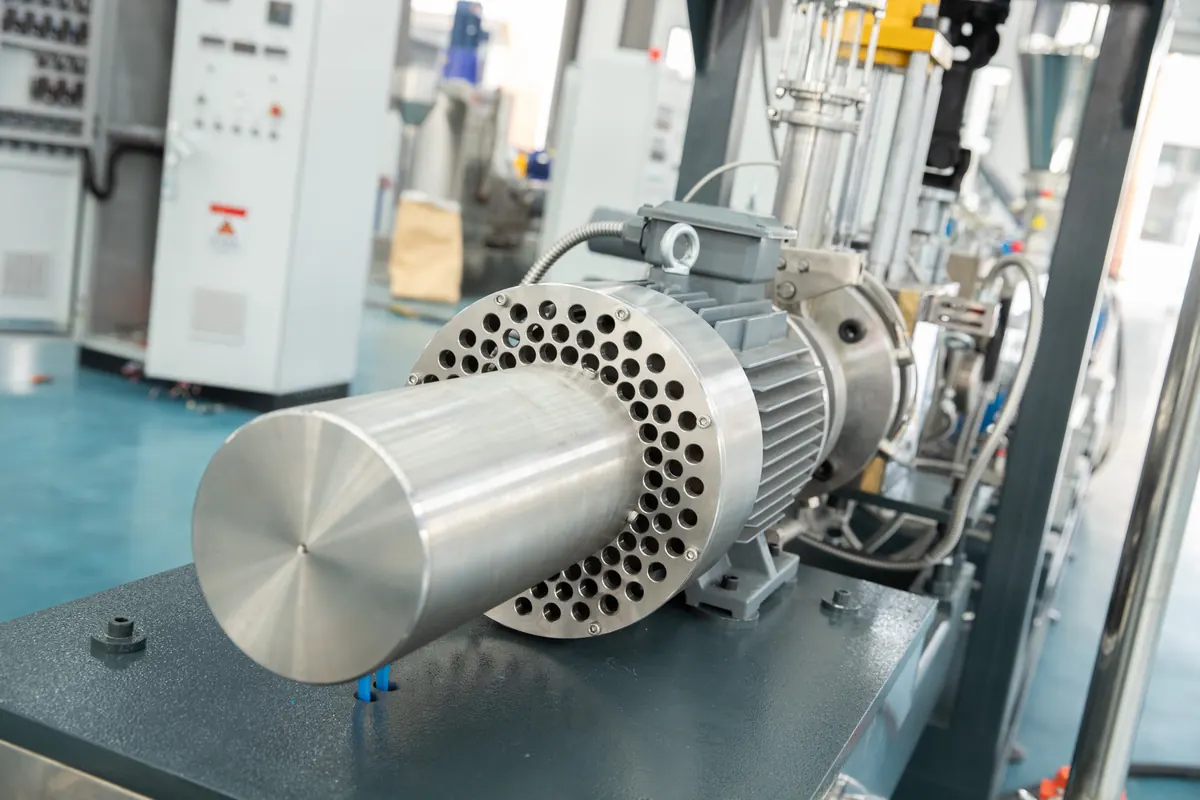 Underwater Hot Die-Face Pelletizing — workshop photo 5, Kerke workshop, Nanjing
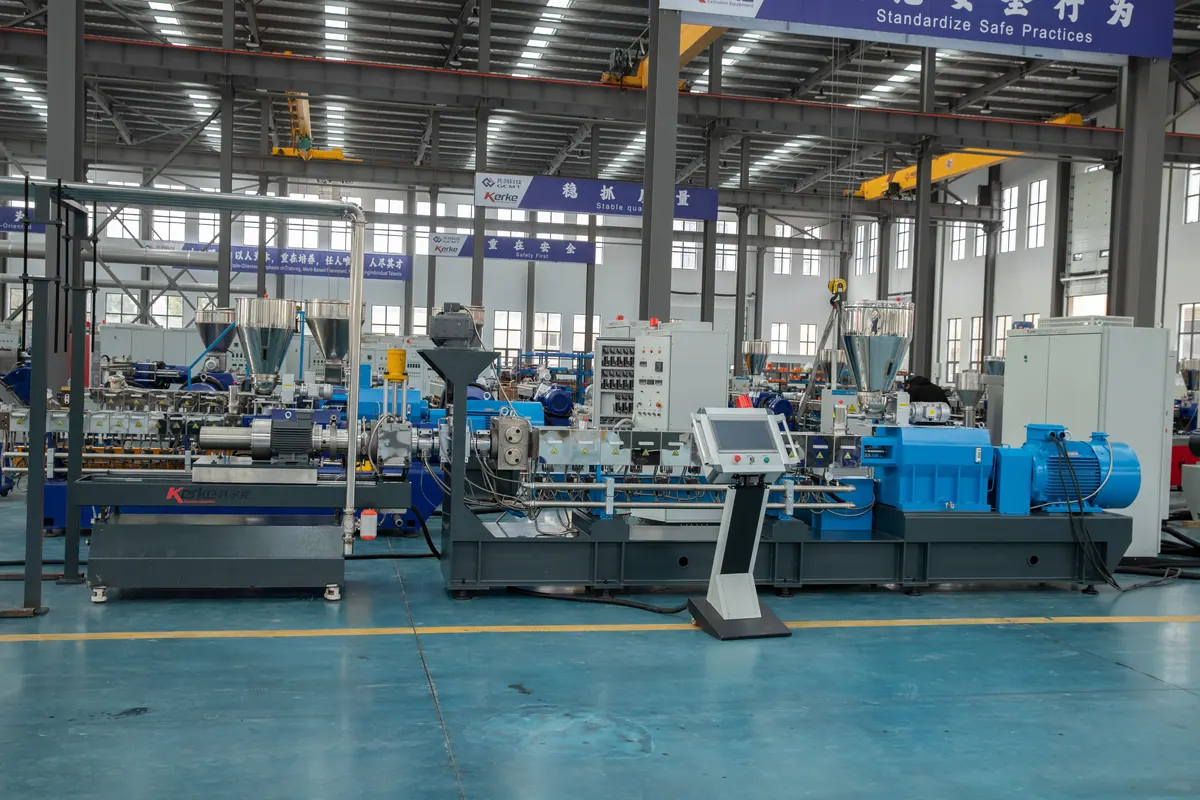 Underwater Hot Die-Face Pelletizing — workshop photo 6, Kerke workshop, Nanjing
Quick answer
Underwater pelletizing cuts the melt at the die face inside a flooded, pressurized chamber. Pellets are round, dense and dust-free straight out of the water — the required shape for TPE/TPU, hot melt adhesives, EPP expandable beads and spun-grade or foam-grade polymers where irregular pellets would feed unevenly.
Workshop photos — shot on our own lines in Nanjing, not stock images.
How the underwater hot die-face pelletizing line works
- Melt enters a circular die plate inside the water-filled cutting chamber.
- Rotating hub knives cut pellets flush at the die face under water pressure.
- Chamber water flow carries pellets up the discharge pipe to a dewatering screen.
- Centrifugal drying brings surface moisture below 0.2%.
- Start-up is automated: chamber pre-heating and a scrap diversion sequence prevent die freeze-off.
Where this method wins
Underwater wins where pellet geometry is functional: EPP beads must be round to roll evenly in moulds; hot melt adhesives must flow; TPE/TPU blocks when strand-cut because the material is tacky; and spinning or foaming grades need dust-free round pellets. The costs are a more complex start-up and higher maintenance skill — we automate both.
Reference data
| Item | Value |
|---|---|
| Best for | TPE/TPU, hot melt adhesive, EPP beads, round-pellet polymers |
| Output range | 200–2,000 kg/h |
| Pellet shape | Round, dense, dust-free |
| Watch out | Water temperature and flow, die freeze-off at start-up |
Reference output measured on the stated material family; subject to a material trial. Die hole count sets the capacity ceiling — check the die, not the label.
Selection notes from our floor
Water temperature inside the chamber is material-specific — TPU wants warm water so pellets do not freeze into tails, EPP wants cold water for bead stability. Our standard control loop holds chamber water within ±2 °C and sequences the start-up so the die never sees stagnant water.
FAQ
Why must TPE be underwater?
TPE and TPU stay tacky after the die. On strands they glue to guides and to each other; cut underwater, the surface sets instantly and pellets leave as individual beads.
What happens on an unplanned stop?
Without the start-up sequence, melt in the die holes freezes and blocks them. Our lines divert scrap and keep water circulating during stops, so a restart takes minutes, not hours.
Can one underwater line serve EPP and TPU?
Yes with a changeover kit: die plate, knife speed and water temperature are the change items. Plan half a day including purging.
Where these numbers come from
Output ranges, pellet shapes and watch-outs come from Kerke commissioning records and the pelletizing systems parameter table. Where a catalogue value and a trial value disagree, the trial value is the one we quote.
Reviewed by the Kerke process team, Nanjing. Page updated 11 November 2026.
Send 25–50 kg — we return pellets, a video and a report with the parameters we used, in 3–7 days.
Underwater Hot Die-Face Pelletizing — the short version
Underwater cutting delivers spherical, dust-free pellets for TPE, TPU, hot-melt adhesives and EPP beads — the premium choice when pellet appearance and flowability matter, at the cost of a more demanding start-up procedure.
Related on this site: Pelletizing systems (all 7 methods) · Pelletizing methods compared · free extrusion line quotation