
Pelletizing · Air-Cooled Hot Die-Face Pelletizing
Air-Cooled Hot Die-Face Pelletizing: How Kerke Builds It
Pellets cut hot at the die face and cooled by air alone — no water anywhere. The only method that works for PVC, HFFR/LSZH cable compounds, XLPE and WPC.
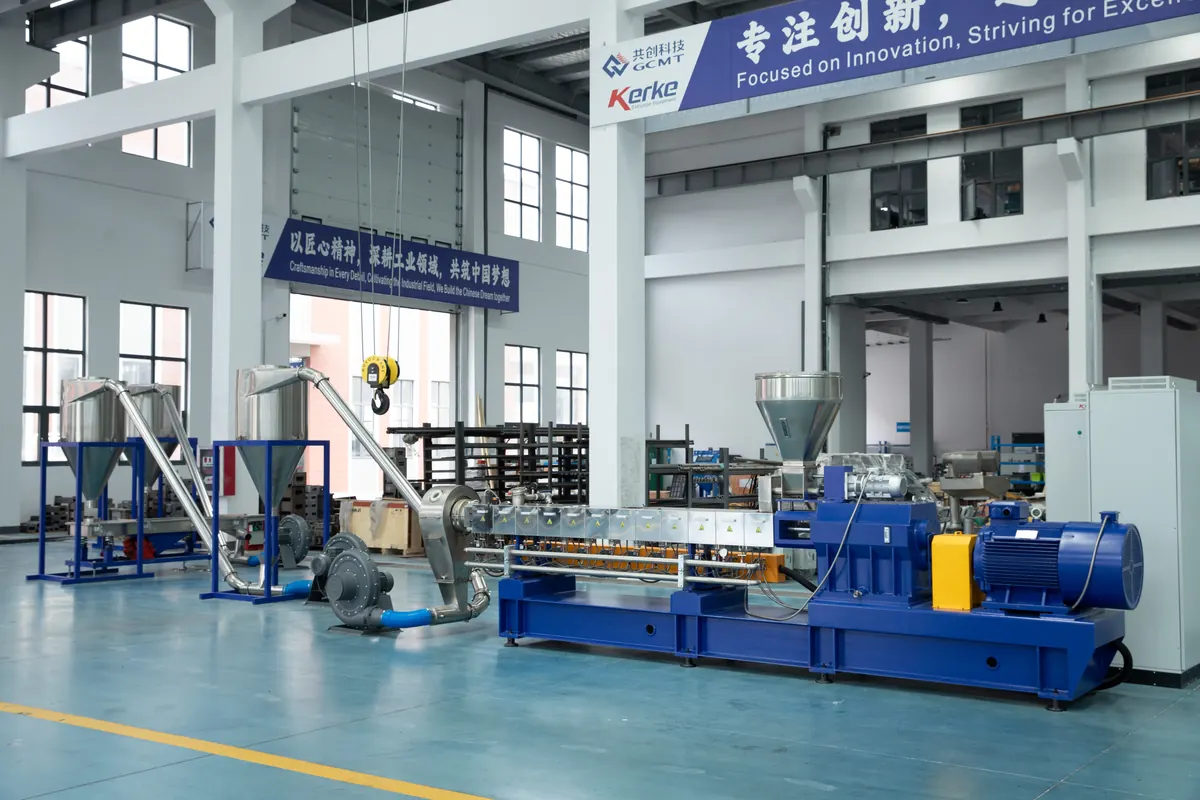 Air-Cooled Hot Die-Face Pelletizing — workshop photo 1, Kerke workshop, Nanjing
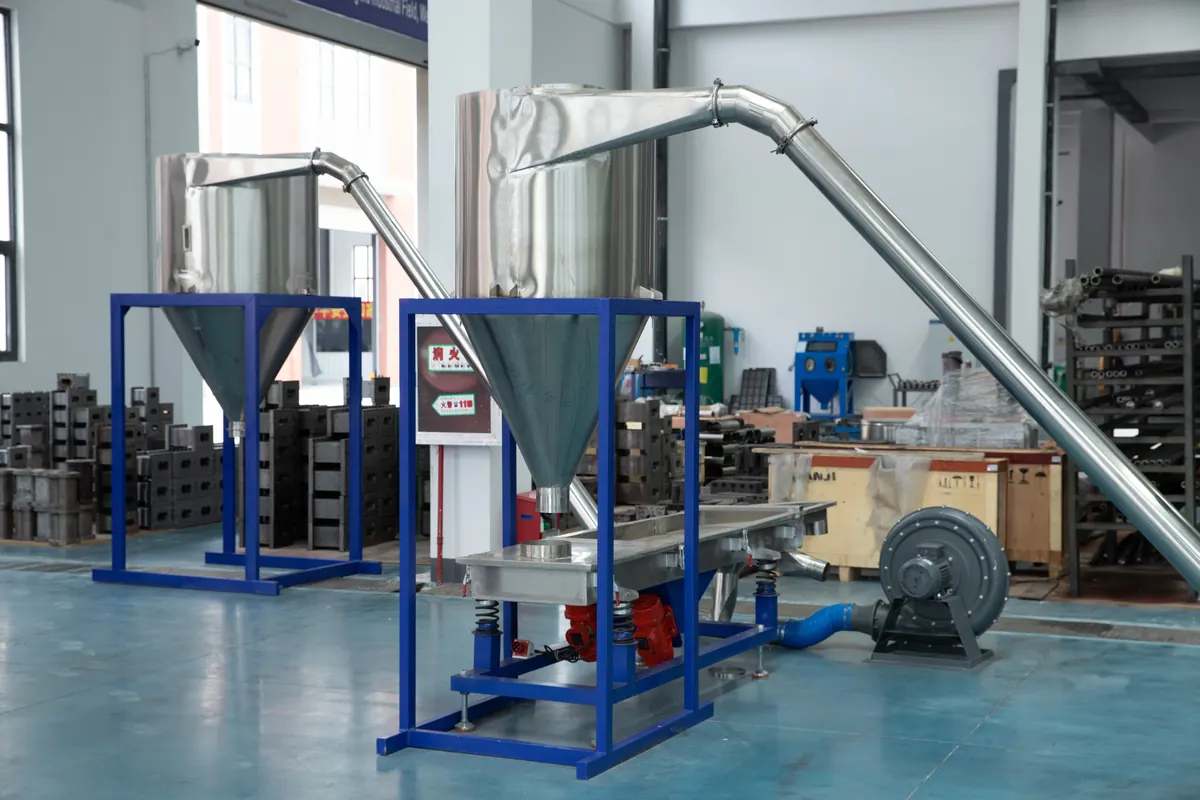 Air-Cooled Hot Die-Face Pelletizing — workshop photo 2, Kerke workshop, Nanjing
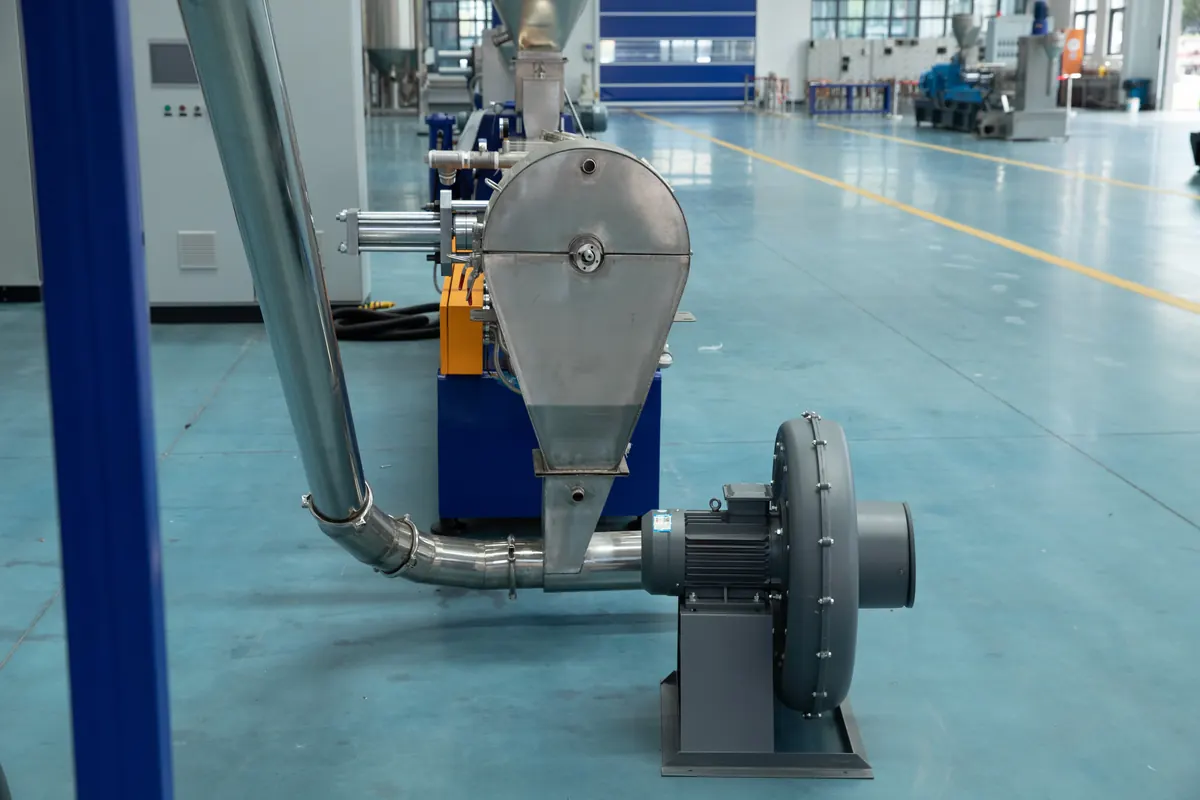 Air-Cooled Hot Die-Face Pelletizing — workshop photo 3, Kerke workshop, Nanjing
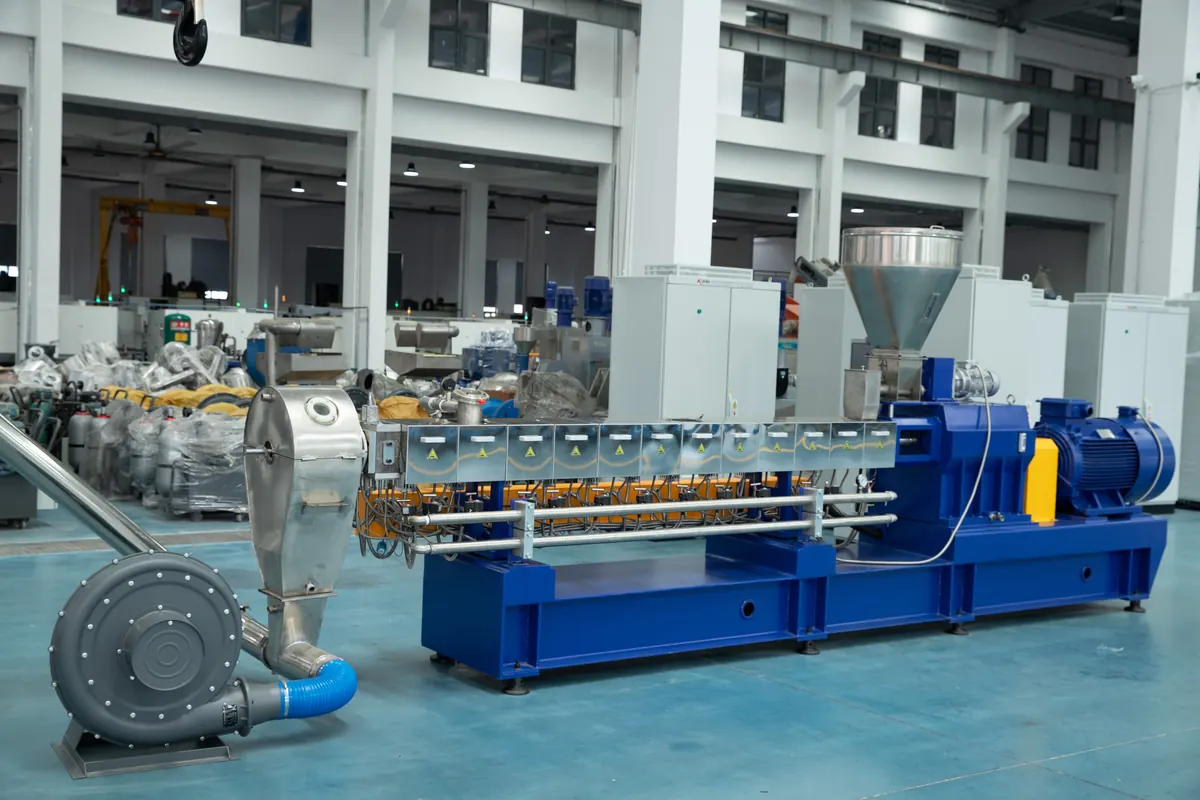 Air-Cooled Hot Die-Face Pelletizing — workshop photo 4, Kerke workshop, Nanjing
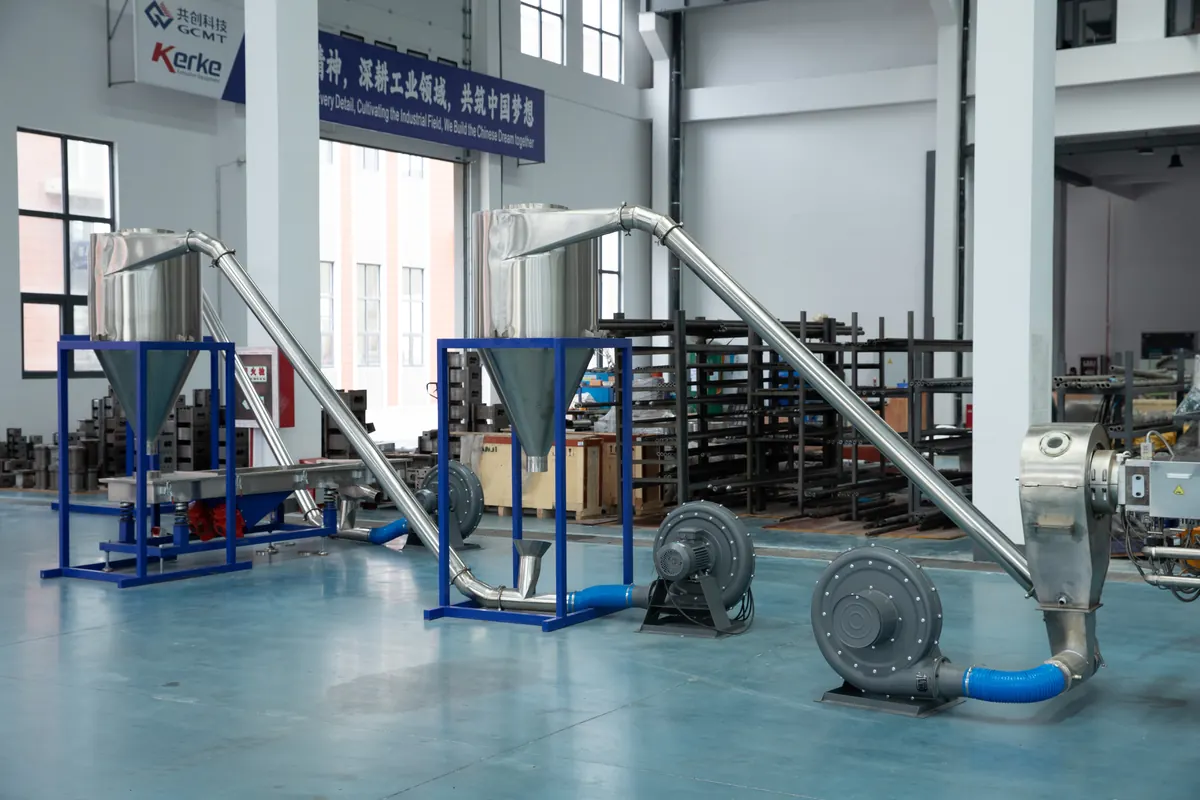 Air-Cooled Hot Die-Face Pelletizing — workshop photo 5, Kerke workshop, Nanjing
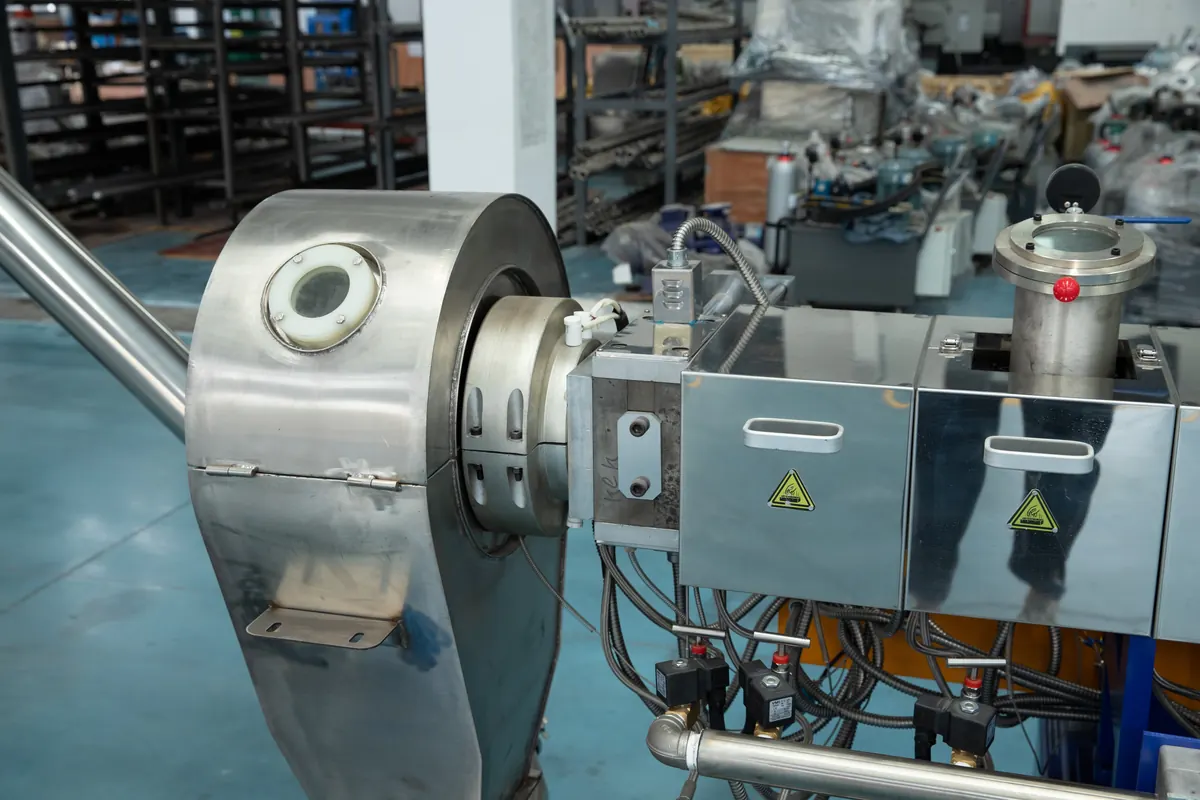 Air-Cooled Hot Die-Face Pelletizing — workshop photo 6, Kerke workshop, Nanjing
Quick answer
Air-cooled hot die-face pelletizing cuts pellets at the die face into a moving air stream. With zero water contact it is the mandatory method for PVC, HFFR/LSZH and XLPE cable compounds, WPC and anything where a drop of water means black specks, voids or hydrolyzed polymer.
Workshop photos — shot on our own lines in Nanjing, not stock images.
How the air-cooled hot die-face pelletizing line works
- Melt exits a hot die plate designed for the compound's viscosity.
- Knives cut at the die face; pellets are caught by a ring of process air.
- Pellets travel a short air-cooling duct or vortex cooler to set their surface.
- A screener separates fines and oversize tails.
- Pellets drop dry into bagging or silo conveying — no drying stage needed.
Where this method wins
Air-cooled hot face is the cable and profile compounder's method: PVC dry blends, HFFR/LSZH with 50–60% ATH/MDH, cross-linkable XLPE grafts, WPC with wood flour, and any moisture-sensitive engineering compound. Pellets are irregular with lower bulk density than water-cut pellets — acceptable in extrusion, but worth knowing if your feeder is volumetric.
Reference data
| Item | Value |
|---|---|
| Best for | PVC, HFFR/LSZH, XLPE, WPC, moisture-sensitive compounds |
| Output range | 100–1,500 kg/h |
| Pellet shape | Irregular, low bulk density, completely dry |
| Watch out | Air flow uniformity, dust, pellet shape variation |
Reference output measured on the stated material family; subject to a material trial. Die hole count sets the capacity ceiling — check the die, not the label.
Selection notes from our floor
Uniform air flow is the whole game. Dead spots let hot pellets fuse; excess velocity makes dust. We tune duct velocity per compound on trial and ship the screener sized for the real fines rate — usually 0.2–0.5%. For XLPE graft compounds, oxygen exposure time is minimised by short ducts.
FAQ
Why can't PVC go through water cooling?
PVC absorbs and traps moisture and can blow voids in the next extrusion; hot PVC hitting water also shocks the surface. Air cooling keeps the pellet completely dry — this is why every PVC pelletizing line we build is air-cooled.
Are irregular pellets a problem for feeding?
For gravimetric feeding, no — weight is weight. For volumetric dosing, bulk density variation shows up as output drift; we then recommend a densifying die plate or gravimetric feeders.
What output can air cooling realistically reach?
1,500 kg/h is practical for PVC dry blend. Beyond that the air volume becomes uneconomic — a water ring line takes over above roughly 2,000 kg/h where water is allowed.
Where these numbers come from
Output ranges, pellet shapes and watch-outs come from Kerke commissioning records and the pelletizing systems parameter table. Where a catalogue value and a trial value disagree, the trial value is the one we quote.
Reviewed by the Kerke process team, Nanjing. Page updated 11 November 2026.
Send 25–50 kg — we return pellets, a video and a report with the parameters we used, in 3–7 days.
Air-Cooled Hot Die-Face Pelletizing — the short version
Air-cooled hot die-face is the standard for PVC, WPC and cable compounds: pellets cool on a vibrating air conveyor, never touch water, and go straight to silos or bagging.
Related on this site: Pelletizing systems (all 7 methods) · Pelletizing methods compared · free extrusion line quotation