
Model · Lab & pilot twin screw
KTE-16 Lab Twin Screw Extruder
The KTE-16 lab twin screw extruder: 15.6 mm, 1–5 kg/h — the smallest co-rotating screw we build, for formulation screening on grams, not kilos.
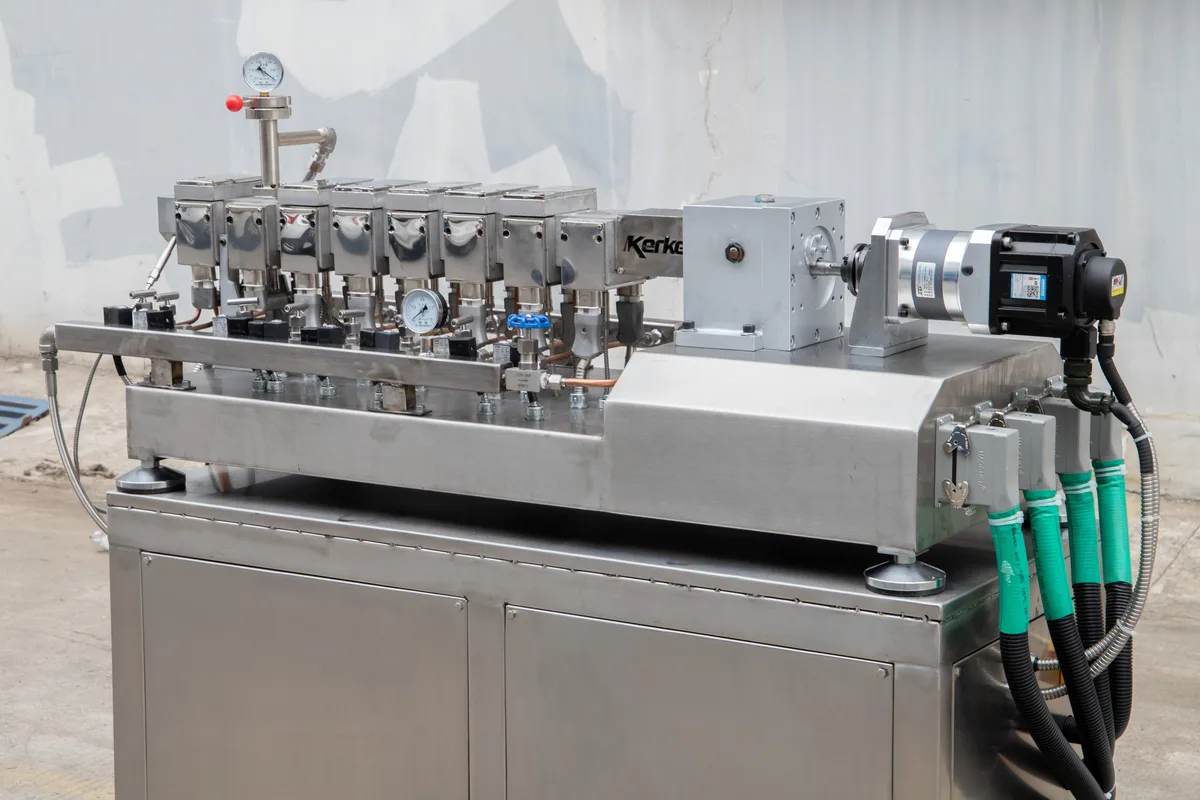 KTE-16 lab twin screw extruder — workshop photo 1, Kerke workshop, Nanjing
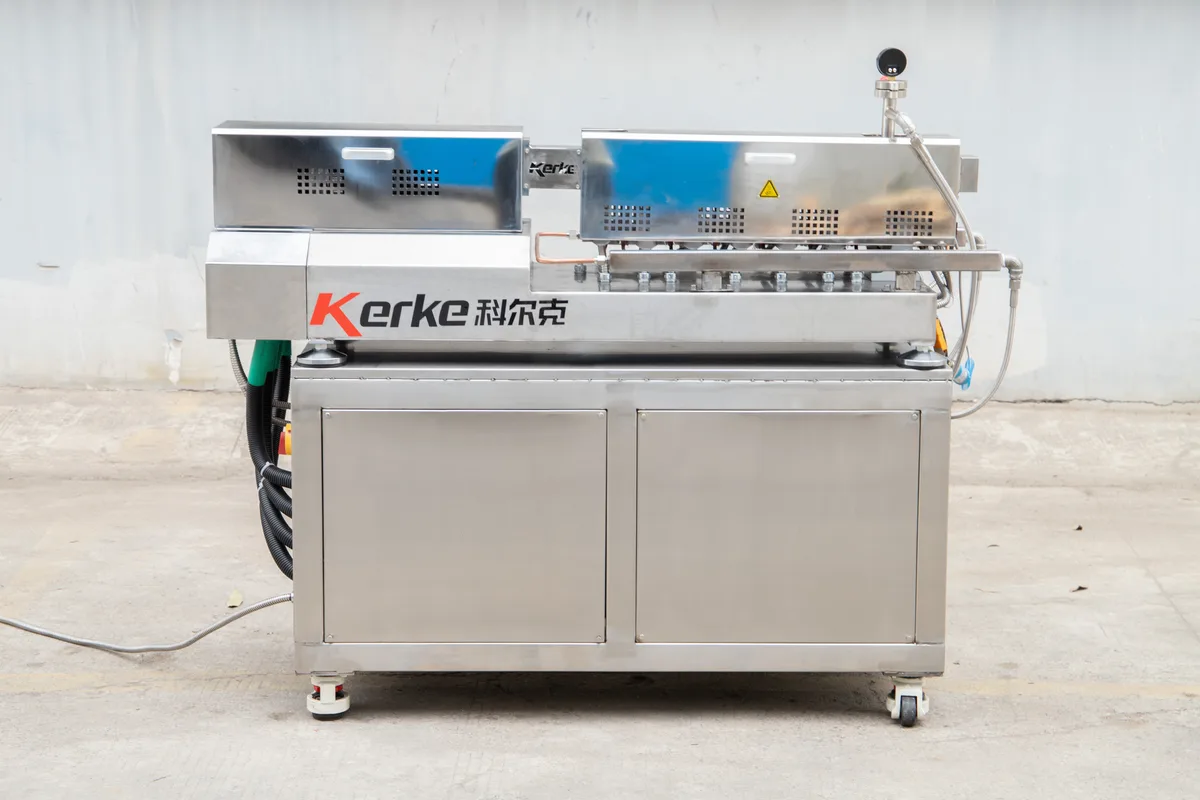 Lab & pilot twin screw — workshop photo 2, Kerke workshop, Nanjing
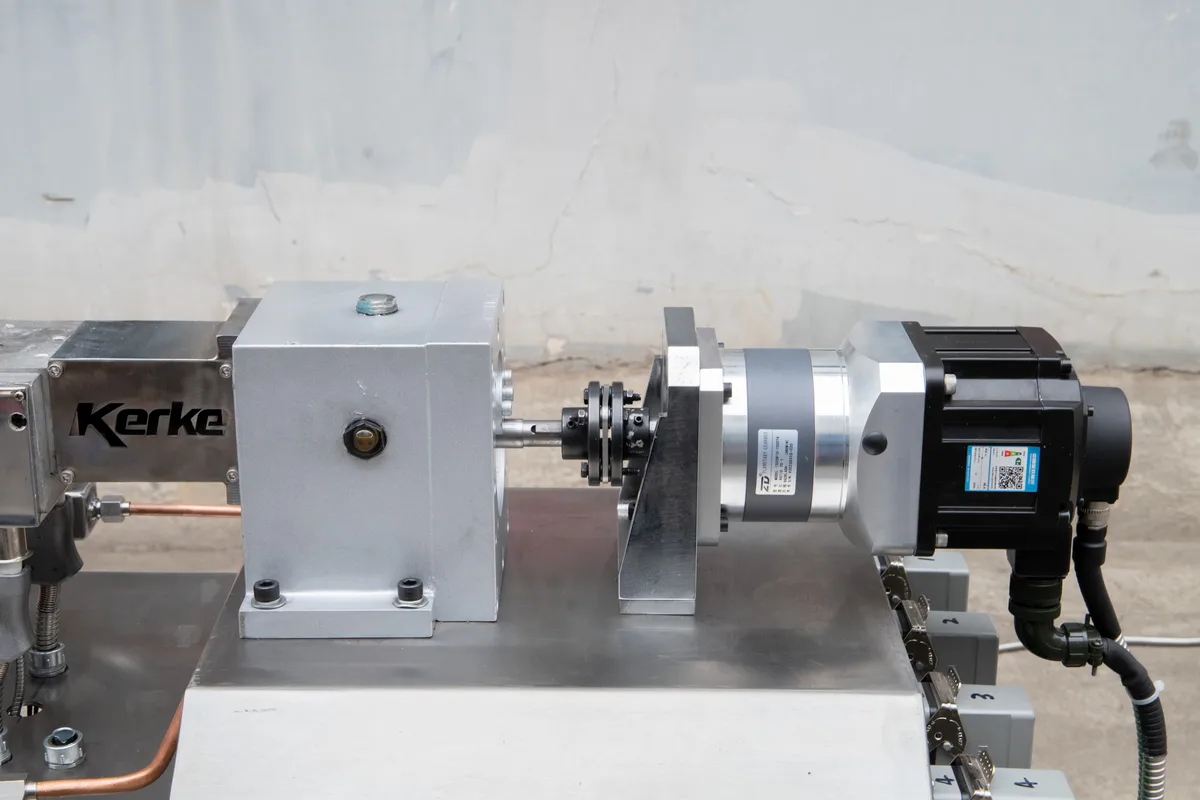 Lab & pilot twin screw — workshop photo 3, Kerke workshop, Nanjing
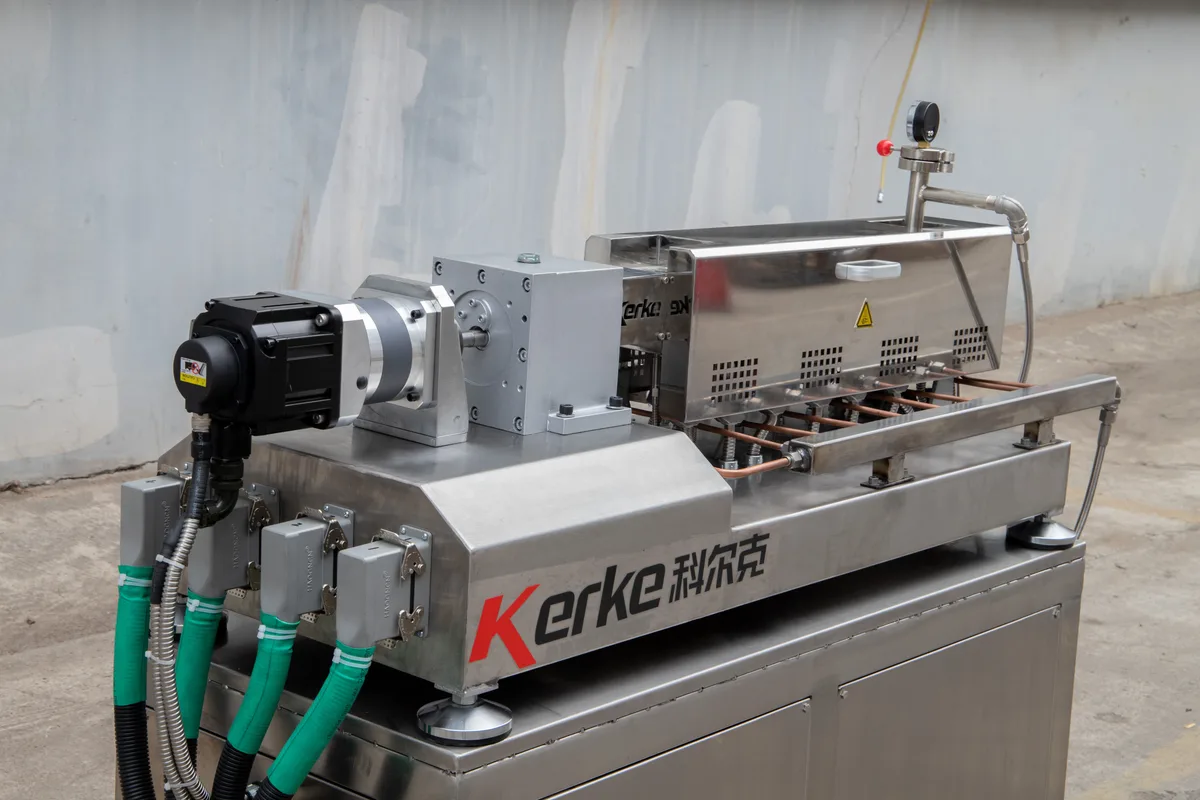 Lab & pilot twin screw — workshop photo 4, Kerke workshop, Nanjing
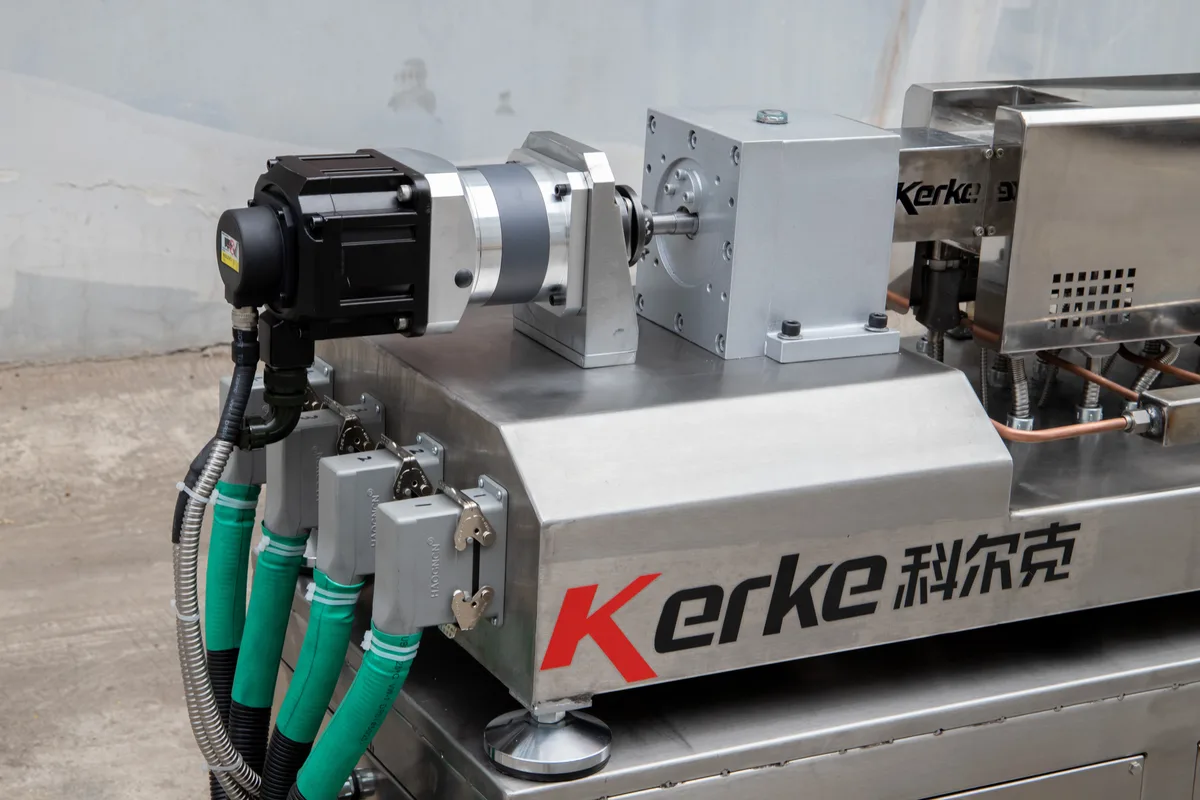 Lab & pilot twin screw — workshop photo 5, Kerke workshop, Nanjing
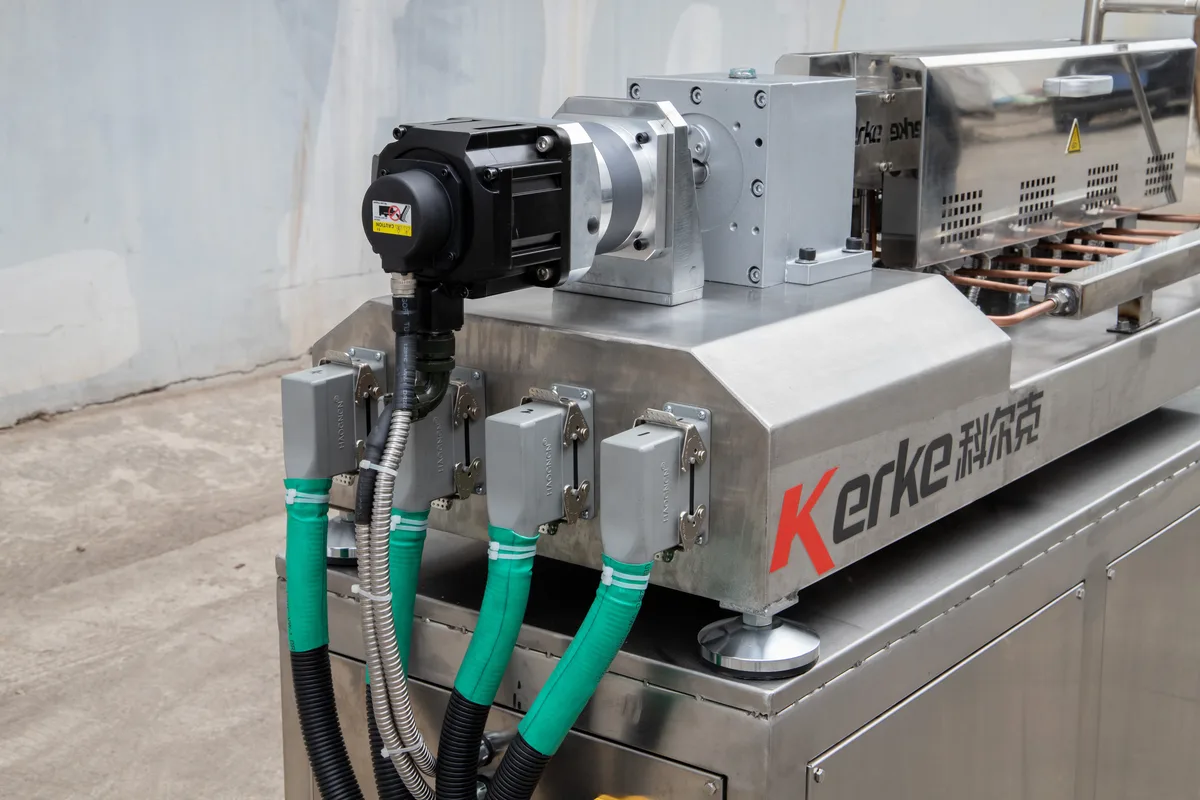 Lab & pilot twin screw — workshop photo 6, Kerke workshop, Nanjing
Quick answer
The KTE-16 is the floor of the platform: 15.6 mm screw, 2.2 kW, 2×18 N·m, 1–5 kg/h. It exists for screening expensive formulations — additives, pigments, medical and food-grade premixes — where 25 kg of material is the whole budget.
Workshop photos and a running video — shot on our own lines, not stock images.
Parameters
| Model | Screw dia. (mm) | Speed (rpm) | Motor (kW) | Torque (N·m) | Output (kg/h) |
|---|---|---|---|---|---|
| KTE-16 | 15.6 | 500 | 2.2 | 2×18 | 1–5 |
Reference output measured on the stated material family; subject to a material trial. Motor and torque values are per machine, not per screw shaft.
Where it fits in the range
Bottom of the lab ladder: the KTE-20B (2–15 kg/h) and KTE-25D (5–20 kg/h) follow, up to the KTE-36B/KTE-36D pilot class. The 16 shares the building-block element system, so a recipe proven here moves up without translation.
What it runs
Duties: additive and pigment screening, university teaching labs, pharmaceutical and food-grade premix trials, and small rheology sample production.
Filler Masterbatch Extruder Line
Filler masterbatch is sold by the tonne, so the line is judged on two numbers only: how much powder it can swallow, an…
Color Masterbatch Extruder Line
Colour masterbatch is a dispersion business with a cleaning problem attached: the same line has to make 20% pigment di…
Configuration options
Lab models share the building-block platform of the production range, so a screw set validated on a KTE-16 translates upward. Options: transparent or split barrel for teaching, torque and melt-pressure logging to CSV for R&D records, strand or water-ring pelletizing at this scale, and a quick-change element kit so one machine serves several formulations in a day.
Lab work at Kerke follows the same discipline as production: every run is logged with barrel temperatures, screw speed, feeder setting and output, so the report you receive is a record, not an impression. A typical screening week covers five to ten configurations; a full pilot campaign — trial, re-run, scale-up note — fits in two, and the scale-up note travels with the recipe to whichever production KTE the duty lands on.
FAQ
Can 1–5 kg/h produce usable pellets?
Yes — strand pelletizing at this scale is slower, not different: the pellets are real, and they go into the same MFI, DSC and colour tests as production samples.
What material quantity does a screening session need?
100–500 g per configuration in most cases. That is the KTE-16's reason to exist: answering questions while the material budget is still small.
Does the KTE-16 use production-type elements?
Scaled versions of the same building-block system — kneading blocks, conveying elements, reverse elements — so geometry learnings translate to the 20/36 and production classes.
Where these numbers come from
Parameters come from the Kerke parameter table and product master data sheet, cross-checked against commissioning records for the same model and duty. Where a catalogue value and a trial value disagree, the trial value is the one we quote.
Reviewed by the Kerke process team, Nanjing. Page updated 6 November 2026.
Send 25–50 kg — we return pellets, a video and a report with the parameters we used, in 3–7 days.
KTE-16 lab twin screw extruder — the short version
Note on KTE-16 lab twin screw extruder: what separates one machine from another is torque class, L/D and the wear package matched to your material, not the build standard. Shortlist from the tables, then confirm the choice on a trial with your own powder.
Planning an upgrade this quarter? Send the material and the target output — the configuration comes back within one working day.
Every quotation lists the wear package as a separate line, so its cost is visible from day one.
Questions are answered the same day, in English or Chinese.
Note on KTE-16 lab twin screw extruder: the data on this page was last verified on our own test line in Nanjing.
Not sure which KTE-16 lab twin screw extruder configuration fits? Describe the material and the pellet shape required — we answer with a recommendation, not a brochure.
A KTE-16 lab twin screw extruder from Kerke ships with CE documentation, a test-run record and a recommended spare set.
Related on this site: Extrusion lines by application · Extruder selection guide · free extrusion line quotation · Wikipedia: Twin-screw extruder