
Model · Lab & pilot twin screw
KTE-20B Lab Twin Screw Extruder
The KTE-20B lab twin screw extruder is our trial-bench standard: 21.7 mm, 2–15 kg/h — the machine behind every free material trial we run.
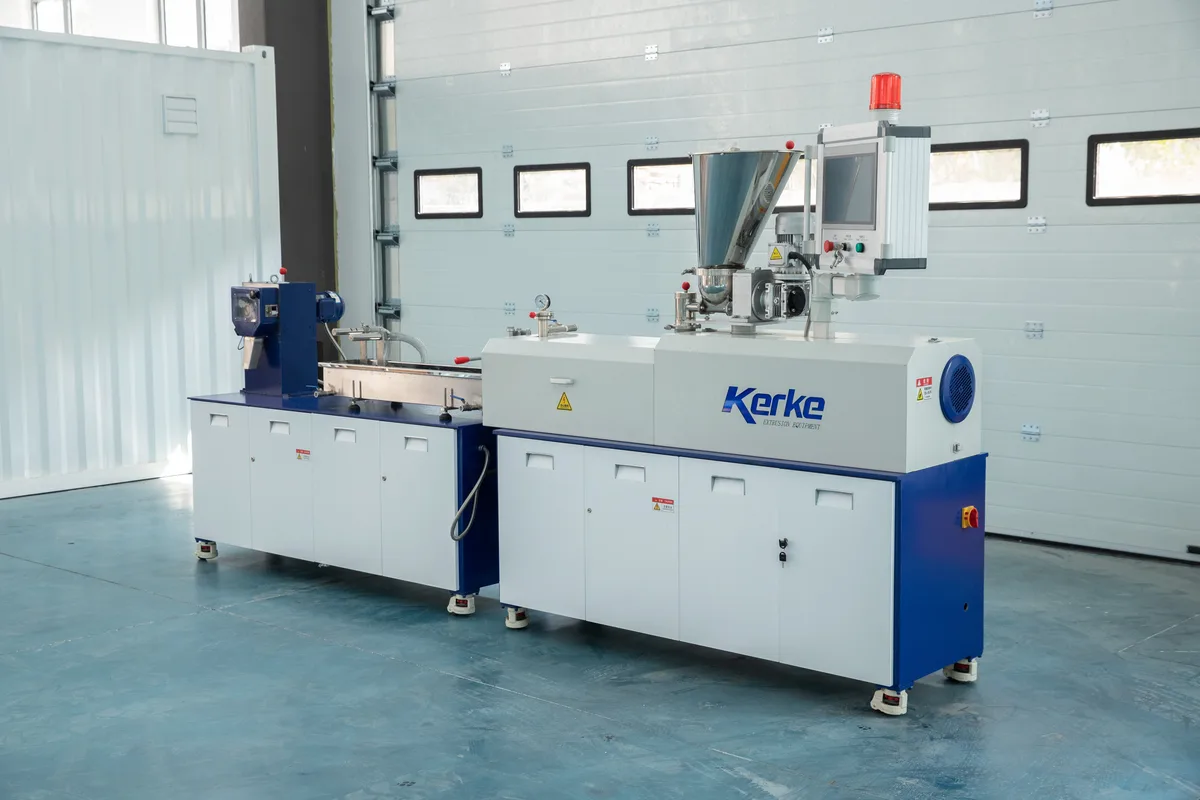 KTE-20B lab twin screw extruder — workshop photo 1, Kerke workshop, Nanjing
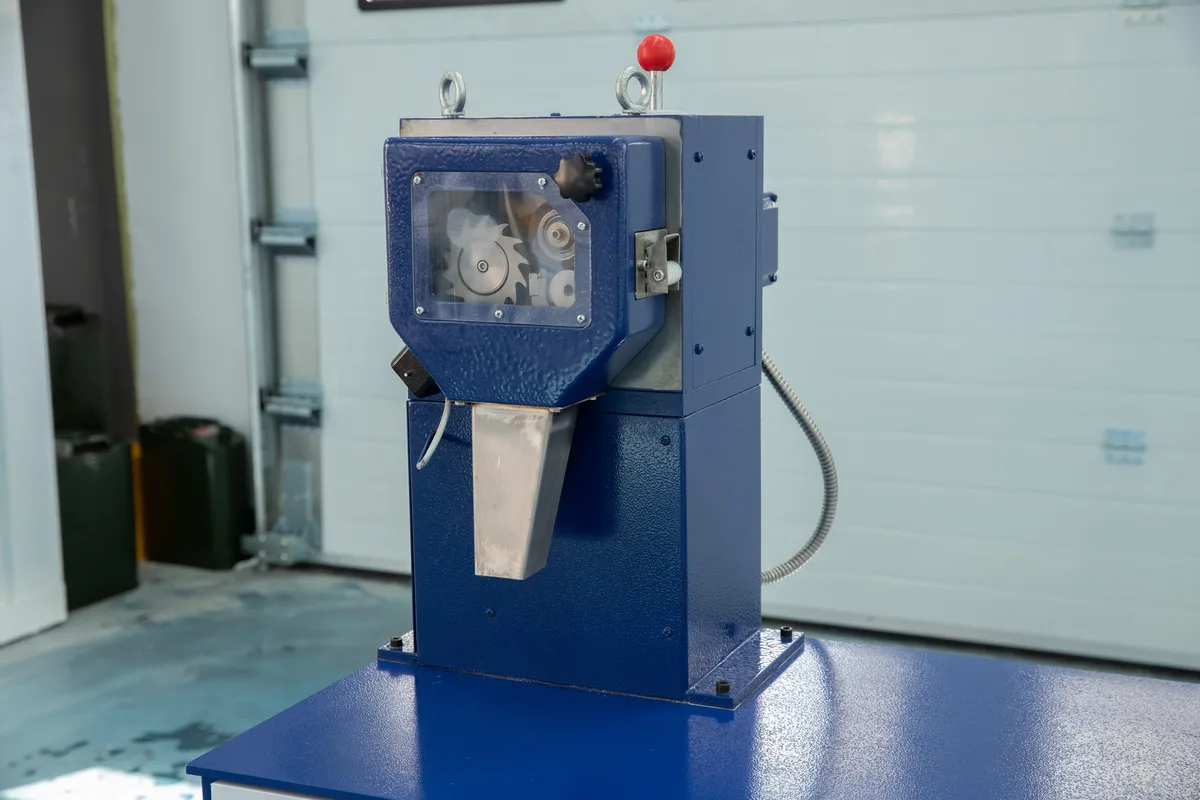 Lab & pilot twin screw — workshop photo 2, Kerke workshop, Nanjing
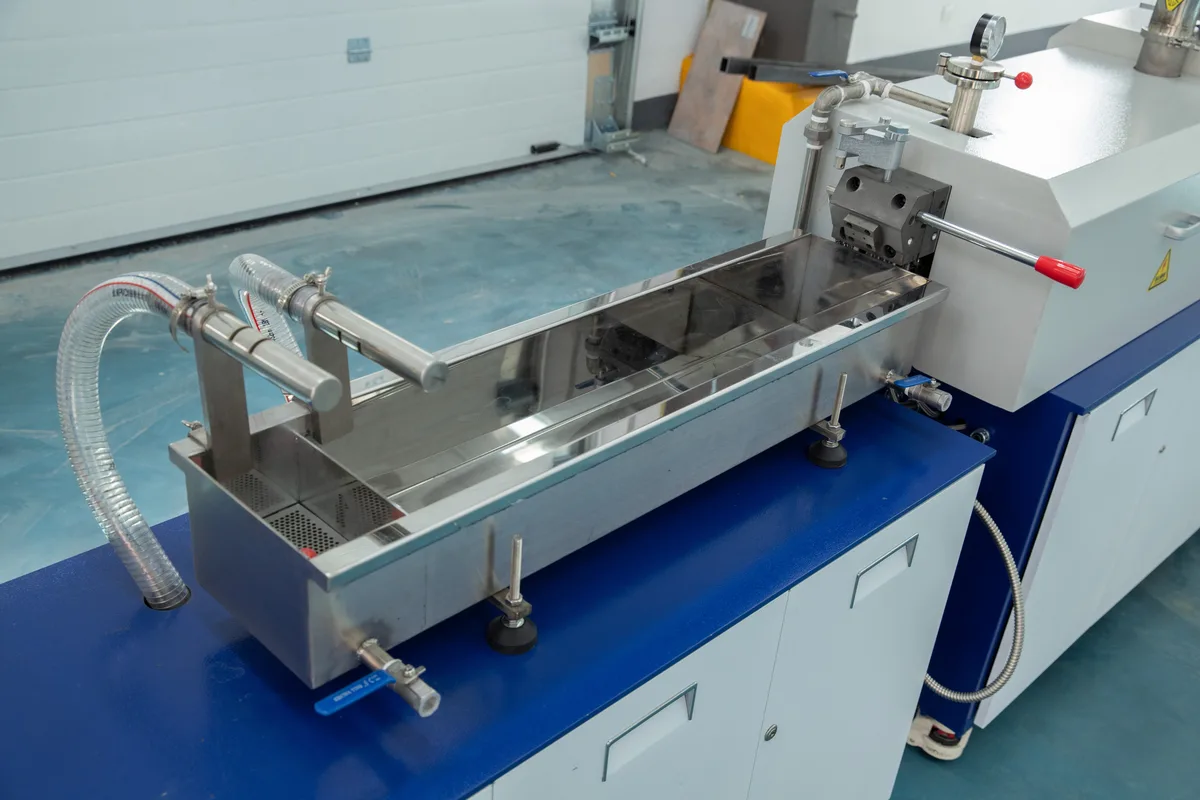 Lab & pilot twin screw — workshop photo 3, Kerke workshop, Nanjing
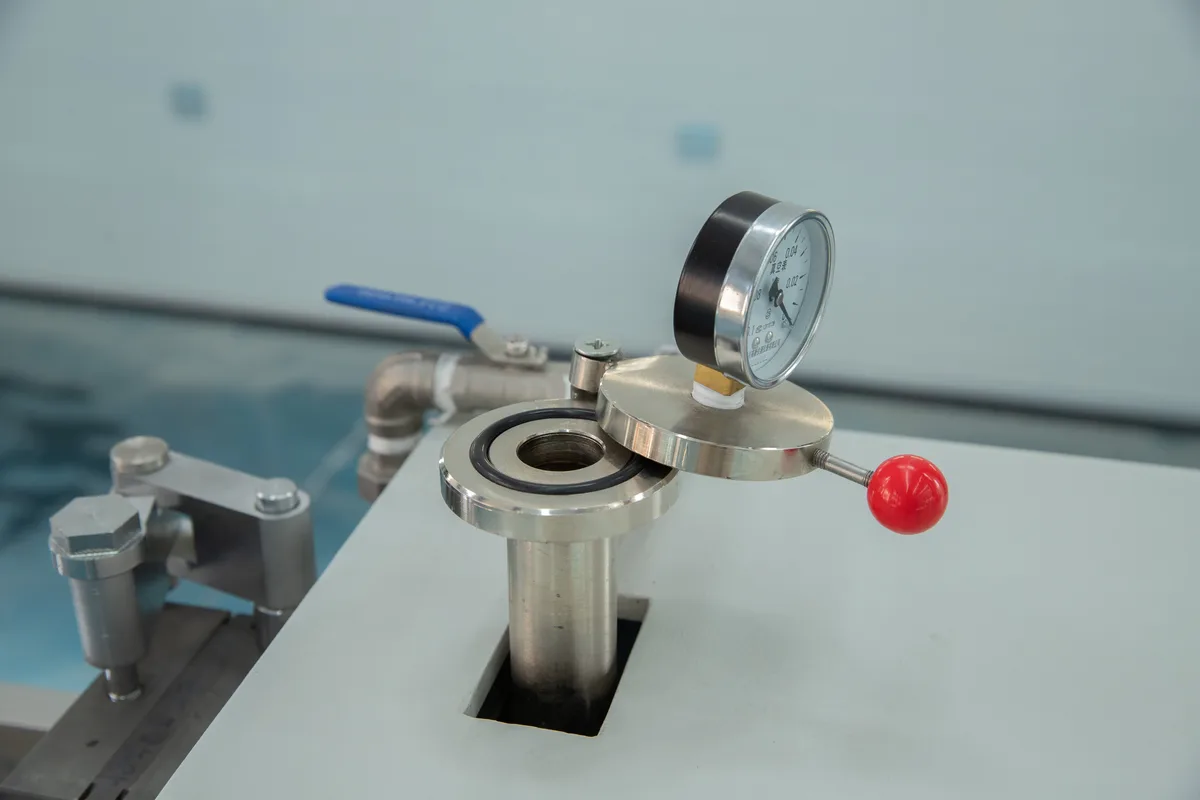 Lab & pilot twin screw — workshop photo 4, Kerke workshop, Nanjing
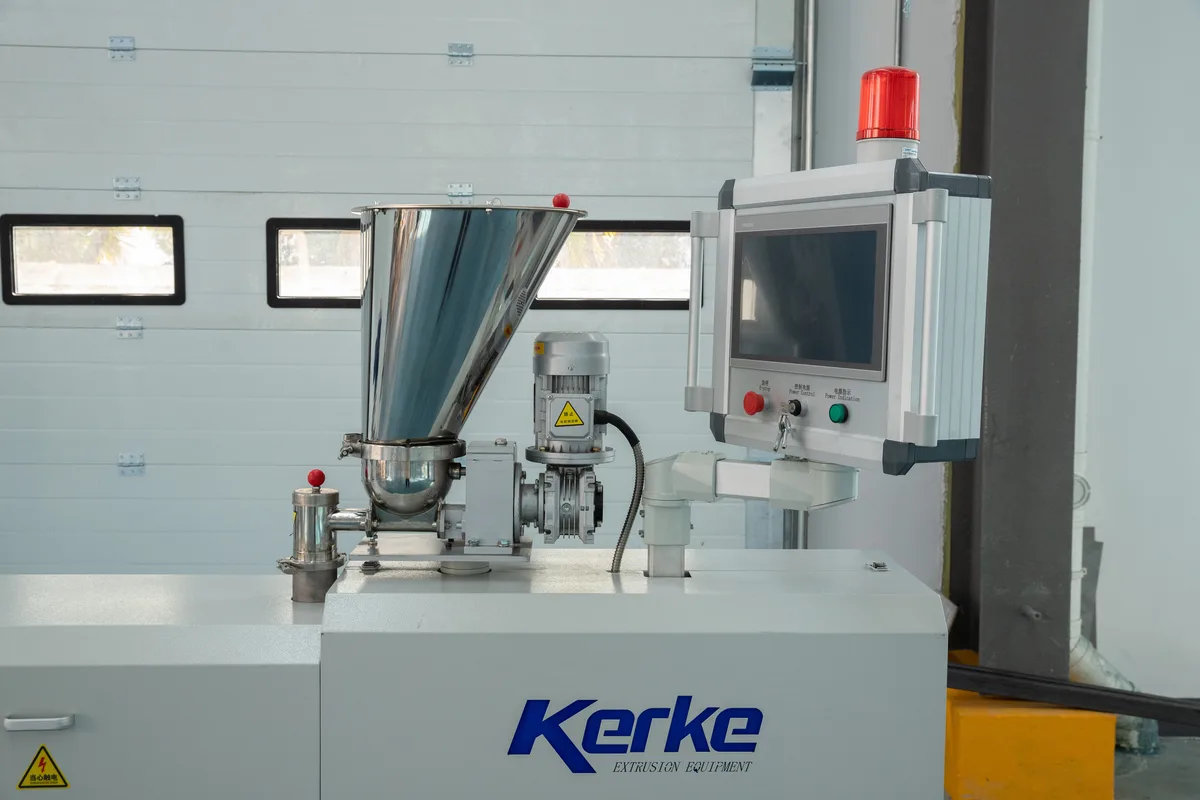 Lab & pilot twin screw — workshop photo 5, Kerke workshop, Nanjing
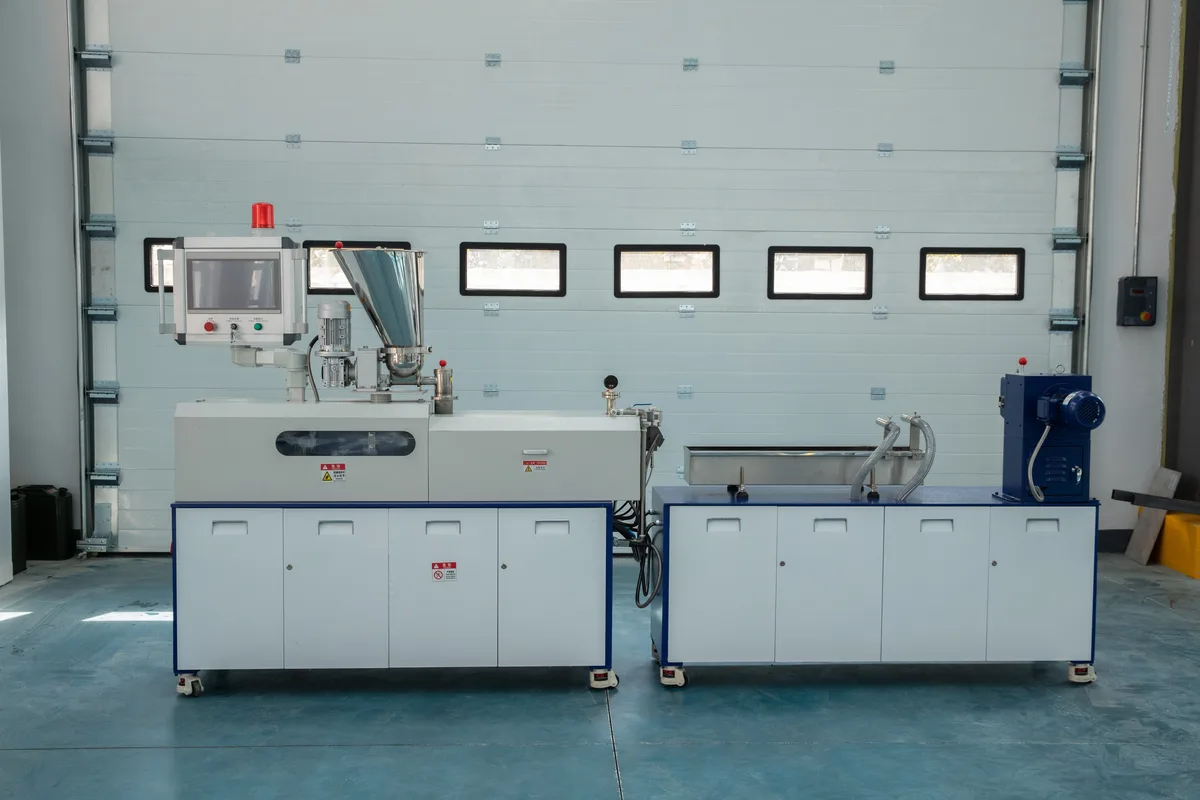 Lab & pilot twin screw — workshop photo 6, Kerke workshop, Nanjing
Quick answer
The KTE-20B is the machine our own trial service runs on: 21.7 mm, 4 kW, 2×30 N·m, 2–15 kg/h. Send 25–50 kg of material and the pellets, video and capacity report you get back were made on one of these.
Workshop photos and a running video — shot on our own lines, not stock images.
Parameters
| Model | Screw dia. (mm) | Speed (rpm) | Motor (kW) | Torque (N·m) | Output (kg/h) |
|---|---|---|---|---|---|
| KTE-20B | 21.7 | 500 | 4 | 2×30 | 2–15 |
Reference output measured on the stated material family; subject to a material trial. Motor and torque values are per machine, not per screw shaft.
Where it fits in the range
Second step of the lab ladder: the KTE-16 below for gram-scale screening, the KTE-25D above when torque is the subject, and the KTE-36B/KTE-36D for pilot batches. The 20B is the volume answer for formulation validation.
What it runs
Duties: customer material trials, masterbatch and compound development, quality re-checks on production recipes, and small sample production for market qualification.
Filler Masterbatch Extruder Line
Filler masterbatch is sold by the tonne, so the line is judged on two numbers only: how much powder it can swallow, an…
Color Masterbatch Extruder Line
Colour masterbatch is a dispersion business with a cleaning problem attached: the same line has to make 20% pigment di…
Engineering Plastics Compounding Line
Engineering plastics punish shortcuts in two places: drying (PA and PC want 120 °C for four hours, not 80 °C overnight…
Configuration options
Lab models share the building-block platform of the production range, so a screw set validated on a KTE-20B translates upward. Options: transparent or split barrel for teaching, torque and melt-pressure logging to CSV for R&D records, strand or water-ring pelletizing at this scale, and a quick-change element kit so one machine serves several formulations in a day.
Lab work at Kerke follows the same discipline as production: every run is logged with barrel temperatures, screw speed, feeder setting and output, so the report you receive is a record, not an impression. A typical screening week covers five to ten configurations; a full pilot campaign — trial, re-run, scale-up note — fits in two, and the scale-up note travels with the recipe to whichever production KTE the duty lands on.
FAQ
Why is the KTE-20B the trial machine and not a bigger lab model?
Because 25–50 kg is the standard trial quantity and 2–15 kg/h covers a meaningful run in an afternoon — bigger machines would waste the customer's material, smaller ones would waste the day.
Can I book a trial on a KTE-20B with my own powder?
Yes — the trial is free, you cover the freight of 25–50 kg. You get pellets, a running video and a report with the temperatures, screw speed, feeder settings and output we measured.
How does a 20B result translate to a production KTE?
Same building-block platform and the same B-class torque philosophy; what scales is thermal profile and residence time. That translation is exactly what the trial report documents.
Where these numbers come from
Parameters come from the Kerke parameter table and product master data sheet, cross-checked against commissioning records for the same model and duty. Where a catalogue value and a trial value disagree, the trial value is the one we quote.
Reviewed by the Kerke process team, Nanjing. Page updated 6 November 2026.
Send 25–50 kg — we return pellets, a video and a report with the parameters we used, in 3–7 days.
KTE-20B lab twin screw extruder — the short version
Note on KTE-20B lab twin screw extruder: what separates one machine from another is torque class, L/D and the wear package matched to your material, not the build standard. Shortlist from the tables, then confirm the choice on a trial with your own powder.
Planning an upgrade this quarter? Send the material and the target output — the configuration comes back within one working day.
Every quotation lists the wear package as a separate line, so its cost is visible from day one.
Questions are answered the same day, in English or Chinese.
Note on KTE-20B lab twin screw extruder: the data on this page was last verified on our own test line in Nanjing.
Not sure which KTE-20B lab twin screw extruder configuration fits? Describe the material and the pellet shape required — we answer with a recommendation, not a brochure.
A KTE-20B lab twin screw extruder from Kerke ships with CE documentation, a test-run record and a recommended spare set.
Related on this site: Extrusion lines by application · Extruder selection guide · free extrusion line quotation · Wikipedia: Twin-screw extruder