White Masterbatch Line

Home/Applications/White Masterbatch Line Application · Plastic Masterbatch White Masterbatch Line: 50–70% TiO2 Without Agglomerates Titanium dioxide is the one filler that fails visibly: 63% loading with poor wetting gives white specks in a black film, and no amount of filtering saves the batch. A reference white masterbatch line page from Kerke. Updated 6 November 2026 […]
Talc Filler Masterbatch Line

Home/Applications/Talc Filler Masterbatch Line Application · Plastic Masterbatch Talc Filler Masterbatch Line: Dispersion & Wear Solutions Talc is a platelet, not a bead. It resists wetting, abrades the barrel along its own flat faces, and at 60–70% loading it turns a filler line into a wear test. A reference talc filler masterbatch line page from […]

Functional Masterbatch Line

Home/Applications/Functional Masterbatch Line Application · Plastic Masterbatch Functional Masterbatch Line: Antistatic, Antibacterial & Flame Retardant Functional masterbatch is a temperature-control problem, not a shear problem. Every active ingredient has a ceiling — brominated flame retardants below 220 °C, silver antibacterial below 230 °C — and the line must hold it. A reference functional masterbatch line […]

Masterbatch Production Line

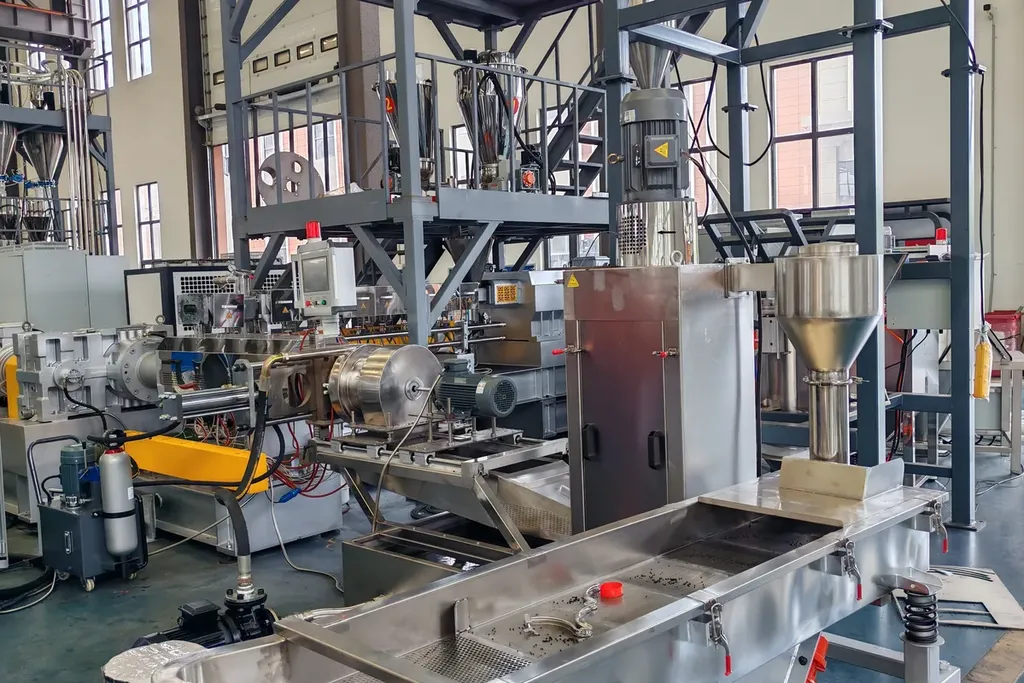
Home/Applications/Masterbatch Production Line Application · Plastic Masterbatch Masterbatch Production Line: Filler, Color & Functional in One Plant A masterbatch plant is a feeding system, an extruder, a pelletizer and a material-handling skeleton. Buying them as four separate decisions is how plants end up with a bottleneck at the bagging station. A reference masterbatch production line […]

Filler Masterbatch Line

Home/Applications/Filler Masterbatch Line Application · Plastic Masterbatch Filler Masterbatch Line: 85–90% CaCO3 at 350–550 kg/h Filler masterbatch is sold by the tonne, so the line is judged on two numbers only: how much powder it can swallow, and whether the pellets still feed cleanly in the customer’s film line. Both are decided before the extruder. […]

CaCO₃ Filler Masterbatch Line

Home/Applications/CaCO3 Filler Masterbatch Line Application · Plastic Masterbatch CaCO3 Filler Masterbatch Line: 85–90% Filling Recipe & Equipment Calcium carbonate is the cheapest thing you can put in a bag and the hardest to keep in suspension. The line is built around activation, feeder discipline and a wear package — not around motor size. A reference […]

High Filler Masterbatch

Home/Applications/High Filler Masterbatch Application · Plastic Masterbatch High Filler Masterbatch: 85–90% Filling on a Kneader Line Above 85% the melt stops behaving like a polymer: it will not take shear heat, and one machine cannot both wet out the filler and build die pressure. The line that holds 88–90% is a kneader compounding extruder — […]

Color Masterbatch Extruder Line

Home/Applications/Color Masterbatch Extruder Line Application · Plastic Masterbatch Color Masterbatch Extruder Line: Screw Design & Pelletizing Colour masterbatch is a dispersion business with a cleaning problem attached: the same line has to make 20% pigment dispersion and then be spotless again in twenty minutes for the next colour. A reference color masterbatch extruder line page […]

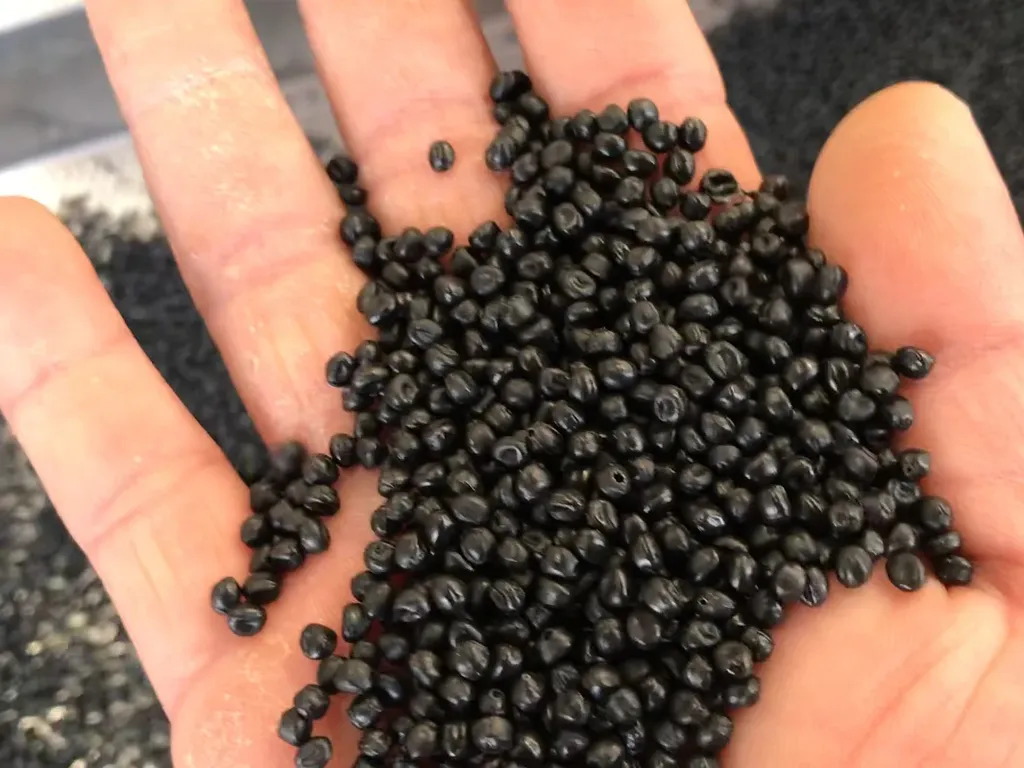
Black Masterbatch Line: Up to 40% Carbon Black

Home/Applications/Black Masterbatch Line Application · Plastic Masterbatch Black Masterbatch Line: Up to 40% Carbon Black Carbon black at 40% costs 20–25% of the output of a general colour masterbatch on the same machine — dispersion eats throughput, and that difference is what the price is really made of. A reference black masterbatch line page from […]