Lab & pilot
Lab Twin Screw Extruder, 15.6–36 mm screw diameter
A lab extruder is bought for one reason: to make a production decision with 2 kg of material instead of 2 tonnes. That means a lab twin screw extruder has to represent the production screw geometry, not just turn.
- KTE-16 / 20 / 25D / 36B — 15.6 to 36 mm, 1–120 kg/h
- Interchangeable screw elements, same profile as production machines
- Pelletizing options: strand, water ring or small underwater head
Get a costed configuration
Reply within one working day, in English or Chinese.
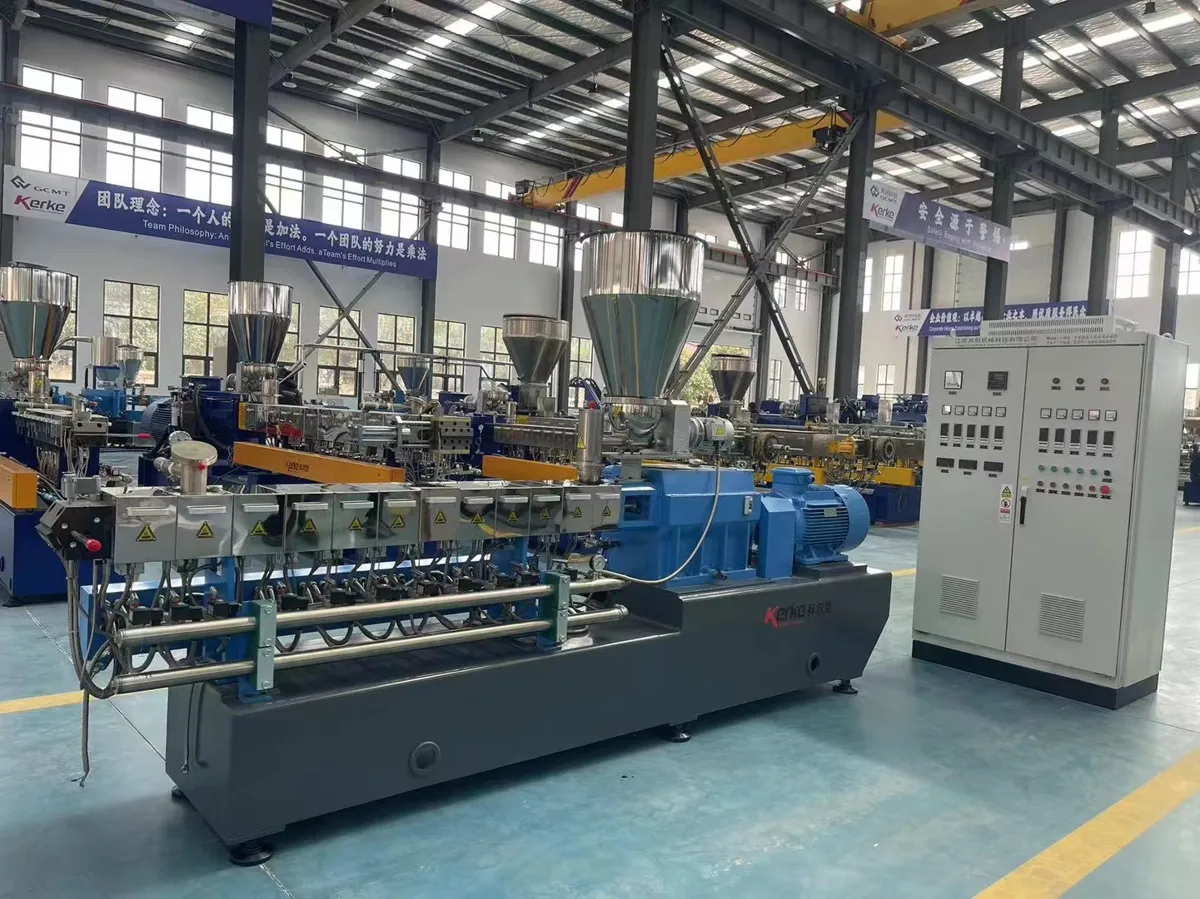
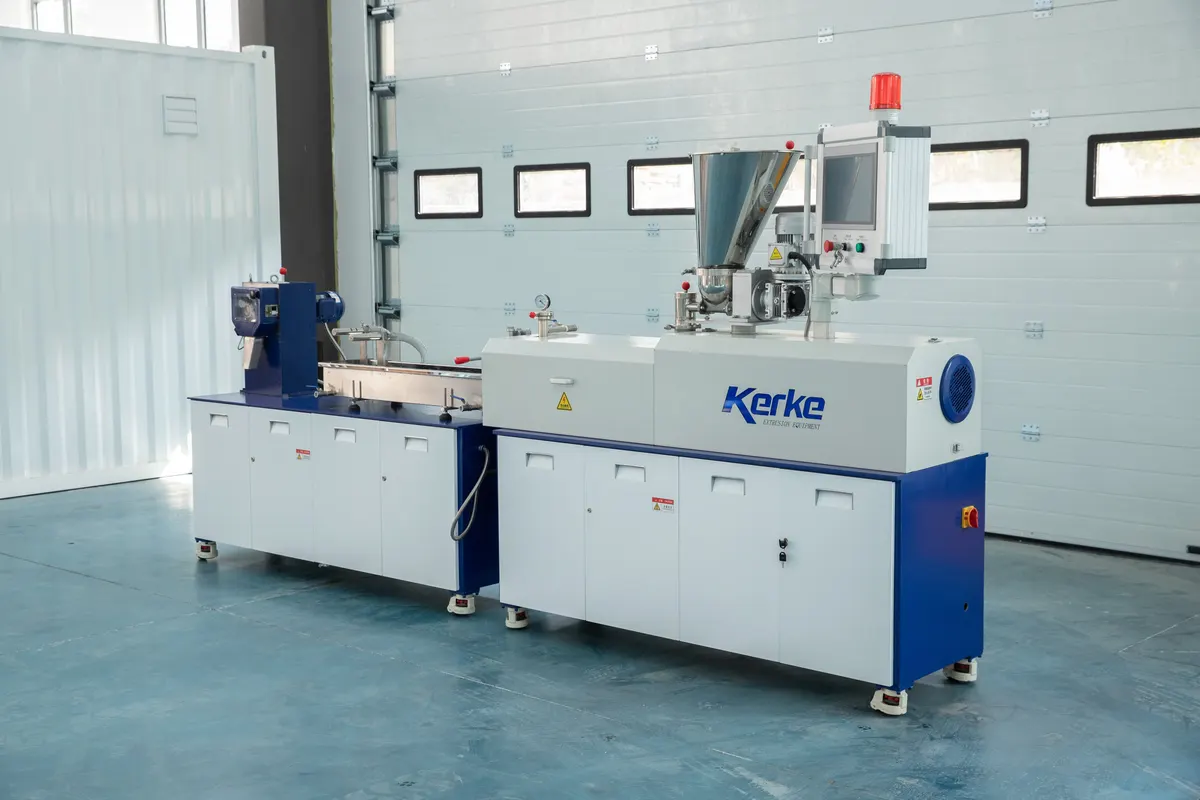
What a lab line has to get right
The failure mode is a lab twin screw extruder that runs well and tells you nothing about the production line. Scale-up starts with geometry, not with output.
Same screw profile
Elements are scaled from the production KTE series, so a mixing block that disperses on the lab twin screw extruder also disperses on the 95 mm. Different geometry means the trial result does not transfer.
Torque density, not just speed
Small screws run fast. If the lab machine cannot reach production torque density, it will report a formulation as processable when the production line cannot run it.
Feeding that matches the batch
2 kg of powder does not feed like 2 tonnes. Loss-in-weight feeding with a small hopper and a screw that can be changed in minutes is what makes a lab line usable weekly instead of monthly.
- Screw diameter chosen against the batch size
- Interchangeable elements and a configuration drawing
- Feeder, die and pelletizer matched to the sample
- Vacuum devolatilization available where needed
- Data logging for temperature, torque and output
- Training for your lab staff on the first run
Lab twin screw extruder models
| Model | Screw diameter | Output (reference) | Typical use |
|---|---|---|---|
| KTE-16 | 15.6 mm | 1–15 kg/h | formulation screening, masterbatch |
| KTE-20B | 21.7 mm | 5–40 kg/h | colour matching, small batches |
| KTE-25D | 25 mm | 10–60 kg/h | pilot scale, GF compounds |
| KTE-36B | 36 mm | 30–120 kg/h | pre-production, customer samples |
Reference values, subject to material trial. Final parameters are set on your own material.
Questions buyers ask before the call
Can I run 2 kg through it?
Yes. The KTE-16 holds a batch of 2–5 kg with acceptable residence time; below that, purging losses dominate and the result is not representative.
Will the result scale to a 75 mm line?
Scale-up follows screw geometry and torque density, then specific energy. Because the lab twin screw extruder uses elements from the same profile family, the dispersion result transfers; the output does not scale linearly, and we quote the production model from the trial report.
Do you run trials for customers?
Yes — 25–50 kg on KTE-20B or KTE-36B, with pellets, a running video and a capacity report back in 3–7 days. The trial is free; you cover the freight.
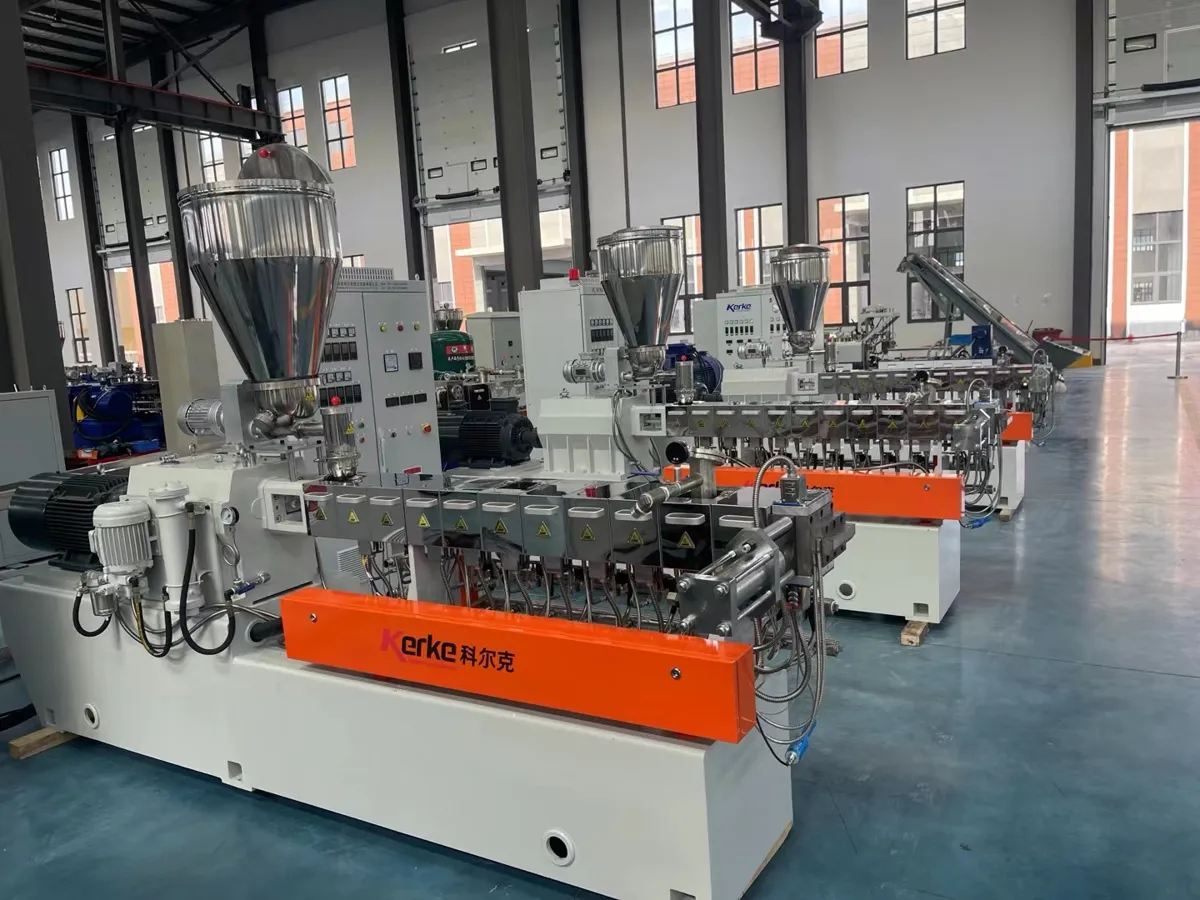
Book a lab slot or price a lab line
Tell us the batch size and the material; we will say which lab twin screw extruder — 16, 20, 25D or 36B — is the right one, and what it will not tell you.