
Pelletizing · Spray Drying Pelletizing
Spray Drying Pelletizing: How Kerke Builds It
Strands or die-face pellets cooled by water spray and dried in the same pass — gentle cooling for sticky, low-melting or moisture-critical products such as PET with high water carry-over.
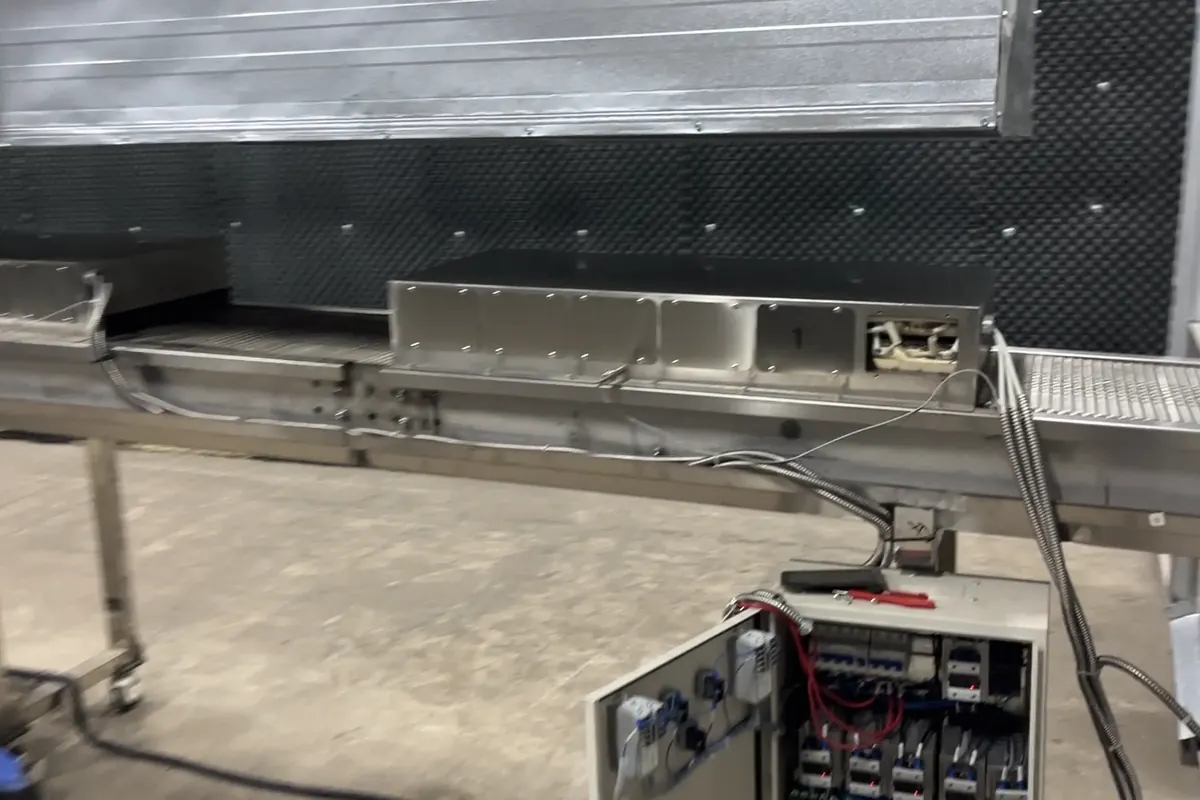 Spray Drying Pelletizing — workshop photo 1, Kerke workshop, Nanjing
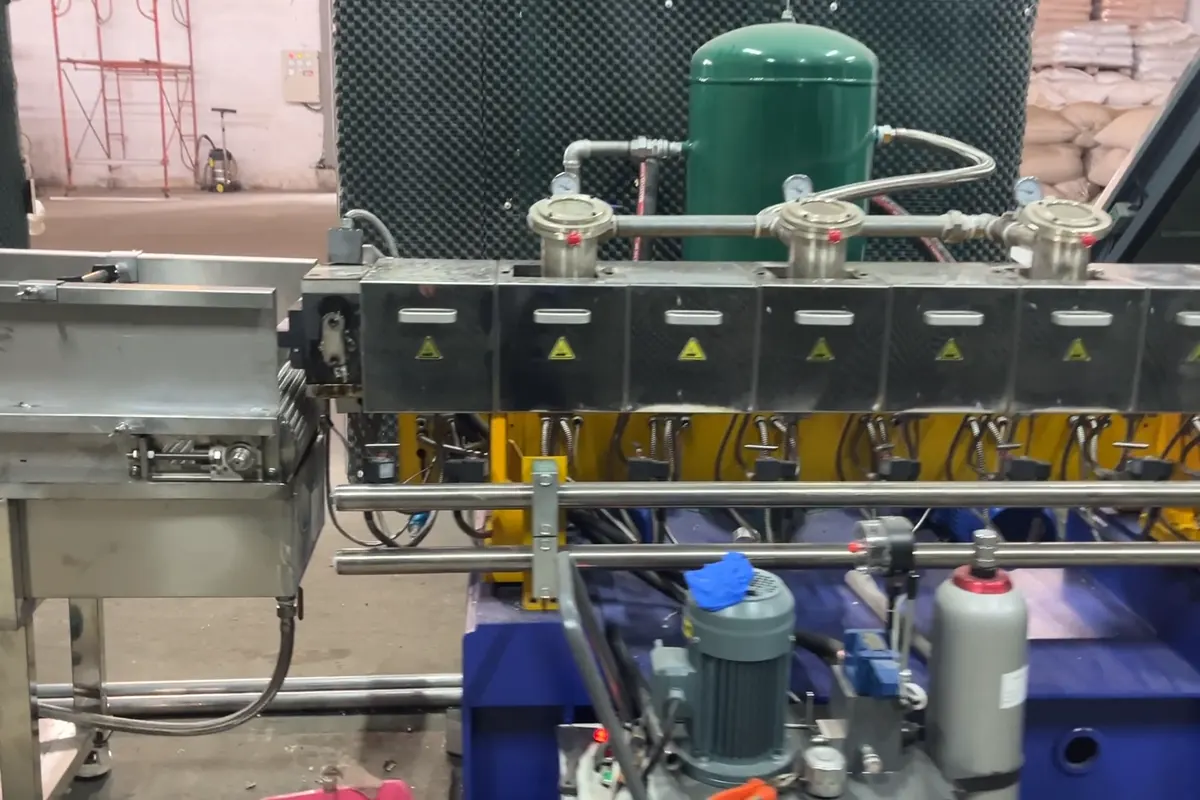 Spray Drying Pelletizing — workshop photo 2, Kerke workshop, Nanjing
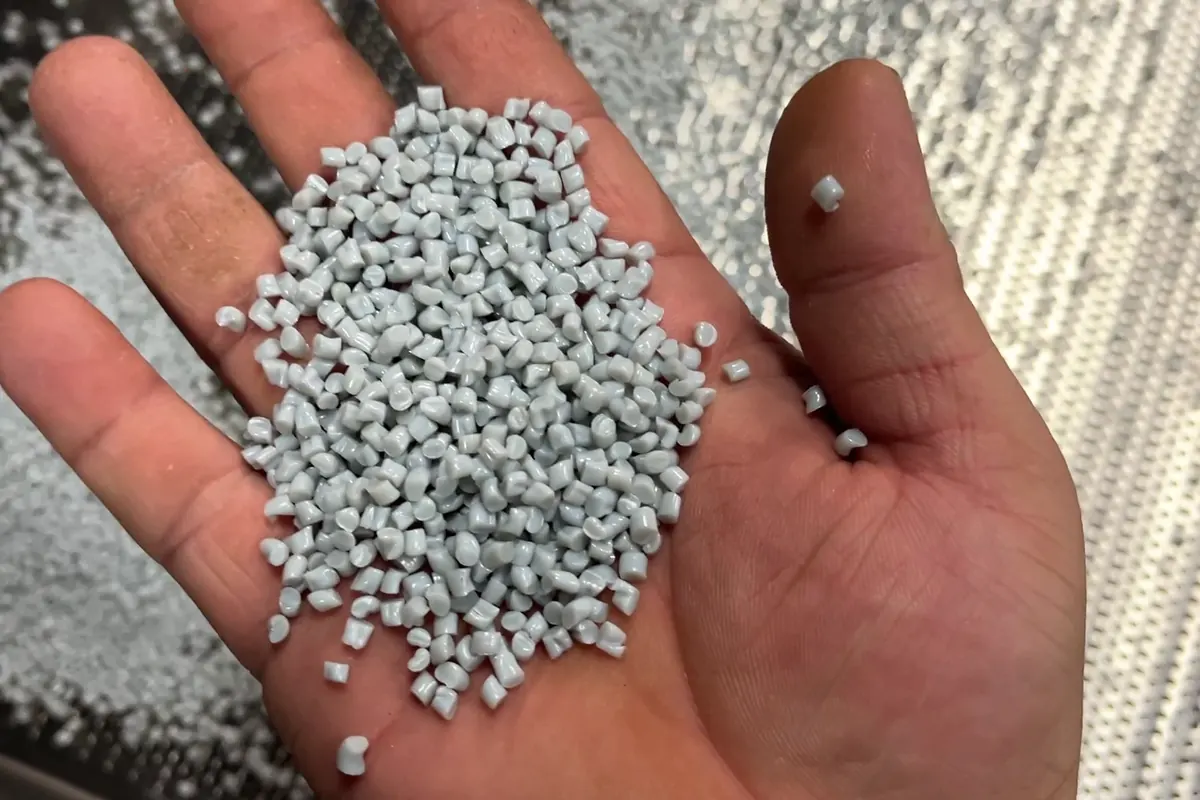 Spray Drying Pelletizing — workshop photo 3, Kerke workshop, Nanjing
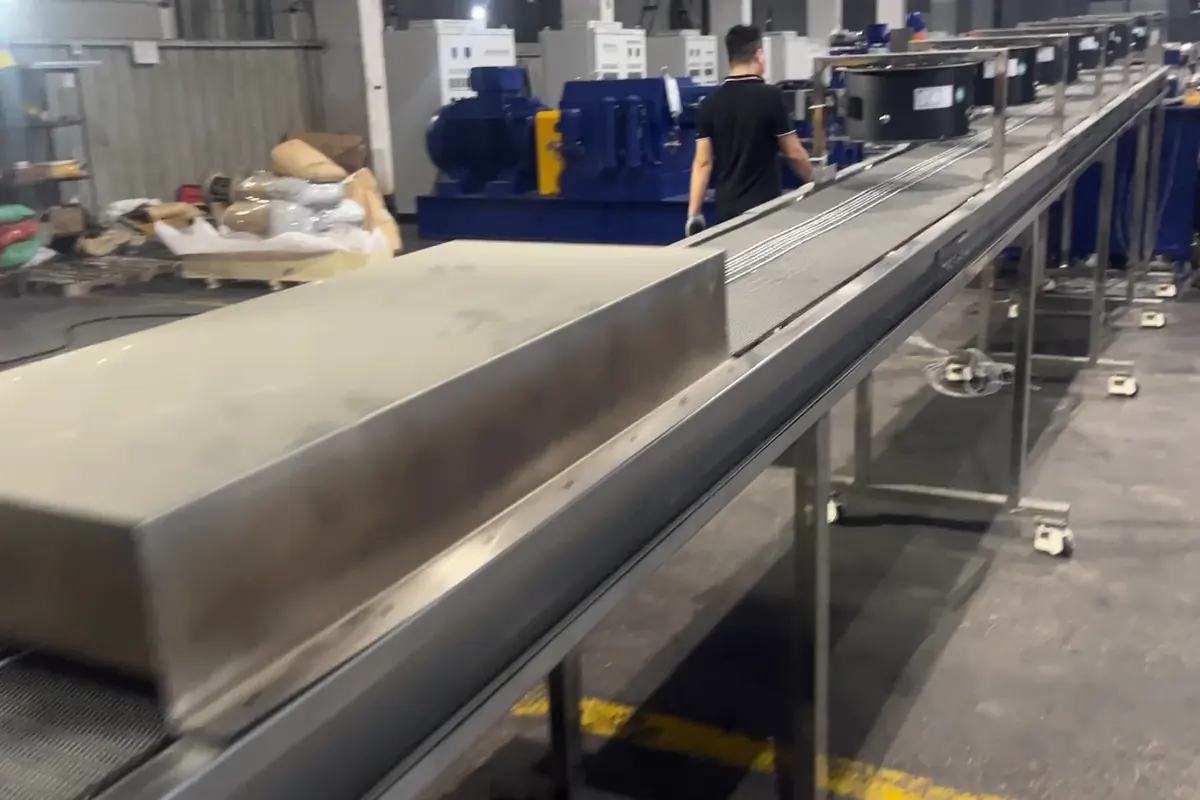 Spray Drying Pelletizing — workshop photo 4, Kerke workshop, Nanjing
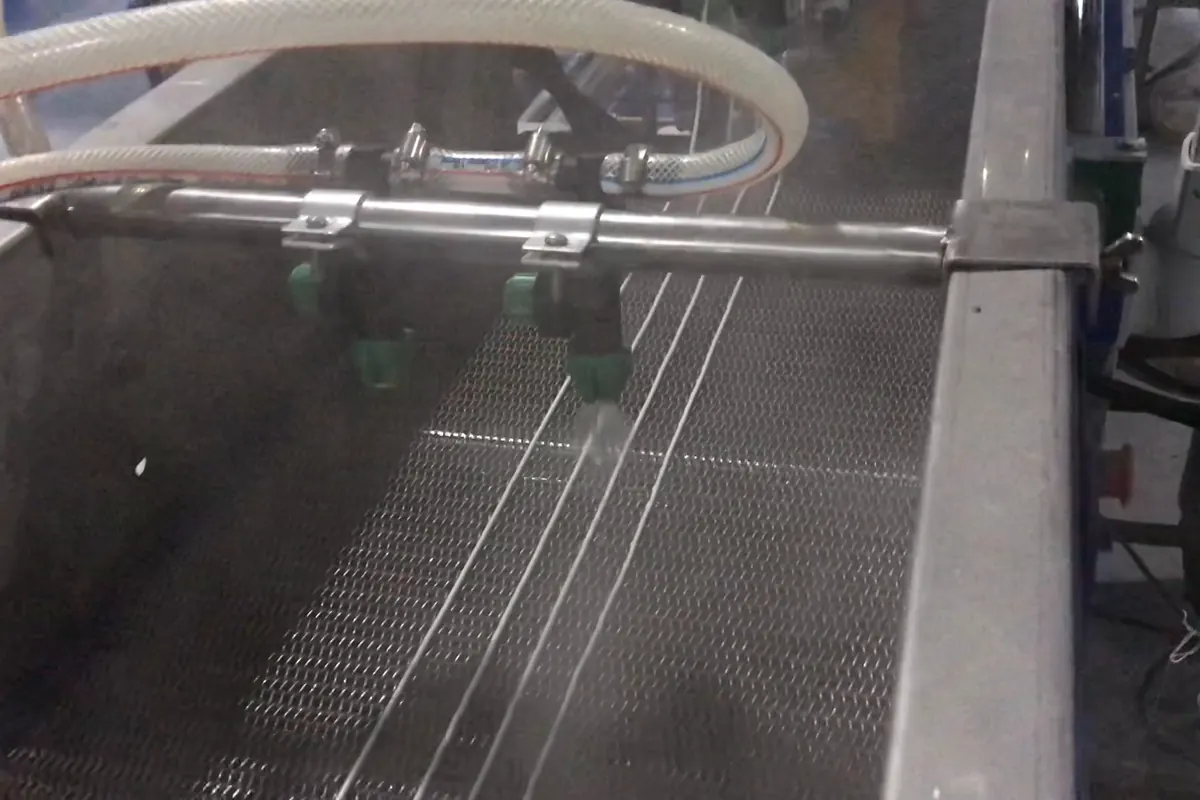 Spray Drying Pelletizing — workshop photo 5, Kerke workshop, Nanjing
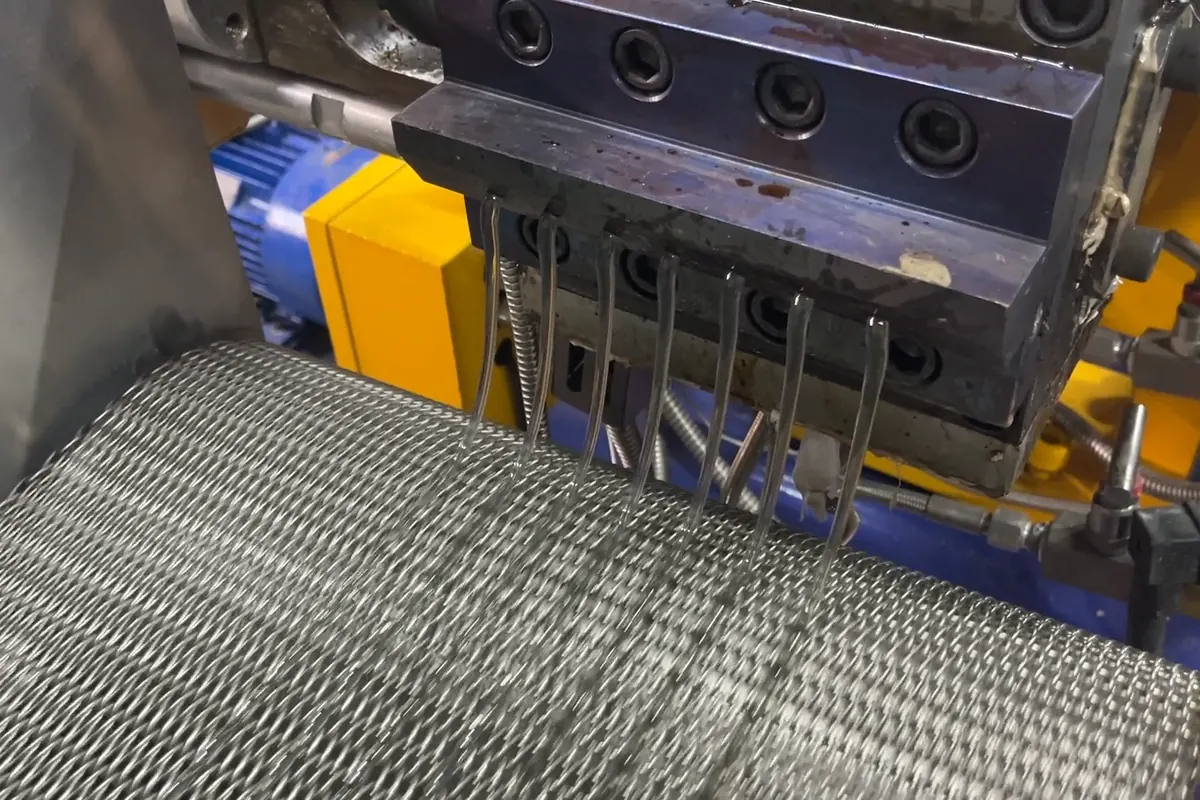 Spray Drying Pelletizing — workshop photo 6, Kerke workshop, Nanjing
Quick answer
Spray drying pelletizing cools strands or hot-face pellets with a fine water spray on a mesh belt, then dries them with hot air in the same continuous pass. Cooling is gentler and drier than a water bath — the method for sticky or low-melting products and for PET streams that arrive with high water carry-over.
Workshop photos — shot on our own lines in Nanjing, not stock images.
How the spray drying pelletizing line works
- Strands or hot-face pellets are laid onto a perforated mesh belt.
- Fine water nozzles spray a thin, even film over the product — enough to cool, not to soak.
- A second zone blows filtered hot air through the bed, evaporating surface water.
- An optional dehumidified zone conditions pellets to storage moisture.
- Pellets drop dry from the belt end to screener and packing.
Where this method wins
Spray drying sits between water bath and air cooling: use it when water bath leaves pellets too wet, and air alone cools too slowly. Typical products are sticky masterbatches that clump in water, low-melting adhesives, and PET pelletizing where strands leave the bath carrying too much water to dry in a separate step. The trade is energy — heating air is the cost driver.
Reference data
| Item | Value |
|---|---|
| Best for | Sticky/low-melting products, PET with high water carry-over |
| Output range | 300–1,500 kg/h |
| Pellet shape | Round to cylinder, surface-dry |
| Watch out | Energy cost of heated air, nozzle maintenance |
Reference output measured on the stated material family; subject to a material trial. Die hole count sets the capacity ceiling — check the die, not the label.
Selection notes from our floor
Nozzle layout decides everything: uneven spray leaves dry islands that fuse and wet patches that carry moisture into packing. We space nozzles by simulation of the bed profile and interlock the hot-air zone with belt speed so residence time adapts to the product, not the other way round.
FAQ
How is this different from a water bath?
A bath soaks pellets and needs a separate drying stage; spray wets the surface only and dries in the same pass. For moisture-critical PET, that difference is the whole business case.
What does the drying stage consume?
Heated air is the main energy item — roughly 15–25 kWh per tonne for PET at 1,000 kg/h, depending on ambient. Heat recovery from the extruder cooling loop trims it.
Can it run sticky masterbatch?
Yes — that is a standard use. The thin water film prevents clumping on the belt, and the hot-air zone sets the surface before pellets touch each other in the hopper.
Where these numbers come from
Output ranges, pellet shapes and watch-outs come from Kerke commissioning records and the pelletizing systems parameter table. Where a catalogue value and a trial value disagree, the trial value is the one we quote.
Reviewed by the Kerke process team, Nanjing. Page updated 11 November 2026.
Send 25–50 kg — we return pellets, a video and a report with the parameters we used, in 3–7 days.
Spray Drying Pelletizing — the short version
Spray drying combines cooling and drying in one continuous pass — the fix for sticky, low-melting-point or high-moisture pellets that bridge in silos after conventional water-ring cutting.
Related on this site: Pelletizing systems (all 7 methods) · Pelletizing methods compared · free extrusion line quotation