
Pelletizing · Water-Cooled Strand Pelletizing
Water-Cooled Strand Pelletizing: How Kerke Builds It
Strands of melt pulled into a water bath, dried and cut into uniform cylindrical pellets — the workhorse for filler and colour masterbatch up to 70% filler and for PA, PBT and PC engineering compounds.
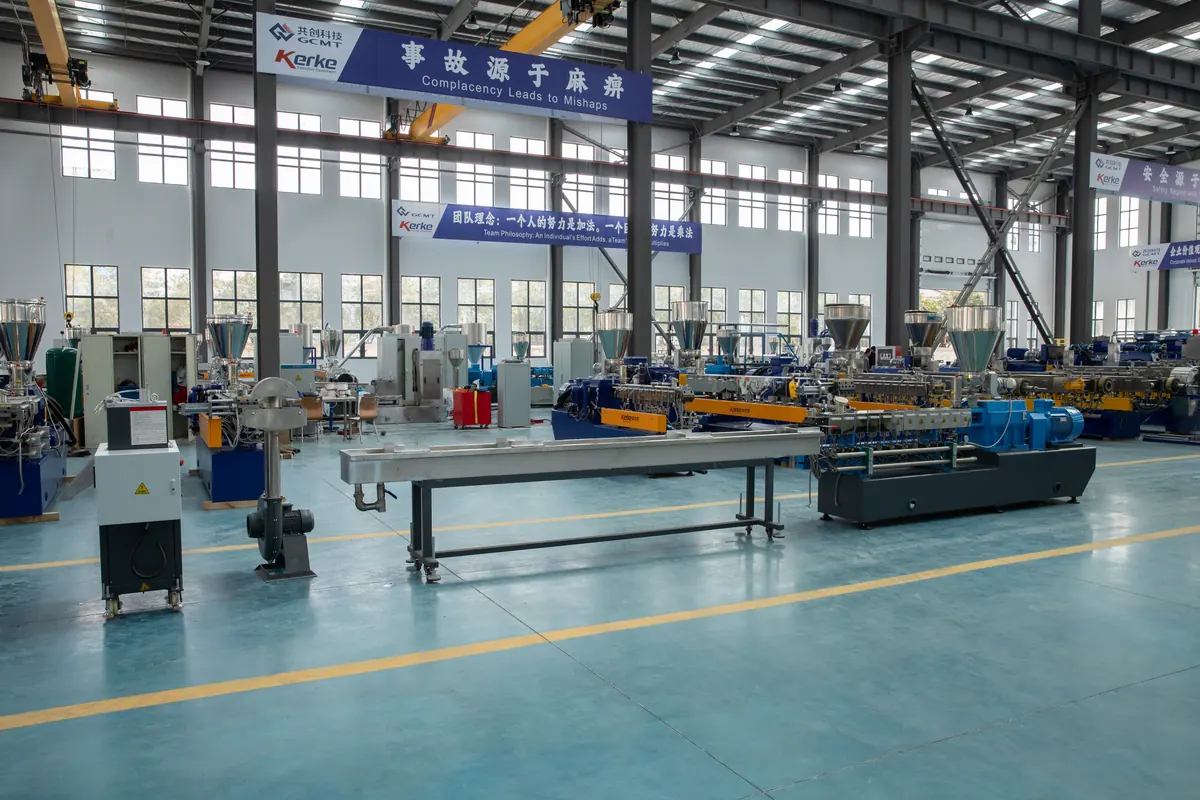 Water-Cooled Strand Pelletizing — workshop photo 1, Kerke workshop, Nanjing
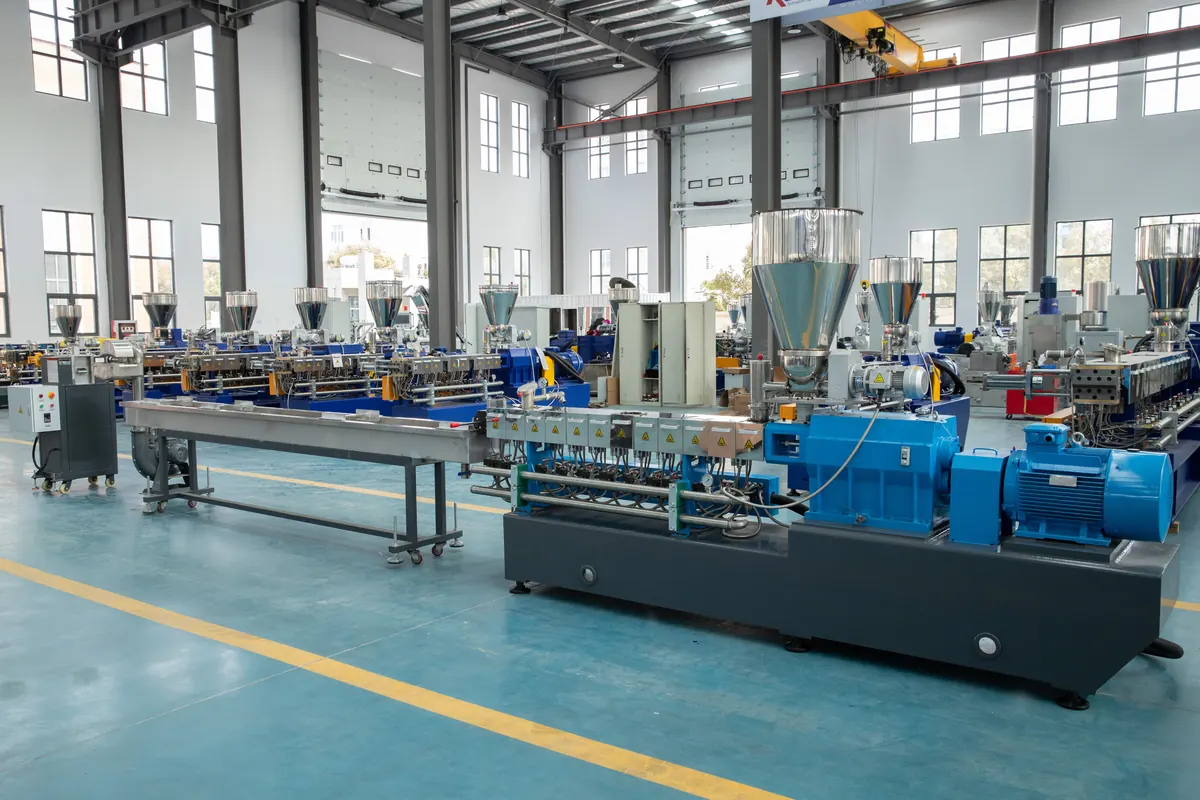 Water-Cooled Strand Pelletizing — workshop photo 2, Kerke workshop, Nanjing
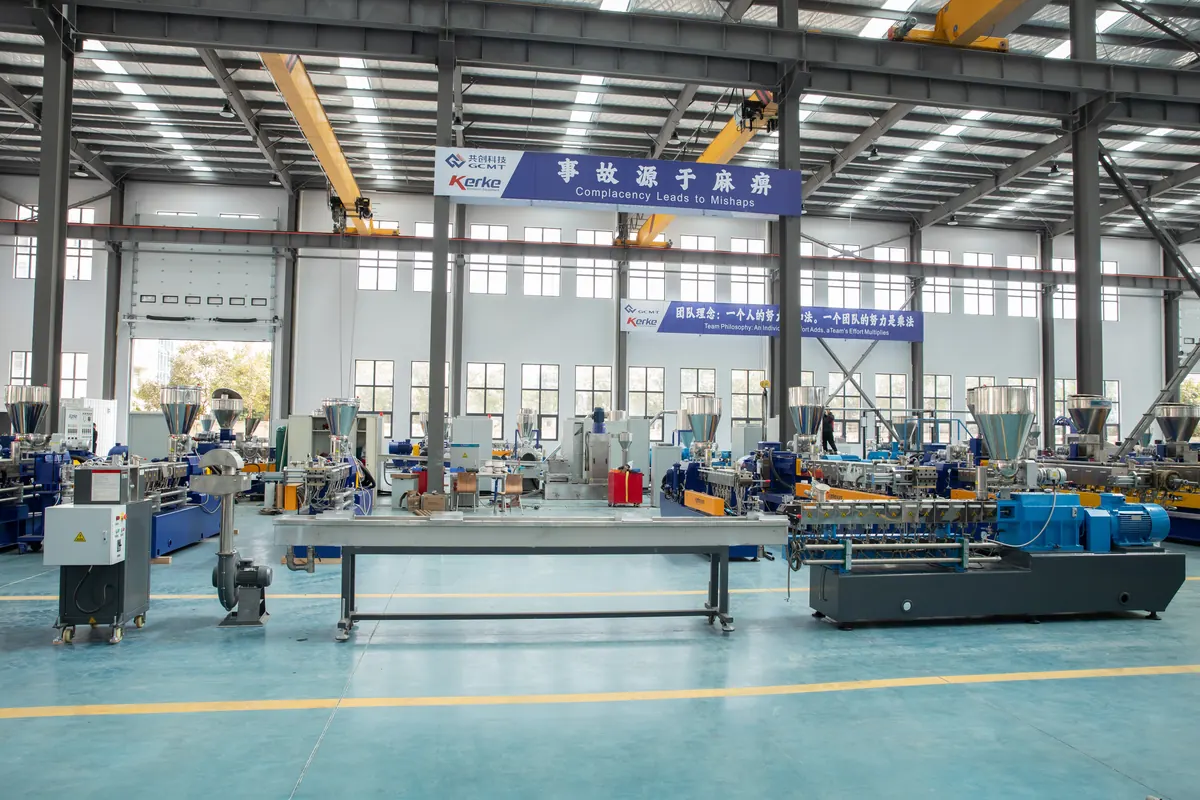 Water-Cooled Strand Pelletizing — workshop photo 3, Kerke workshop, Nanjing
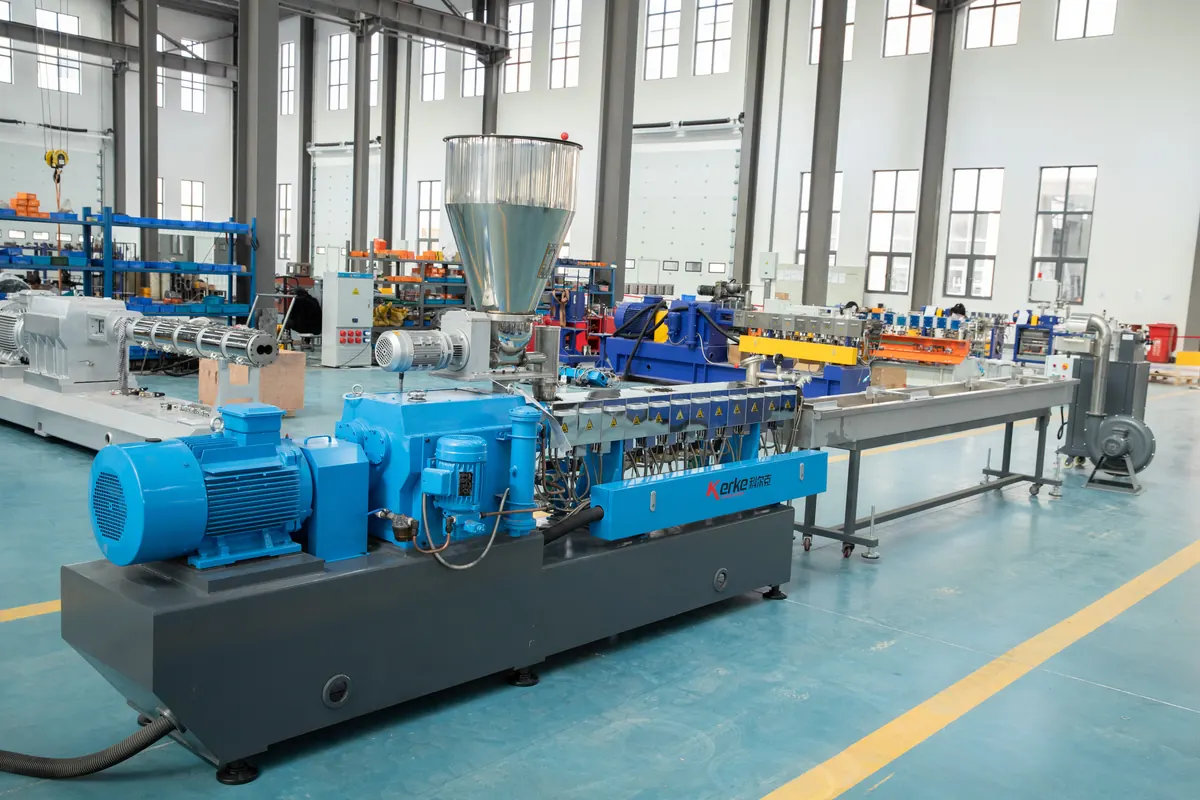 Water-Cooled Strand Pelletizing — workshop photo 4, Kerke workshop, Nanjing
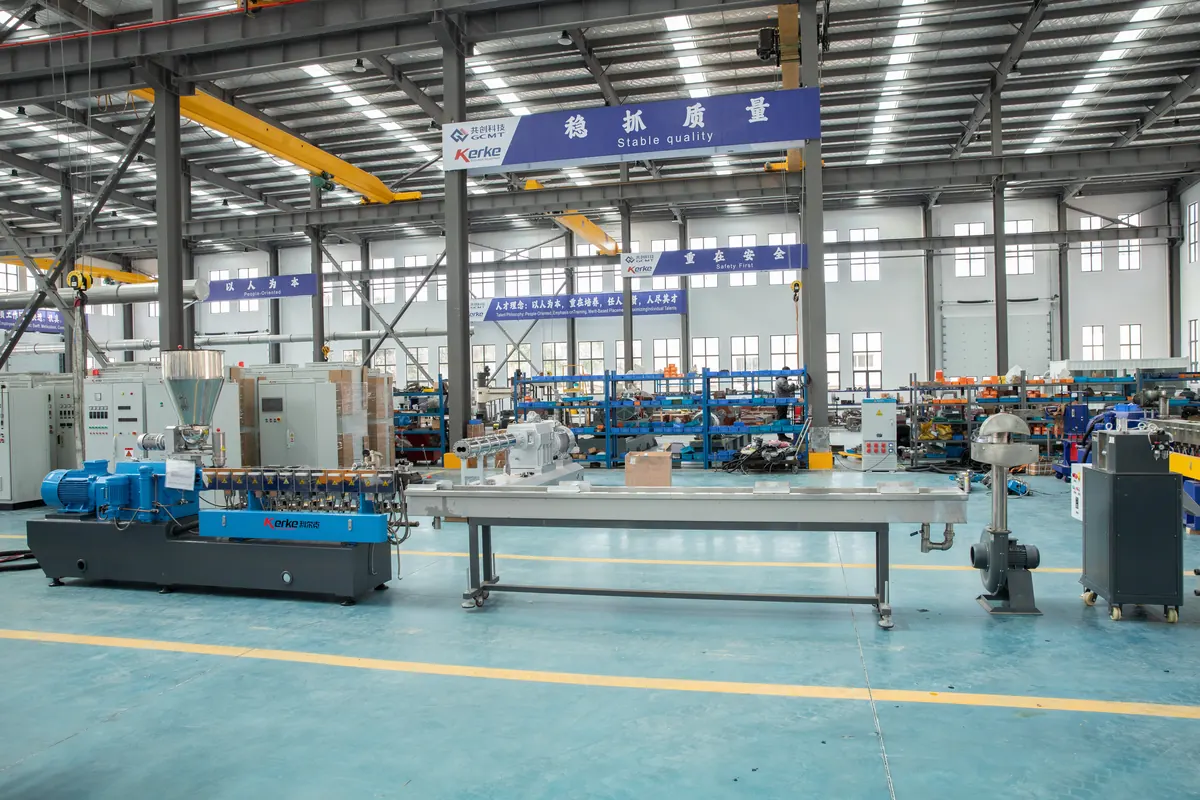 Water-Cooled Strand Pelletizing — workshop photo 5, Kerke workshop, Nanjing
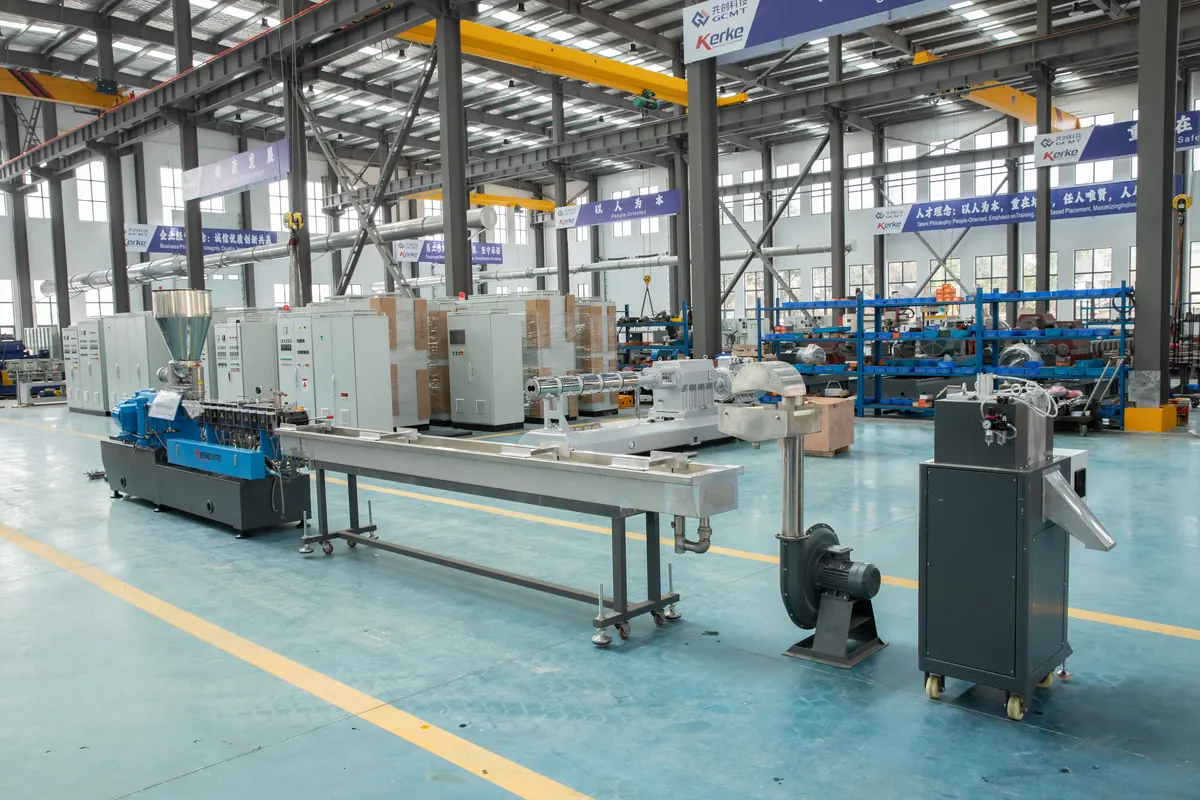 Water-Cooled Strand Pelletizing — workshop photo 6, Kerke workshop, Nanjing
Quick answer
Water-cooled strand pelletizing pulls extruded strands through a flowing water bath, wipes them dry and cuts them at a speed-controlled pelletizer. It is the default choice for filler and colour masterbatch, PA/PBT/PC compounds and recycled PET — simple, cheap to maintain and easy to change over between colours.
Workshop photos — shot on our own lines in Nanjing, not stock images.
How the water-cooled strand pelletizing line works
- Melt leaves the die head as 3–4 mm strands through a heated die plate.
- Strands drop into a stainless water trough with controlled flow and temperature (typically 25–35 °C).
- An air knife or suction wiper removes surface water before the pelletizer.
- A two-knife pelletizer with spring-loaded strands guide cuts dry strands to 3–4 mm pellets.
- Pellets are conveyed to a vibrating screener and hopper; fines return to the line.
Where this method wins
Water-cooled strand wins where pellet shape must be uniform and the material tolerates full water contact. It stays our recommendation for filler masterbatch up to about 70% CaCO₃ or talc, colour masterbatch, PA6/PA66, PBT, PC and recycled PET/PP strands. Above 70–85% filler the strands begin to break; at that point move to a hot die-face method.
Reference data
| Item | Value |
|---|---|
| Best for | Filler/colour masterbatch, PA, PBT, PC, recycled PET |
| Output range | 100–2,000 kg/h (die-hole count decides) |
| Pellet shape | Uniform cylinder, low dust |
| Watch out | Floor space, strand breakage at high filler, colour-change purging |
Reference output measured on the stated material family; subject to a material trial. Die hole count sets the capacity ceiling — check the die, not the label.
Selection notes from our floor
Keep the water bath short but temperature-controlled: cold water stiffens high-filler strands and they snap at the guide; warm water leaves strands soft and they flatten under the knife. For colour work, choose an open trough with quick-release strand guides — changeover time drops from hours to minutes.
FAQ
What filler level can water-cooled strand handle?
We commission strand lines routinely up to 70% CaCO₃ or talc. Between 70% and 85% it depends on the polymer and strand diameter — test it. Above 85%, use water ring or air-cooled hot die-face cutting.
How do I avoid wet pellets?
The air knife is the critical part, not the pelletizer. Set the squeegee gap and air velocity so strands enter the cutter visibly dry; residual moisture below 0.1% is normal on a tuned line.
How long does a colour change take?
With open troughs and quick-release guides, 20–40 minutes including purging. Closed troughs take longer — we recommend open ones for colour houses.
Where these numbers come from
Output ranges, pellet shapes and watch-outs come from Kerke commissioning records and the pelletizing systems parameter table. Where a catalogue value and a trial value disagree, the trial value is the one we quote.
Reviewed by the Kerke process team, Nanjing. Page updated 11 November 2026.
Send 25–50 kg — we return pellets, a video and a report with the parameters we used, in 3–7 days.
Water-Cooled Strand Pelletizing — the short version
What separates pelletizing methods is where the cut happens and how much water the pellets see. Water-cooled strand wins on simplicity and changeover speed — shortlist it first for masterbatch and engineering compounds, then confirm the choice on a trial with your own powder.
Related on this site: Pelletizing systems (all 7 methods) · Pelletizing methods compared · free extrusion line quotation