Model · Single screw SE
SE-100 Single Screw Extruder
SE-100 single screw extruder: 100 mm, 45–55 kW, 200–400 kg/h — round-number capacity for regrind and flake lines with room to grow.
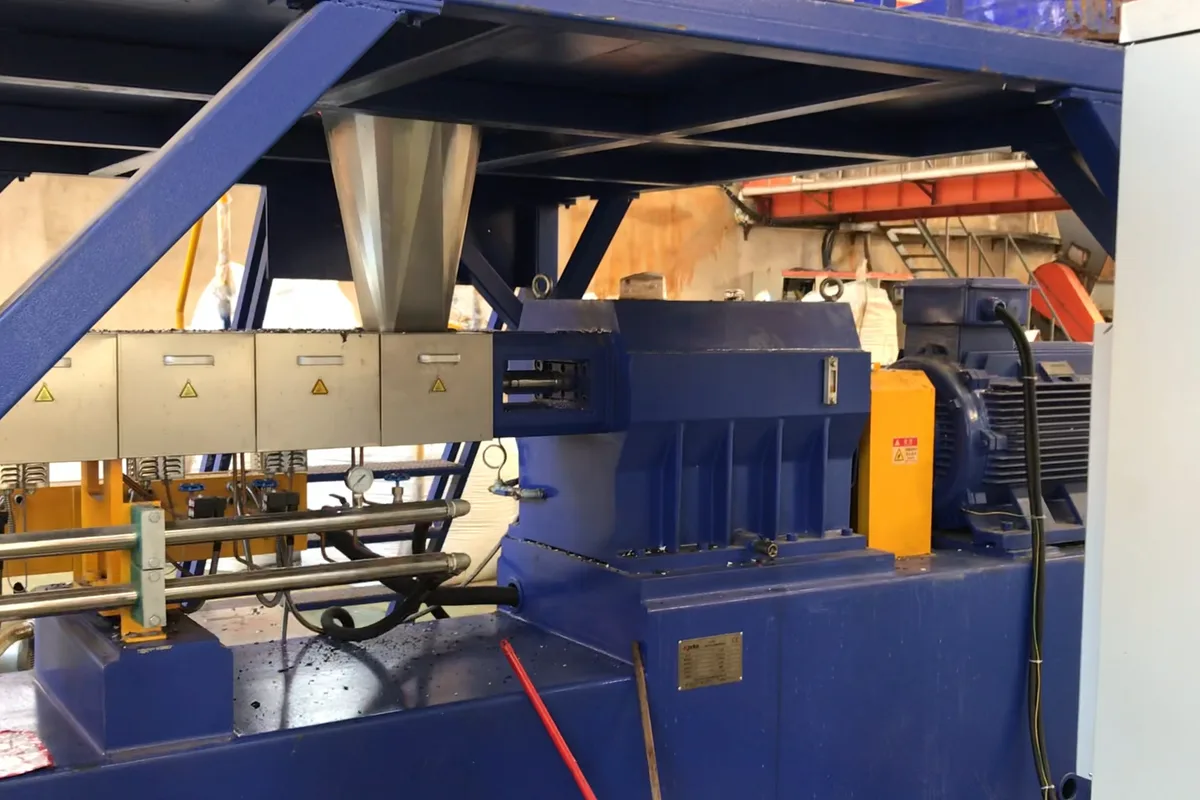 SE-100 single screw extruder — workshop photo 1, Kerke workshop, Nanjing
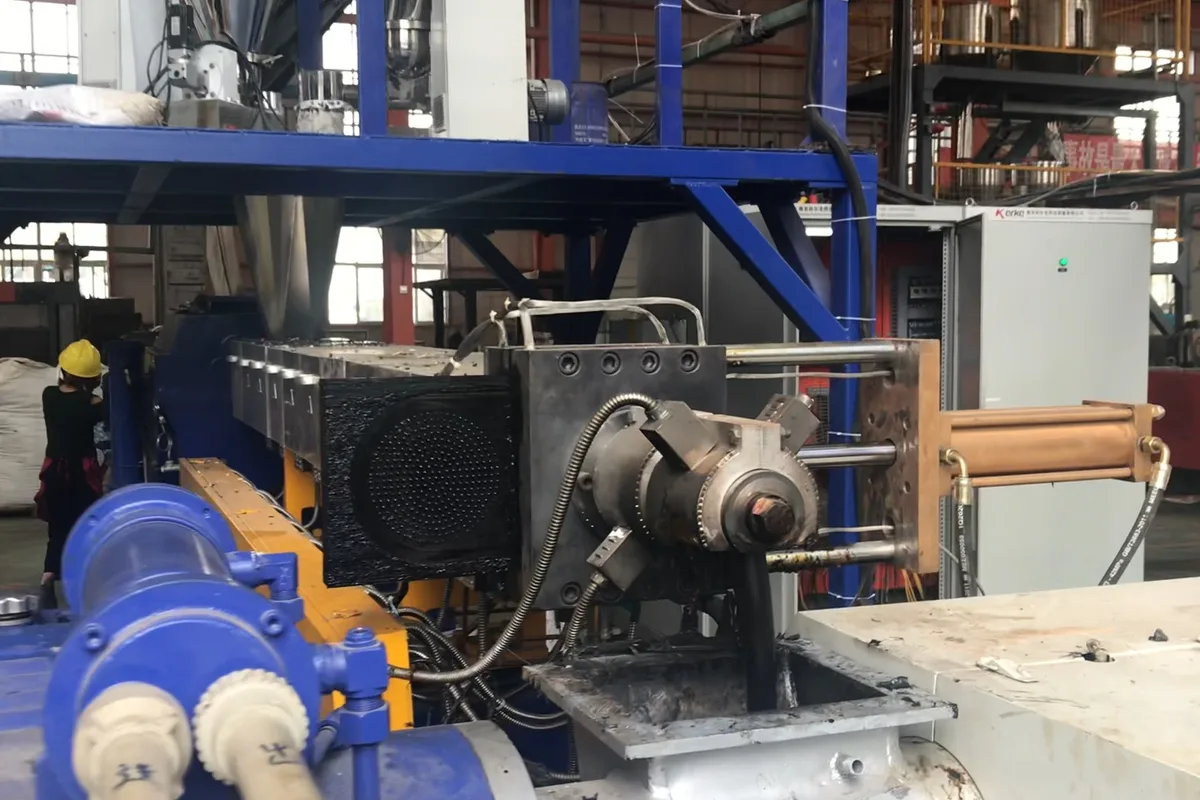 Single screw SE — workshop photo 2, Kerke workshop, Nanjing
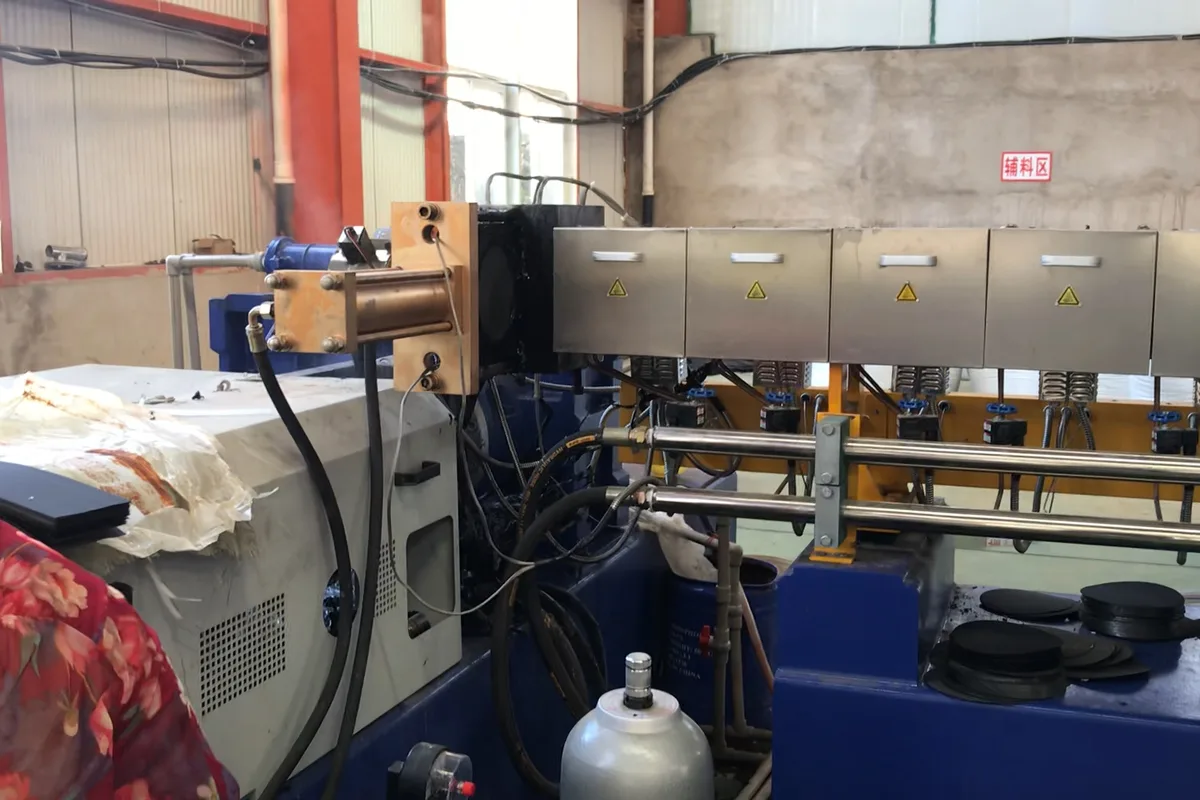 Single screw SE — workshop photo 3, Kerke workshop, Nanjing
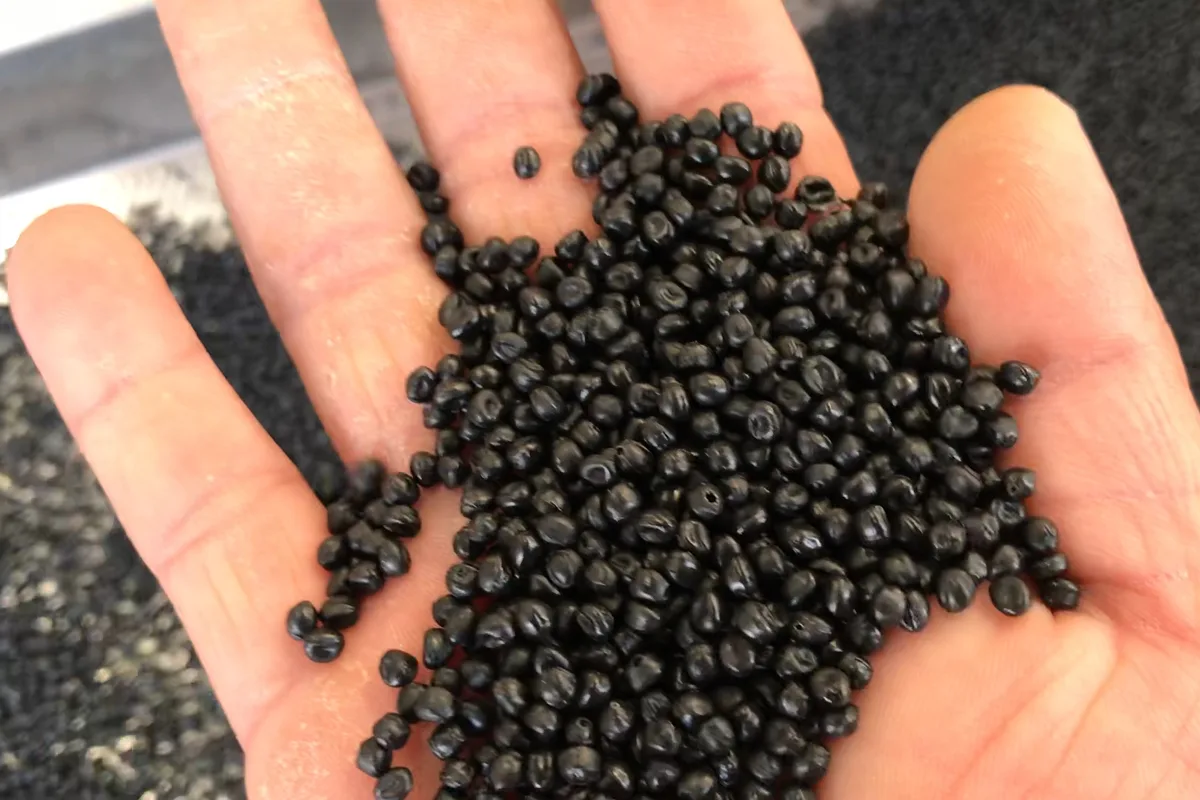 Single screw SE — workshop photo 4, Kerke workshop, Nanjing
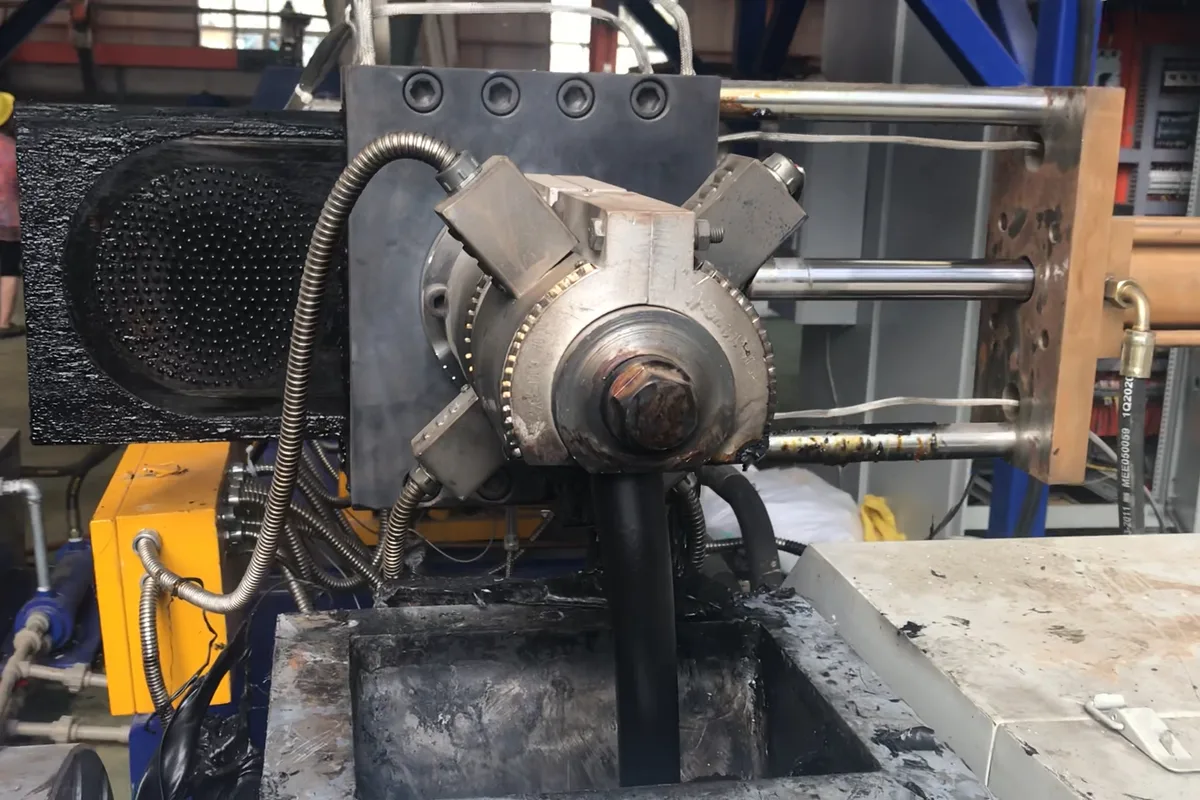 Single screw SE — workshop photo 5, Kerke workshop, Nanjing
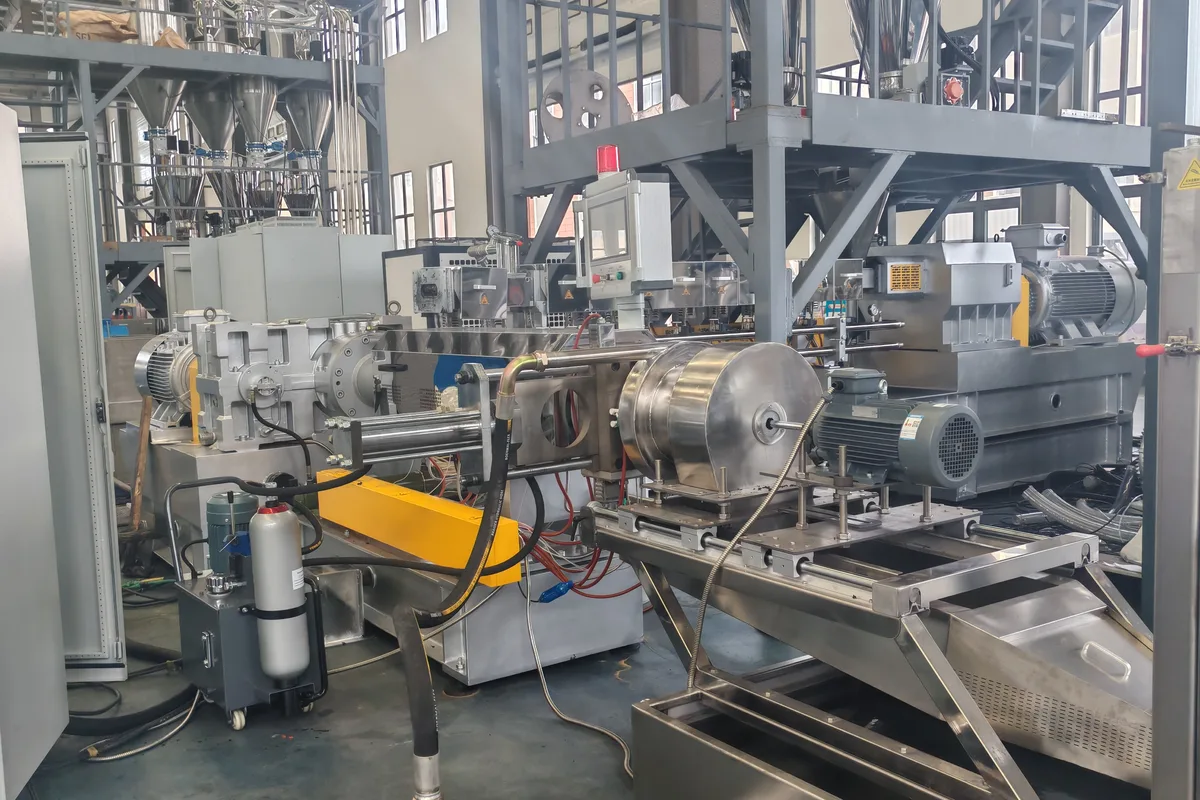 Single screw SE — workshop photo 6, Kerke workshop, Nanjing
Quick answer
The SE-100 fills the gap between the 90 and 120: 200–400 kg/h at 45–55 kW, L/D 25–33. A practical size for recycling lines whose feed grew past a 90's band but whose budget has not reached the 120's class.
Workshop photos and a running video — shot on our own lines, not stock images.
Parameters
| Model | Screw dia. (mm) | L/D | Motor (kW) | Output (kg/h) |
|---|---|---|---|---|
| SE-100 | 100 | 25–33 | 45–55 | 200–400 |
Reference output measured on the stated material family; subject to a material trial. Motor and torque values are per machine, not per screw shaft.
Where it fits in the range
Between the SE-90 (150–300 kg/h) and the SE-120 (300–600 kg/h). The 120 matters beyond recycling — it is the discharge size of the two-stage KTE/SE family and the small end of the SE/SE lines — so plants that plan two-stage later often standardise on SE-120 auxiliaries from the start.
What it runs
Duties: PP/PE/ABS regrind at 250–350 kg/h, washed flake, rigid scrap purging lines, and sheet/strap extrusion where 300 kg/h class is the ceiling.
Configuration options
Every SE model is quoted with the feeding and filtration that its material needs, because a single screw only works as well as what is pushed into it. On a SE-100 line the options that matter: forced feeder for low-bulk-density regrind, hydraulic screen changer (2–4 screens) for contaminated input, L/D 28 or 33, and strand, water ring or hot-face pelletizing. Barrel and screw metallurgy follows the abrasive load of the scrap stream.
FAQ
Why choose a 100 over the more standard 120?
Price and power: 45–55 kW against 55–75 kW, for a 100 kg/h difference in band. If the feed forecast is honestly under 350 kg/h, the 100 is the rational buy.
Does the SE-100 take a melt pump?
Yes — a melt pump between screw and die stabilises pressure on pelletizing lines and shows up as gauge-band control on sheet. It is quoted with the downstream, not the extruder.
What wear package suits regrind on the 100?
Bimetallic liner and nitrided screw as standard; full bimetallic screw where the scrap stream carries minerals or glass. The wear parts list comes with the quotation, priced.
Where these numbers come from
Parameters come from the Kerke parameter table and product master data sheet, cross-checked against commissioning records for the same model and duty. Where a catalogue value and a trial value disagree, the trial value is the one we quote.
Reviewed by the Kerke process team, Nanjing. Page updated 6 November 2026.
Send 25–50 kg — we return pellets, a video and a report with the parameters we used, in 3–7 days.
SE-100 single screw extruder — the short version
Note on SE-100 single screw extruder: what separates one machine from another is torque class, L/D and the wear package matched to your material, not the build standard. Shortlist from the tables, then confirm the choice on a trial with your own powder.
Planning an upgrade this quarter? Send the material and the target output — the configuration comes back within one working day.
Every quotation lists the wear package as a separate line, so its cost is visible from day one.
Questions are answered the same day, in English or Chinese.
Note on SE-100 single screw extruder: the data on this page was last verified on our own test line in Nanjing.
Not sure which SE-100 single screw extruder configuration fits? Describe the material and the pellet shape required — we answer with a recommendation, not a brochure.
A SE-100 single screw extruder from Kerke ships with CE documentation, a test-run record and a recommended spare set.
Related on this site: Extrusion lines by application · Extruder selection guide · free extrusion line quotation · Wikipedia: Twin-screw extruder