
Model · Co-rotating twin screw KTE
KTE-65D Twin Screw Extruder
KTE-65D: 62.4 mm, 2×1,530 N·m, 300–800 rpm, 350–600 kg/h — the high-torque 65 for glass fibre, 88% filler and reactive duties. A reference KTE-65D twin screw extruder page from Kerke.
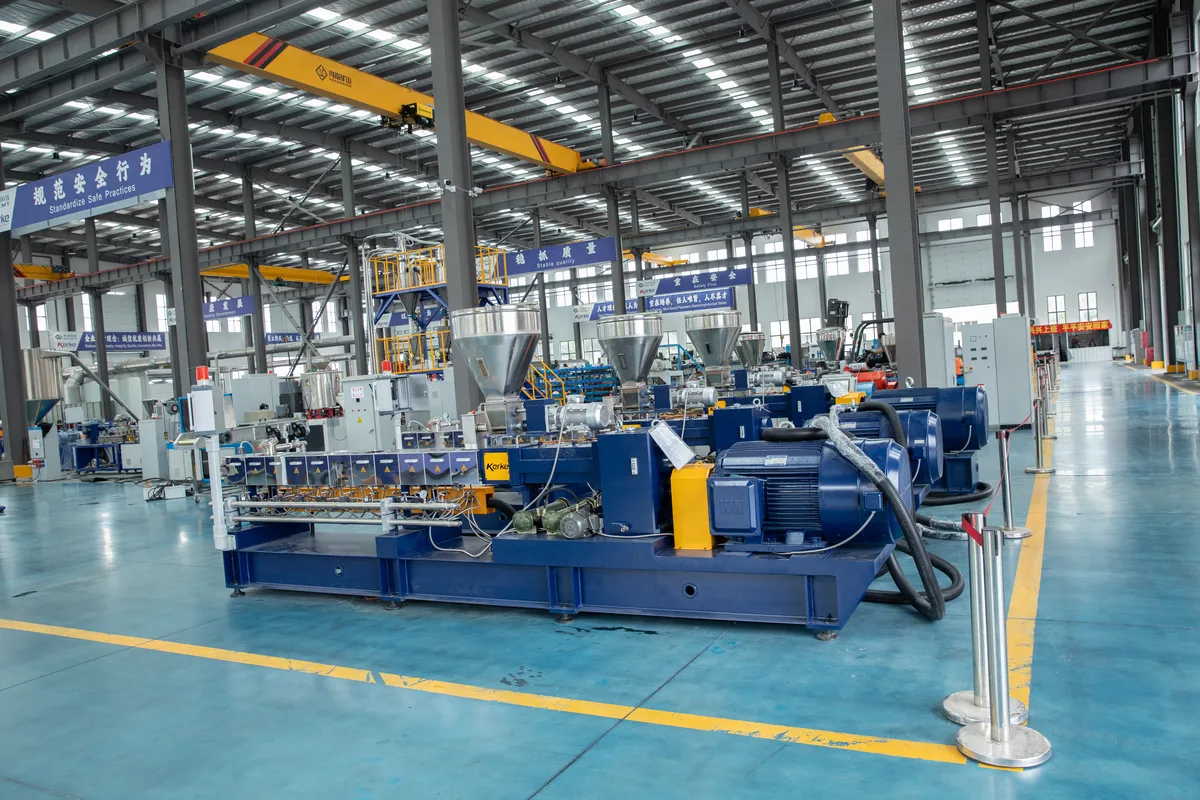 KTE-65D twin screw extruder — workshop photo 1, Kerke workshop, Nanjing
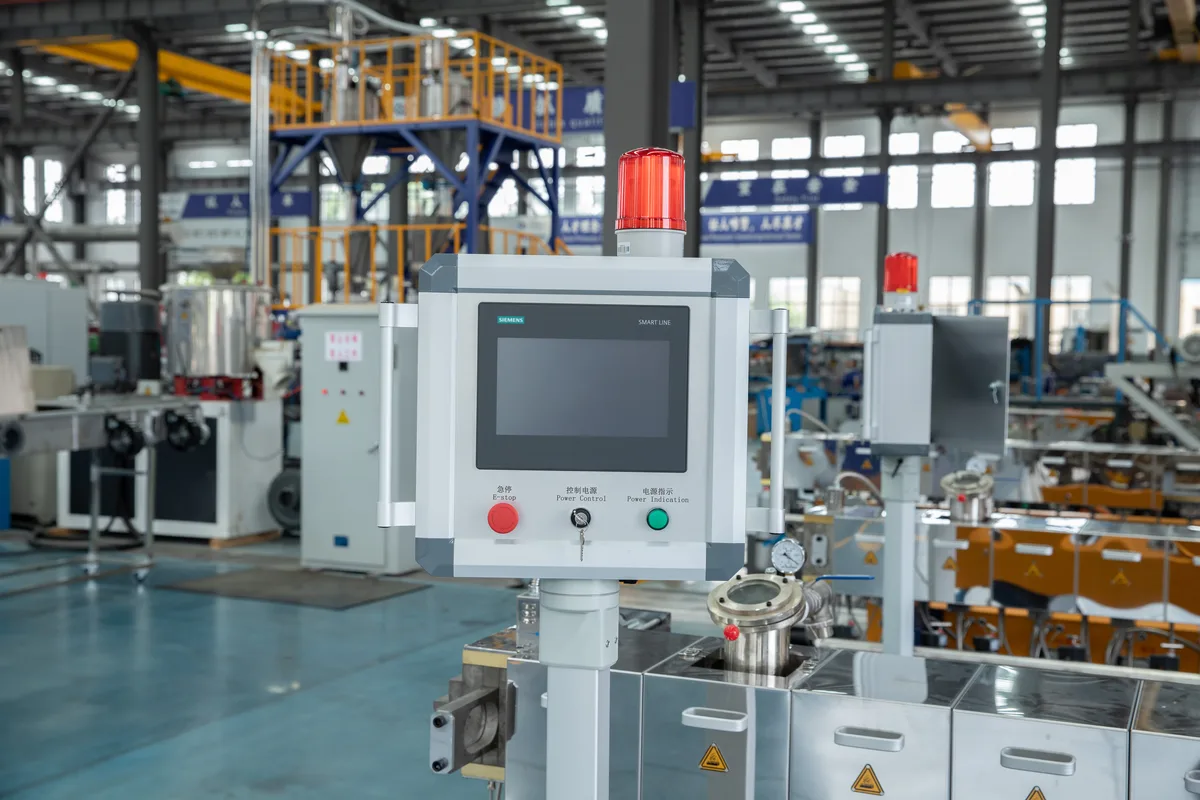 Co-rotating twin screw KTE — workshop photo 2, Kerke workshop, Nanjing
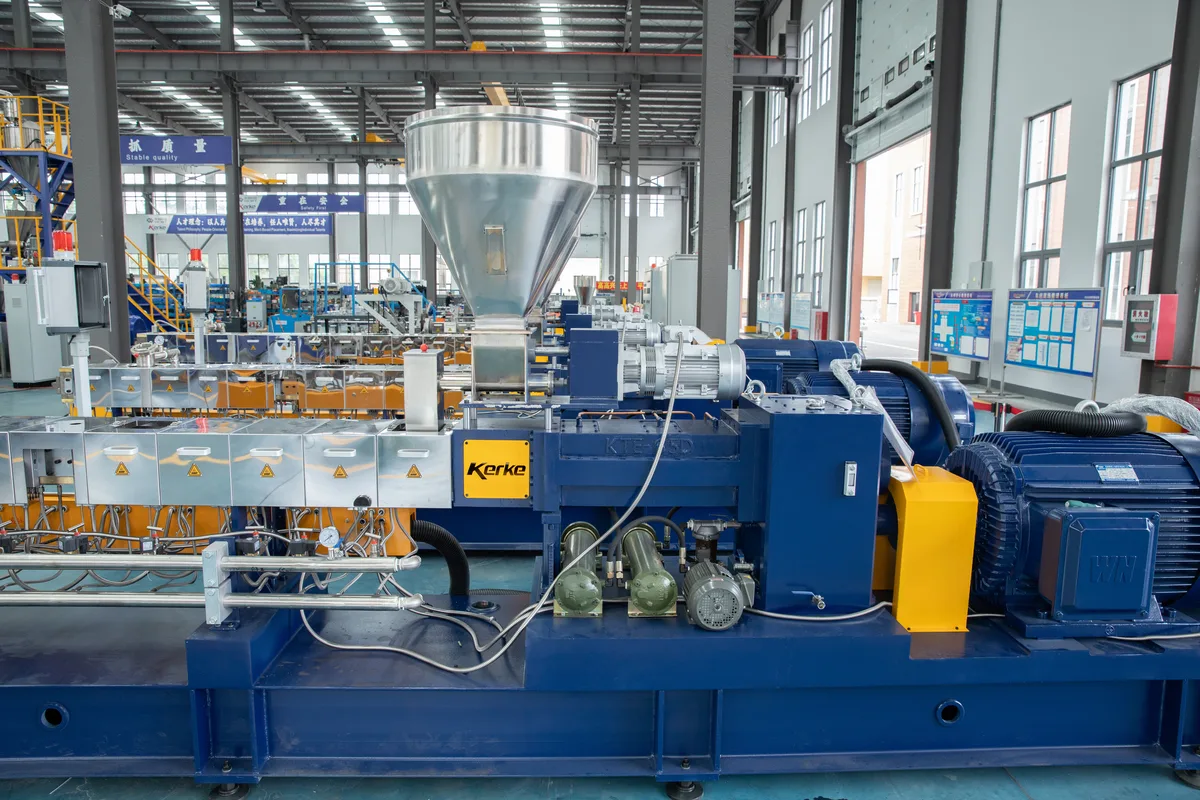 Co-rotating twin screw KTE — workshop photo 3, Kerke workshop, Nanjing
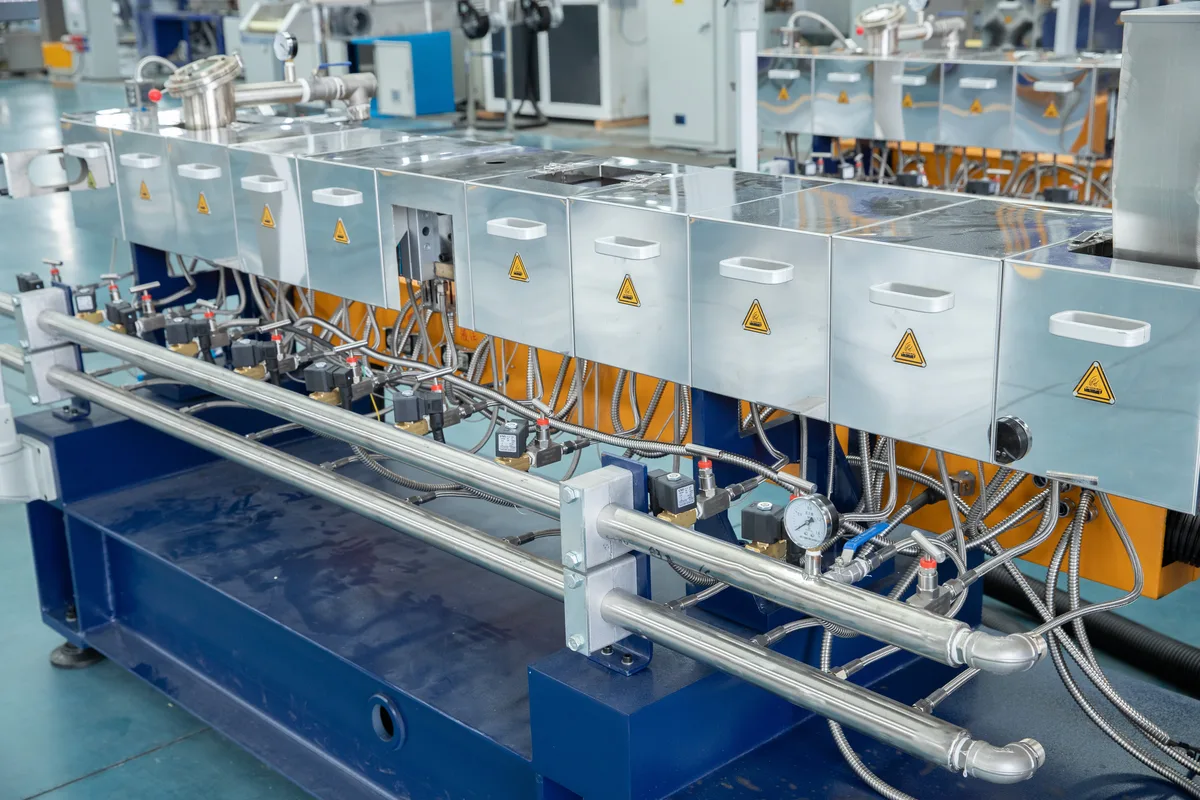 Co-rotating twin screw KTE — workshop photo 4, Kerke workshop, Nanjing
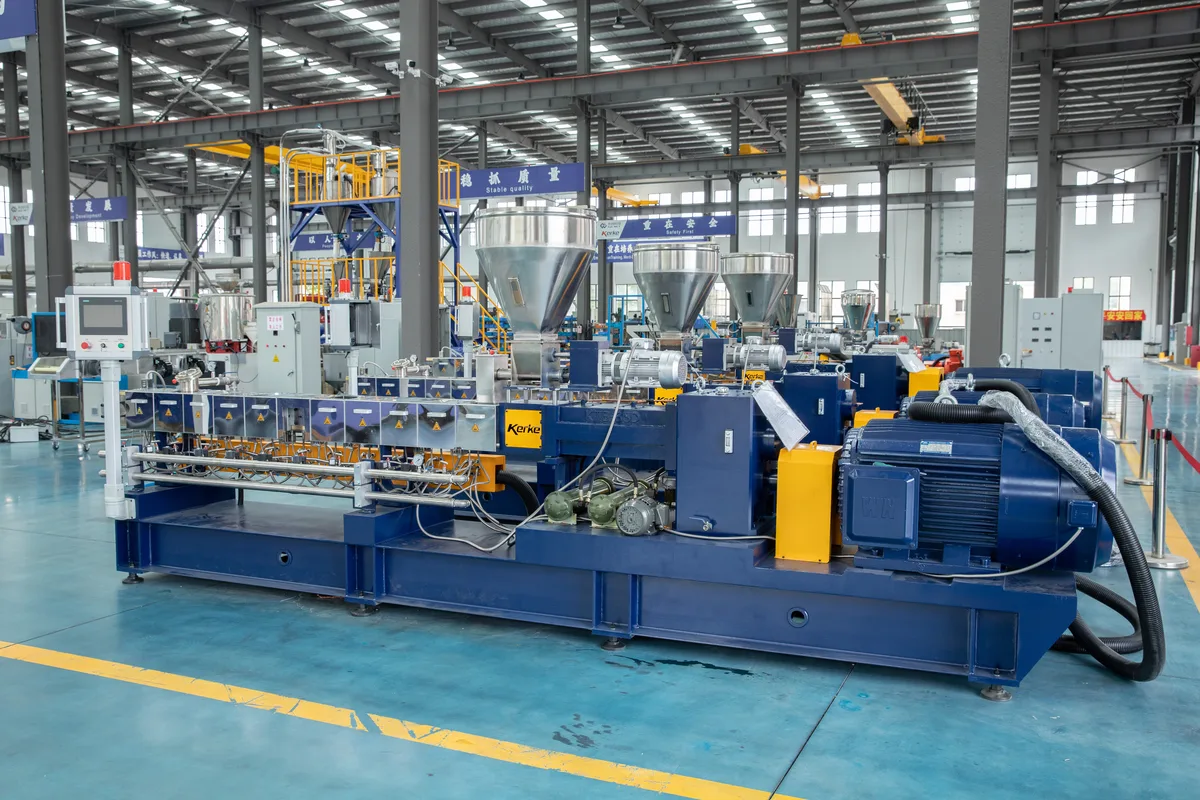 Co-rotating twin screw KTE — workshop photo 5, Kerke workshop, Nanjing
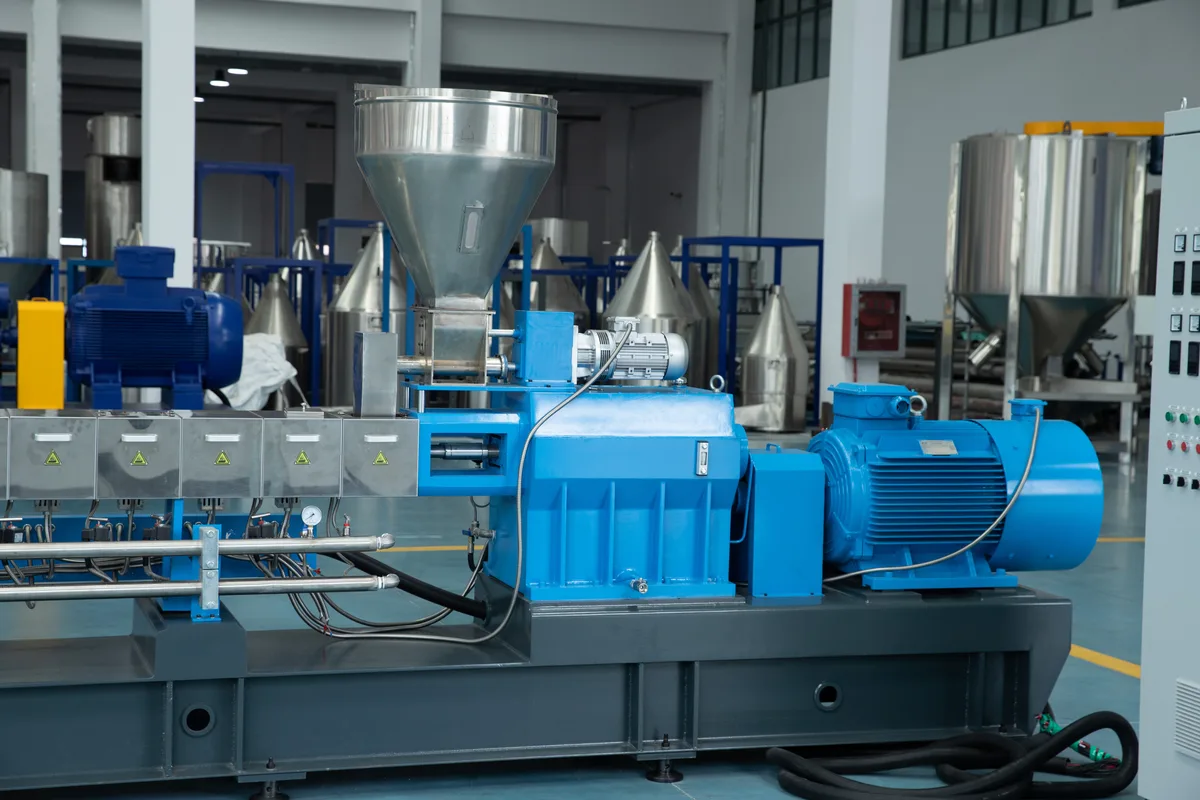 Co-rotating twin screw KTE — workshop photo 6, Kerke workshop, Nanjing
Quick answer
The KTE-65D takes the most common screw size we build and fits the strongest gearbox it will carry: 132–160 kW, 2×1,530 N·m. It is the machine for glass-fibre PP/PA at 20–40%, filler masterbatch at 85–90%, and reactive systems — with 350–600 kg/h to show for it.
Workshop photos and a running video — shot on our own lines, not stock images.
Parameters
| Model | Dia. (mm) | Speed (rpm) | Motor (kW) | Torque (N·m) | Output (kg/h) |
|---|---|---|---|---|---|
| KTE-65D | 62.4 | 300–800 | 132–160 | 2×1530 | 350–600 |
Reference output measured on the stated material family; subject to a material trial. Motor and torque values are per machine, not per screw shaft.
Where it fits in the range
The 65D tops the 62.4 mm family: base KTE-65 and KTE-65B below it share its screw platform but not its torque. Step up in diameter and the KTE-75B matches its output band with B-class economy, while the KTE-75D (2×2,100 N·m) is the next severity step.
What it runs
Duties: glass-fibre compounding with late side feed, 85–90% filler masterbatch, HFFR and XLPE-type cable compounds, TPU and reactive extrusion where torque reserve is the difference between a schedule and an excuse.
Glass Fiber Compounding Line
Glass fibre reinforcement is not about getting fibre in — it is about not breaking it on the way through. Screw geomet…
High Filler Masterbatch Line
Above 85% the melt stops behaving like a polymer. Output no longer follows screw speed, and the machine that held 82% …
Engineering Plastics Compounding Line
Engineering plastics punish shortcuts in two places: drying (PA and PC want 120 °C for four hours, not 80 °C overnight…
Configuration options
Every KTE ships as a building-block system: screw elements on splined shafts, barrel modules that accept side feeders, liquid injection and vacuum vents, so the geometry is set by the formulation rather than fixed at the factory. Three choices define a KTE-65D quotation: the L/D (32–36 for simple filling, 40–48 with side feed and devolatilization, 52–60 for reactive duties), the wear package (standard 38CrMoAlA or bimetallic liner with PM/HIP elements where CaCO3, talc or glass fibre grind), and the pelletizing head (strand, water ring, air-cooled hot face or underwater — matched to the polymer, not to the model number).
FAQ
Is the 65D enough for 90% filler?
Yes within its band — 88–90% CaCO3 at 350–450 kg/h is a normal KTE-65D duty. For 600 kg/h at 90% we quote the 75D, because feeding and venting, not torque, become the limit.
65D or 75B at similar output?
Severity decides. Glass fibre and >85% filler take the 65D's D-class torque; easy masterbatch at 500 kg/h is cheaper on the 75B. Same output band, different gearbox philosophy.
What does the 300–800 rpm window buy me?
Low-rpm/high-torque running for glass fibre (fibre length survives) and high-rpm running for easy formulations. One machine, two regimes — that is the practical meaning of the D gearbox.
Where these numbers come from
Parameters come from the Kerke parameter table and product master data sheet, cross-checked against commissioning records for the same model and duty. Where a catalogue value and a trial value disagree, the trial value is the one we quote.
Reviewed by the Kerke process team, Nanjing. Page updated 6 November 2026.
Send 25–50 kg — we return pellets, a video and a report with the parameters we used, in 3–7 days.
KTE-65D twin screw extruder — the short version
Note on KTE-65D twin screw extruder: what separates one machine from another is torque class, L/D and the wear package matched to your material, not the build standard. Shortlist from the tables, then confirm the choice on a trial with your own powder.
Planning an upgrade this quarter? Send the material and the target output — the configuration comes back within one working day.
Every quotation lists the wear package as a separate line, so its cost is visible from day one.
Questions are answered the same day, in English or Chinese.
Note on KTE-65D twin screw extruder: the data on this page was last verified on our own test line in Nanjing.
Not sure which KTE-65D twin screw extruder configuration fits? Describe the material and the pellet shape required — we answer with a recommendation, not a brochure.
A KTE-65D twin screw extruder from Kerke ships with CE documentation, a test-run record and a recommended spare set.
Related on this site: Extrusion lines by application · Extruder selection guide · free extrusion line quotation · Wikipedia: Twin-screw extruder