
Model · Two-stage KTE/SE
KTE-65B / SE-150 Two-Stage Extruder
The KTE-65B SE-150 two-stage extruder (also written KTE-65B / SE-150): 62.4 mm twin screw + 150 mm single screw, 500–800 kg/h — the standard answer for 85% filler masterbatch and PVC compound.
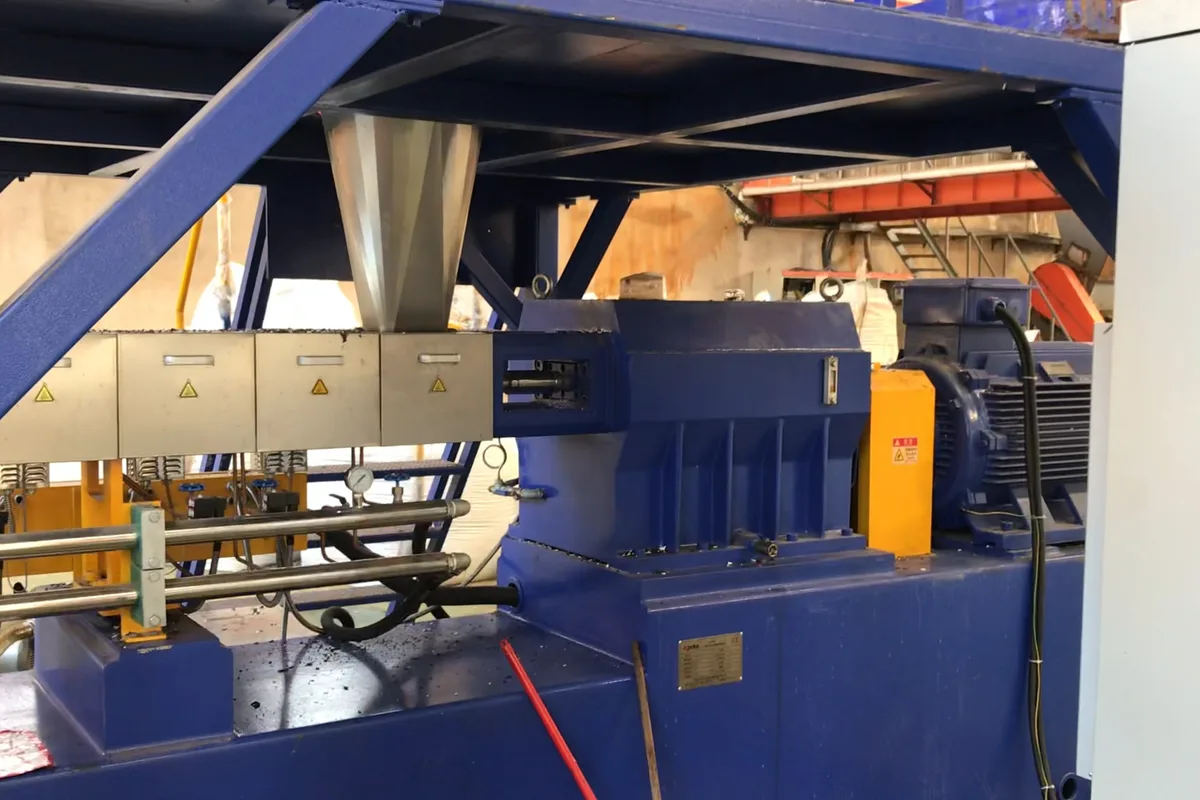 KTE-65B SE-150 two-stage extruder — workshop photo 1, Kerke workshop, Nanjing
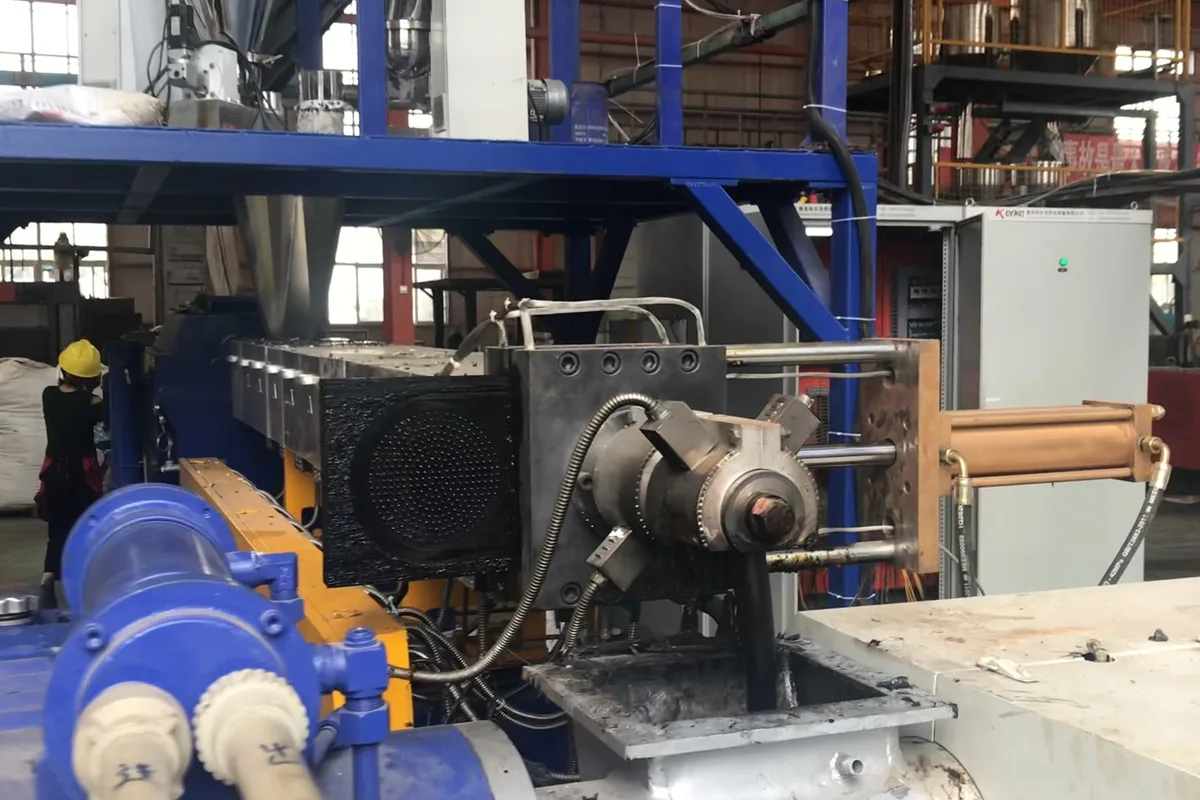 Two-stage KTE SE — workshop photo 2, Kerke workshop, Nanjing
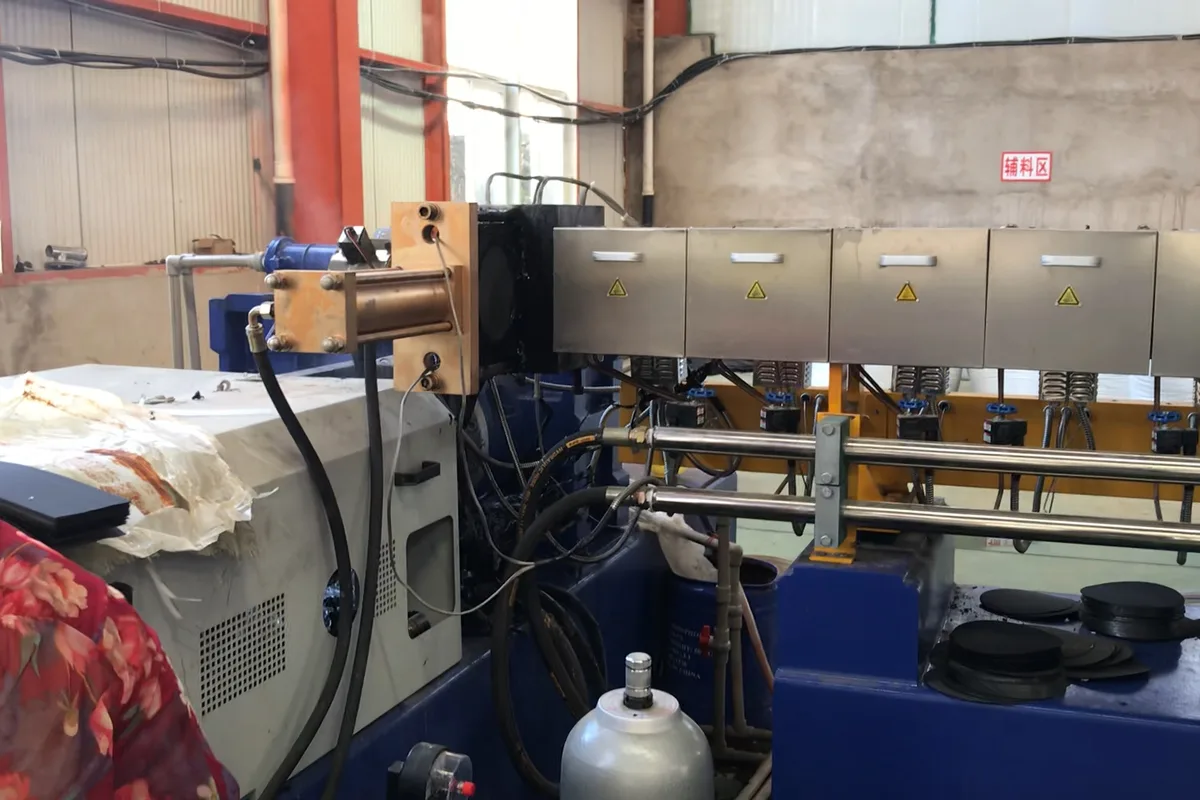 Two-stage KTE SE — workshop photo 3, Kerke workshop, Nanjing
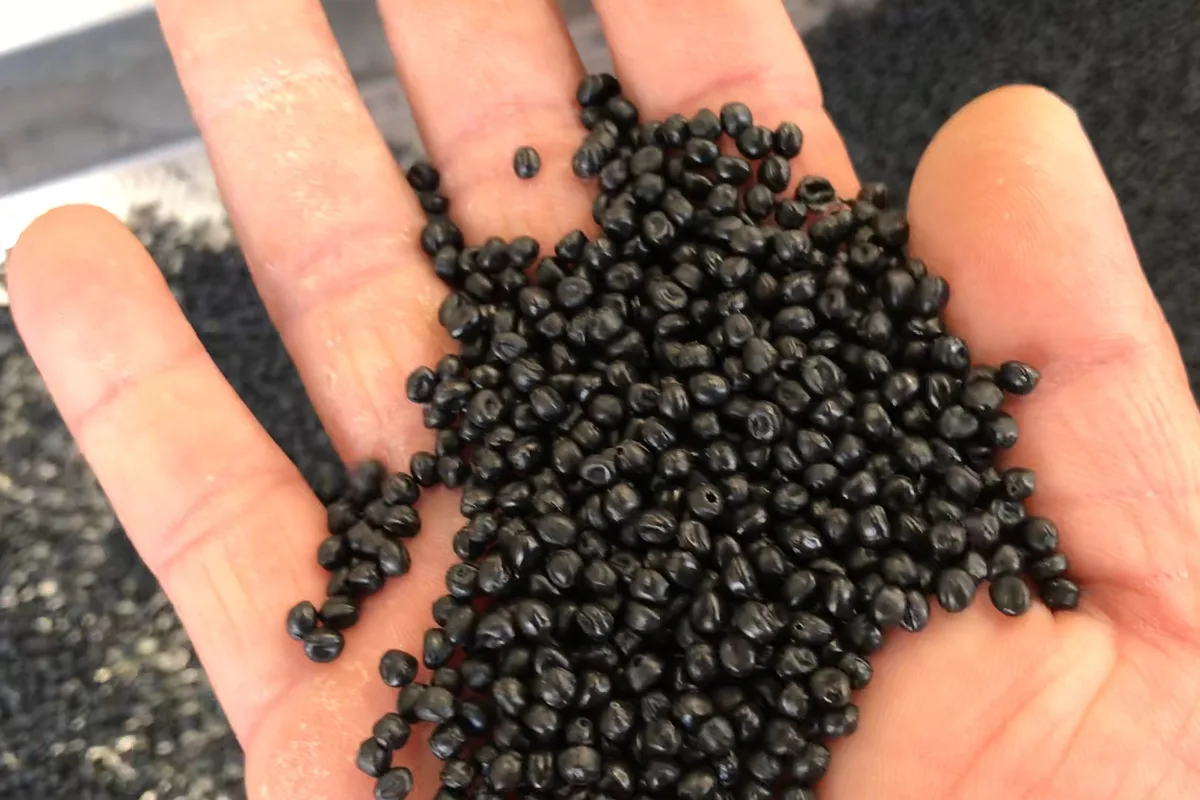 Two-stage KTE SE — workshop photo 4, Kerke workshop, Nanjing
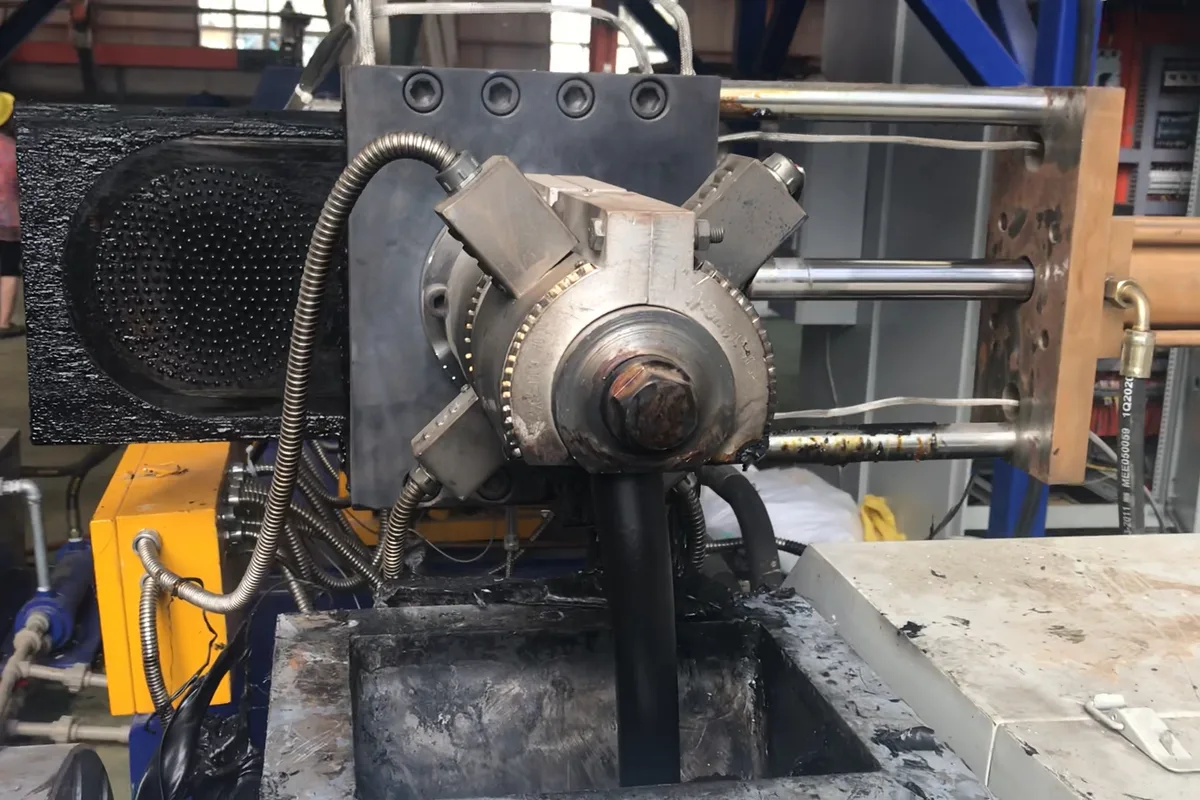 Two-stage KTE SE — workshop photo 5, Kerke workshop, Nanjing
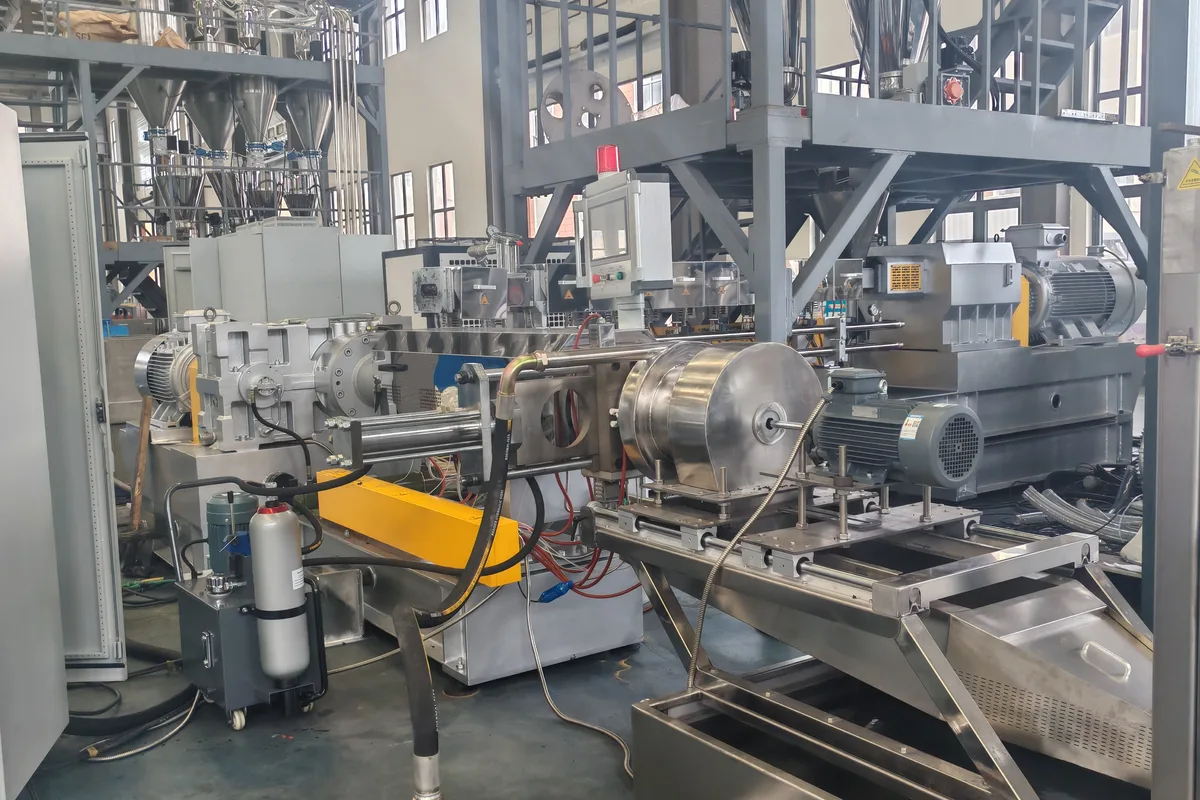 Two-stage KTE SE — workshop photo 6, Kerke workshop, Nanjing
Workshop photos and a running video — shot on our own lines, not stock images.
Parameters
| Configuration | Stage 1 (twin screw) | Stage 2 (single screw) | Output (kg/h) | Typical product |
|---|---|---|---|---|
| KTE-65B / SE-150 | 62.4 mm | 150 mm | 500–800 | Filler masterbatch 85%, PVC |
Reference output measured on the stated material family; subject to a material trial. Motor and torque values are per machine, not per screw shaft.
Where it fits in the range
Middle of the family: KTE-50B / SE-120 below (300–500 kg/h), KTE-75B / SE-180 above (700–1,200 kg/h) for 88–90% filler. Against a single-screw twin solution, the KTE-65D carries severity in one machine but gives back the low-shear finishing stage.
What it runs
Duties: 85% CaCO3/talc masterbatch at 600 kg/h class, PVC compounding where shear after gelling costs output, HFFR cable compound with 50–60% metal hydroxide, and masterbatch grades that must hold a tight IV or moisture specification.
High Filler Masterbatch Line
Above 85% the melt stops behaving like a polymer. Output no longer follows screw speed, and the machine that held 82% …
PVC Compounding Line
PVC is heat-sensitive and water-sensitive at the same time, which rules out both long residence time and water contact…
HFFR / LSZH Cable Compound Line
HFFR compound carries 50–60% metal hydroxide, which starts decomposing around 180 °C. The line has to disperse it thor…
Configuration options
The two stages are ordered as one line but do different jobs, and the quotation reflects that: stage one gets the mixing geometry and the wear package, stage two gets a deep-flighted low-shear screw built only to meter and pressurize. Options that matter on a KTE-65B / SE-150 line: vacuum degree on the twin screw vent (−0.06 to −0.09 MPa), water-ring versus air-cooled hot-face pelletizing on the SE stage, and whether the SE discharge runs at fixed speed or follows the twin screw through a gravimetric loop.
FAQ
When is the KTE-65B / SE-150 the right choice rather than a 65D?
Three cases: filler above 85%, PVC where post-gel shear must stay low, and HFFR at 50–60% hydroxide. In all three a single screw doing both jobs loses 30–40% of output — the SE-150 buys it back.
How is vacuum handled on this line?
The twin screw carries the vent section (atmospheric plus vacuum to −0.09 MPa); the SE-150 stage can add a second vacuum on heavily volatiled or moist compounds. Vent layout is fixed at quotation after the trial.
What output is realistic at 85% filler?
Reference band 500–800 kg/h; 85% CaCO3 masterbatch typically plans 550–700. The number we guarantee comes from a trial with your own powder, not from this paragraph.
Where these numbers come from
Parameters come from the Kerke parameter table and product master data sheet, cross-checked against commissioning records for the same model and duty. Where a catalogue value and a trial value disagree, the trial value is the one we quote.
Reviewed by the Kerke process team, Nanjing. Page updated 6 November 2026.
Send 25–50 kg — we return pellets, a video and a report with the parameters we used, in 3–7 days.
KTE-65B SE-150 two-stage extruder — the short version
Note on KTE-65B SE-150 two-stage extruder: what separates one machine from another is torque class, L/D and the wear package matched to your material, not the build standard. Shortlist from the tables, then confirm the choice on a trial with your own powder.
Planning an upgrade this quarter? Send the material and the target output — the configuration comes back within one working day.
Every quotation lists the wear package as a separate line, so its cost is visible from day one.
Questions are answered the same day, in English or Chinese.
Note on KTE-65B SE-150 two-stage extruder: the data on this page was last verified on our own test line in Nanjing.
Not sure which KTE-65B SE-150 two-stage extruder configuration fits? Describe the material and the pellet shape required — we answer with a recommendation, not a brochure.
A KTE-65B SE-150 two-stage extruder from Kerke ships with CE documentation, a test-run record and a recommended spare set.
Related on this site: Extrusion lines by application · Extruder selection guide · free extrusion line quotation · Wikipedia: Twin-screw extruder