
Model · Co-rotating twin screw KTE
KTE-52D Twin Screw Extruder
KTE-52D: 51.4 mm screw, 2×1,050 N·m D-class torque, 100–400 kg/h — small-frame output with mid-range severity for glass fibre and high filler. A reference KTE-52D twin screw extruder page from Kerke.
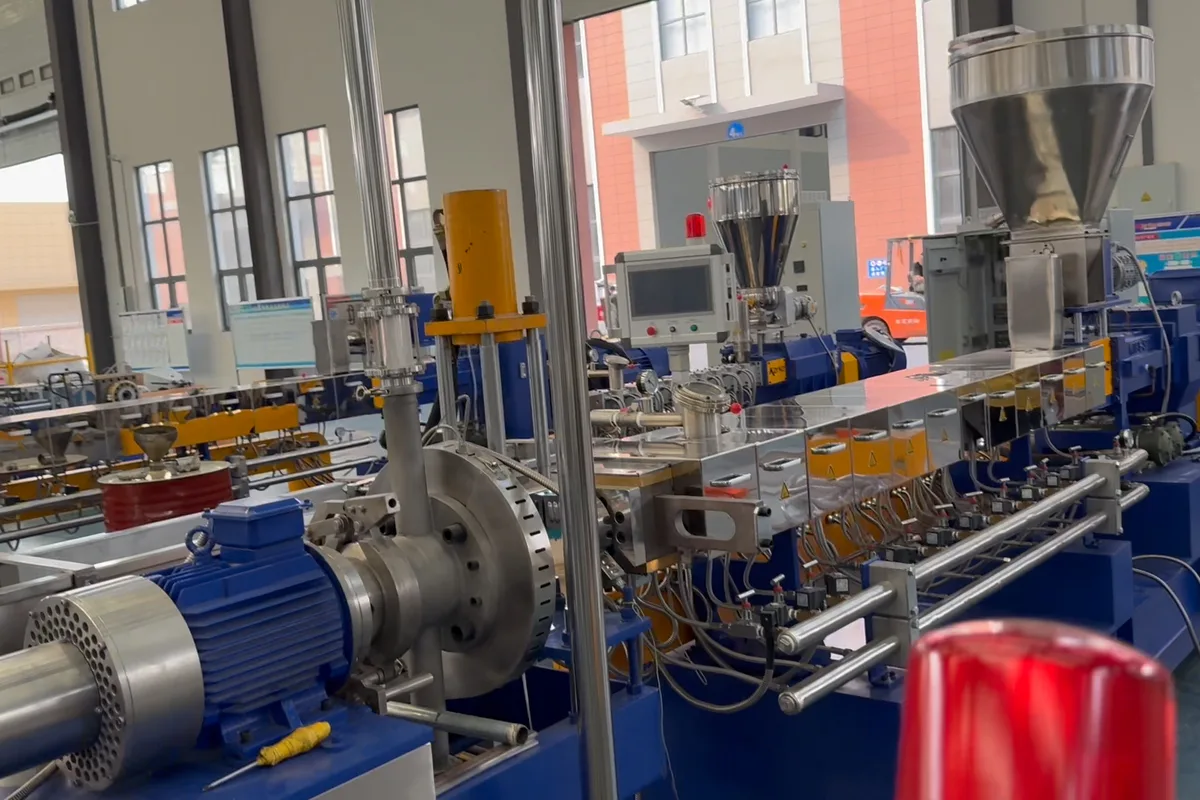 KTE-52D twin screw extruder — workshop photo 1, Kerke workshop, Nanjing
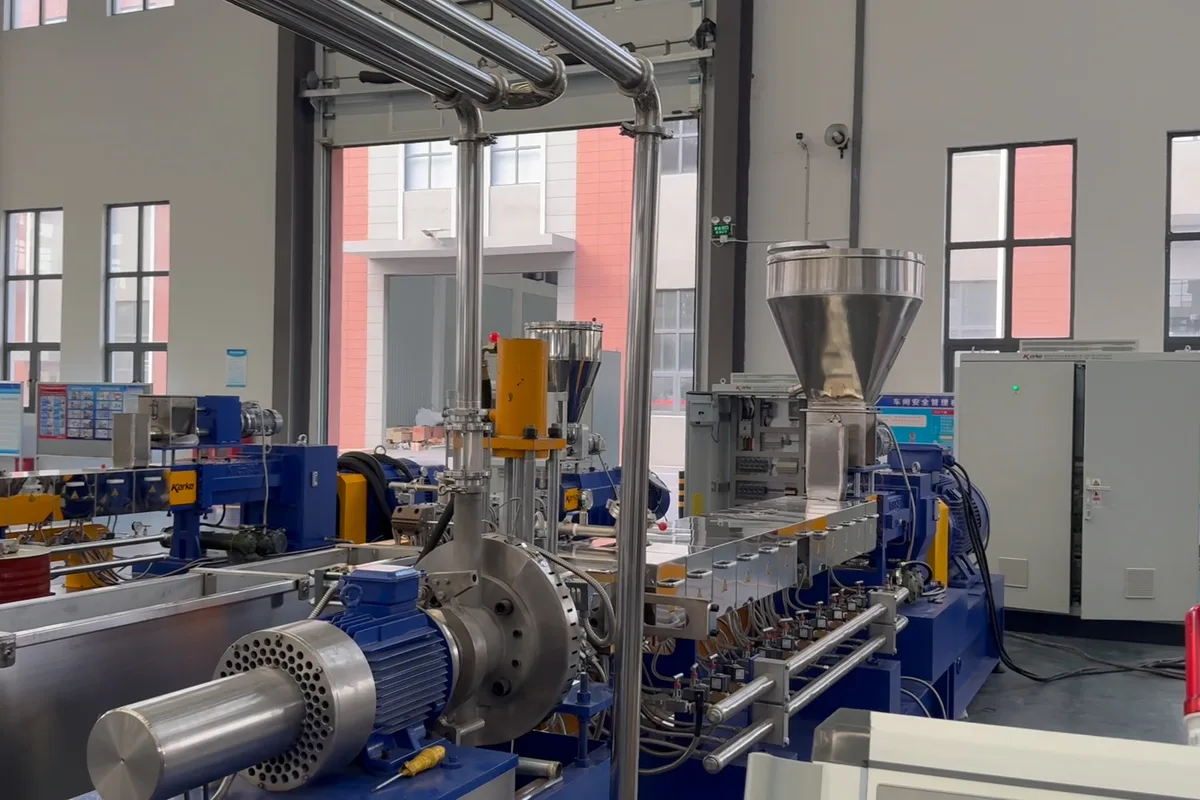 Co-rotating twin screw KTE — workshop photo 2, Kerke workshop, Nanjing
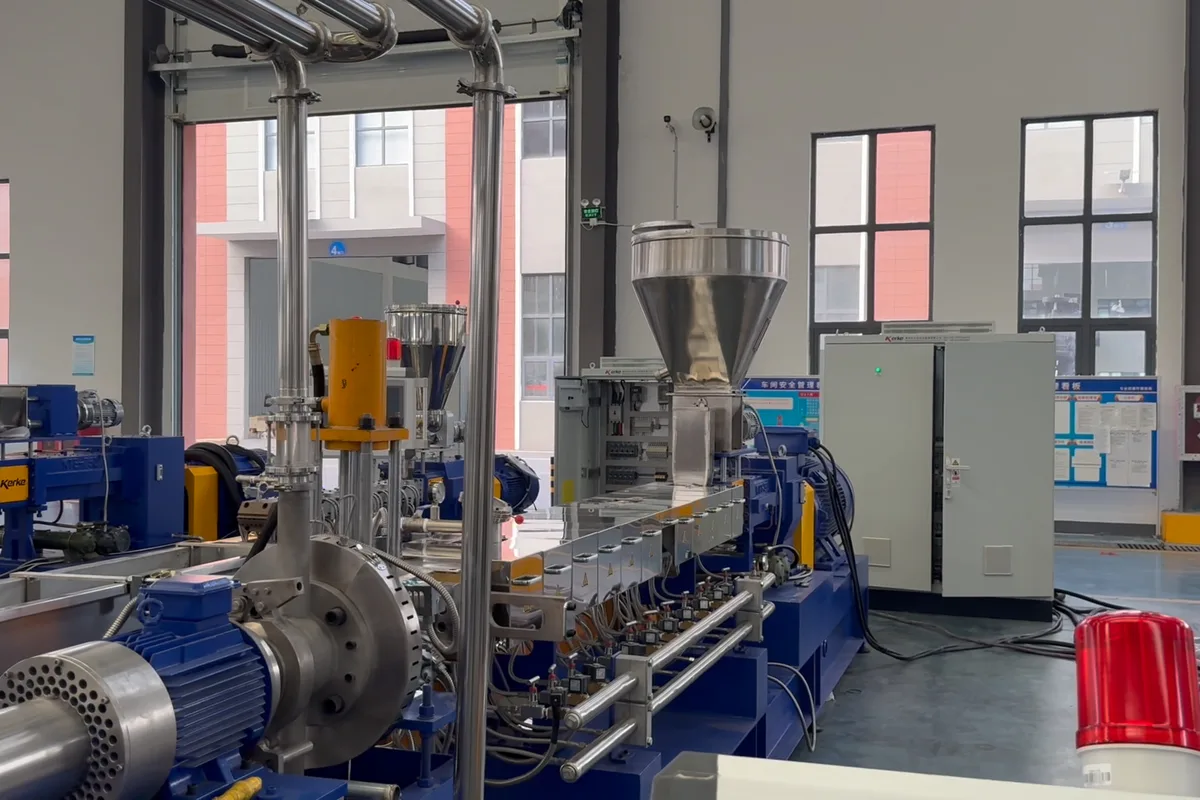 Co-rotating twin screw KTE — workshop photo 3, Kerke workshop, Nanjing
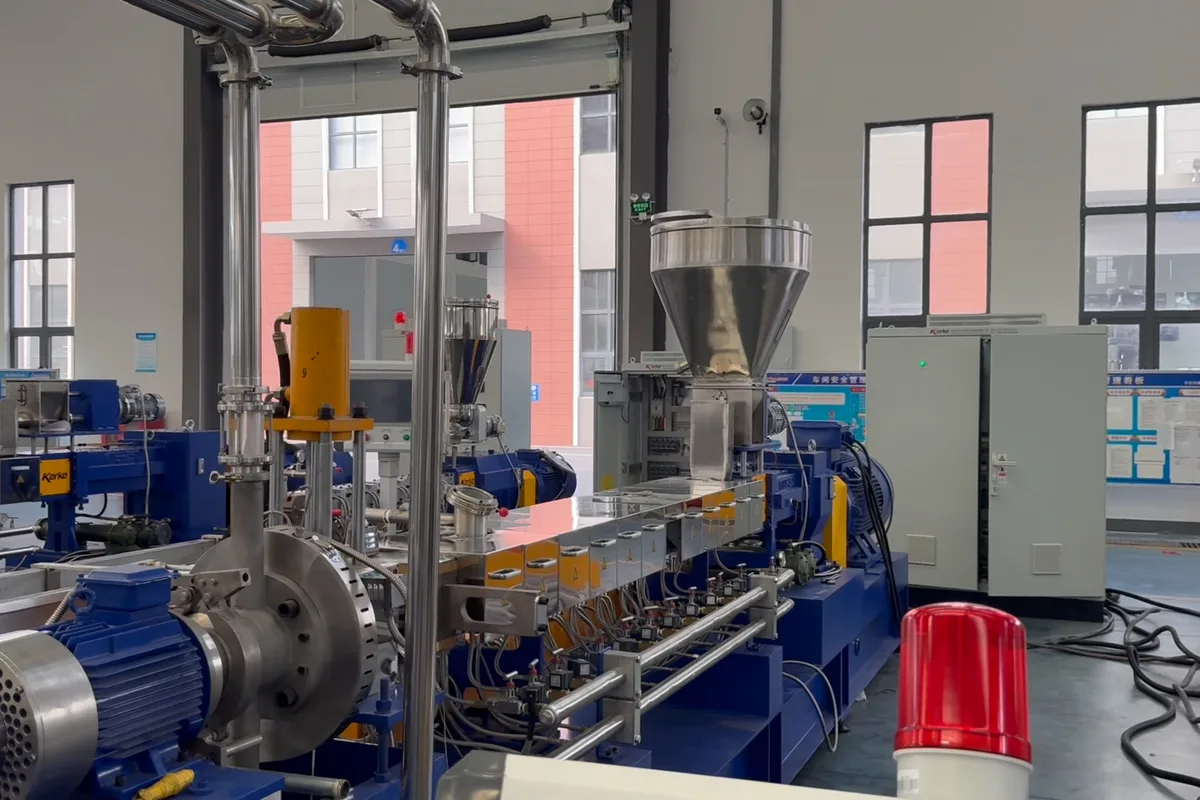 Co-rotating twin screw KTE — workshop photo 4, Kerke workshop, Nanjing
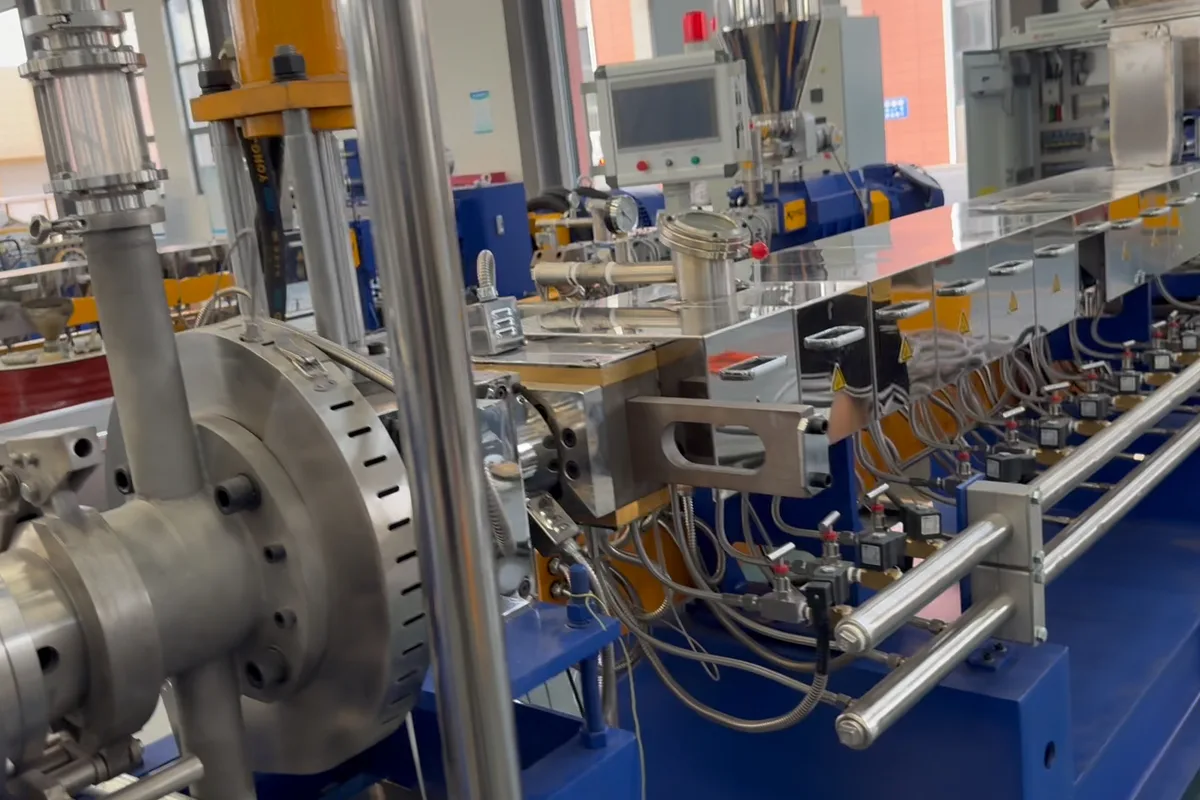 Co-rotating twin screw KTE — workshop photo 5, Kerke workshop, Nanjing
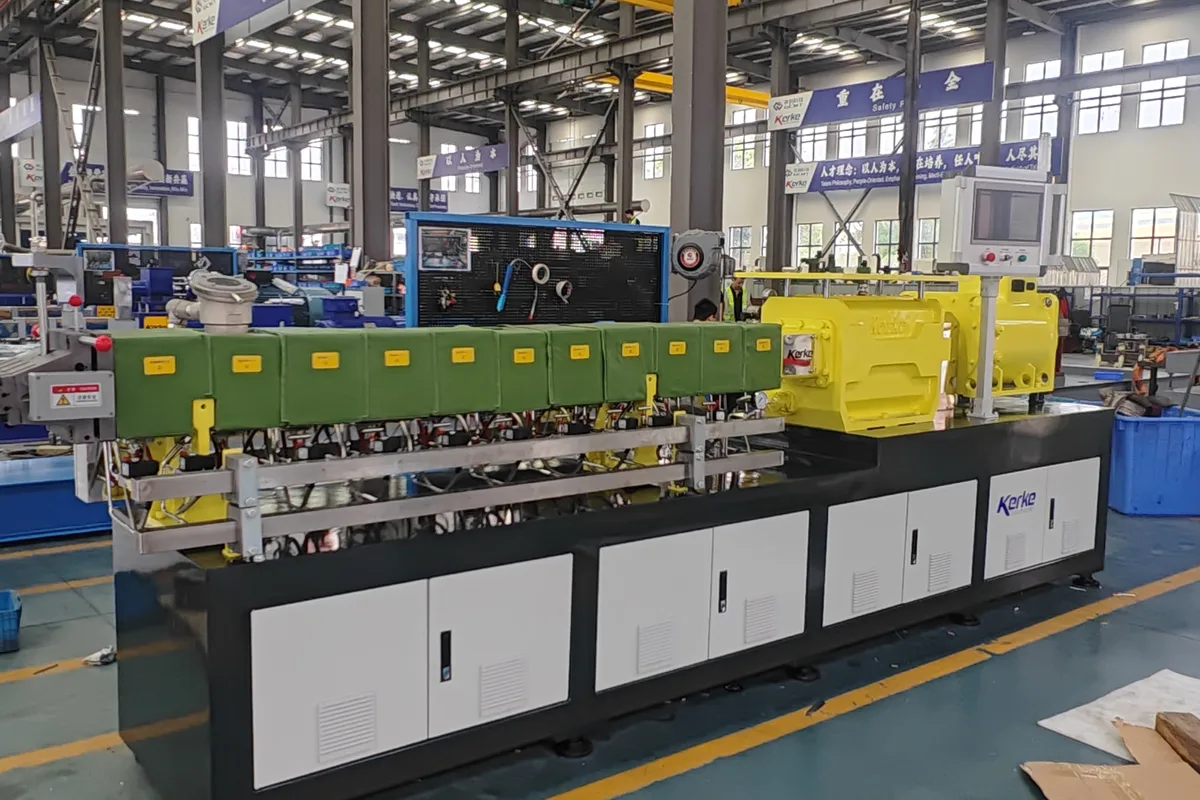 Co-rotating twin screw KTE — workshop photo 6, Kerke workshop, Nanjing
Quick answer
The KTE-52D closes the gap between the small 50D and the 65D: same 51.4 mm platform as the 52B, but 2×1,050 N·m and 75–110 kW, so 100–400 kg/h is available with the torque margin that glass-filled and >85% filler recipes need at pilot-to-production scale.
Workshop photos and a running video — shot on our own lines, not stock images.
Parameters
| Model | Dia. (mm) | Speed (rpm) | Motor (kW) | Torque (N·m) | Output (kg/h) |
|---|---|---|---|---|---|
| KTE-52D | 51.4 | 500–600 | 75–110 | 2×1050 | 100–400 |
Reference output measured on the stated material family; subject to a material trial. Motor and torque values are per machine, not per screw shaft.
Where it fits in the range
Position it between the KTE-50D (2×860 N·m, 100–300 kg/h) and the KTE-65D (2×1,530 N·m, 350–600 kg/h). If your duty is severity-driven and your volume is 200–400 kg/h, the 52D is the smallest machine that carries it; if output drives the project, the 65B or 65D is the better spend.
What it runs
Typical: long-glass or short-glass PA/PP at pilot-to-production volume, HFFR cable compound batches, 88% filler masterbatch trials that later scale onto a 65D or 75D, and reactive systems where the 300–800 rpm window is used daily.
Glass Fiber Compounding Line
Glass fibre reinforcement is not about getting fibre in — it is about not breaking it on the way through. Screw geomet…
HFFR / LSZH Cable Compound Line
HFFR compound carries 50–60% metal hydroxide, which starts decomposing around 180 °C. The line has to disperse it thor…
Configuration options
Every KTE ships as a building-block system: screw elements on splined shafts, barrel modules that accept side feeders, liquid injection and vacuum vents, so the geometry is set by the formulation rather than fixed at the factory. Three choices define a KTE-52D quotation: the L/D (32–36 for simple filling, 40–48 with side feed and devolatilization, 52–60 for reactive duties), the wear package (standard 38CrMoAlA or bimetallic liner with PM/HIP elements where CaCO3, talc or glass fibre grind), and the pelletizing head (strand, water ring, air-cooled hot face or underwater — matched to the polymer, not to the model number).
FAQ
What does the 52D do that the 50D cannot?
Volume and torque together: 400 kg/h ceiling against 300, and 2×1,050 N·m against 2×860. On severe recipes at 250 kg/h the 50D runs near its limit while the 52D holds reserve.
Is the KTE-52D a common model?
It is the specialist of the range — most customers land on the 65 class. We build the 52D when floor space, existing auxiliaries or a validated 51.4 mm screw set argue for staying in the 52 platform.
Can it later be reconfigured for other duties?
Yes — building-block screws and modular barrels mean a 52D bought for glass fibre can be re-elemented for masterbatch in a day. The gearbox is the fixed part, so size it for the hardest duty you foresee.
Where these numbers come from
Parameters come from the Kerke parameter table and product master data sheet, cross-checked against commissioning records for the same model and duty. Where a catalogue value and a trial value disagree, the trial value is the one we quote.
Reviewed by the Kerke process team, Nanjing. Page updated 6 November 2026.
Send 25–50 kg — we return pellets, a video and a report with the parameters we used, in 3–7 days.
KTE-52D twin screw extruder — the short version
Note on KTE-52D twin screw extruder: what separates one machine from another is torque class, L/D and the wear package matched to your material, not the build standard. Shortlist from the tables, then confirm the choice on a trial with your own powder.
Planning an upgrade this quarter? Send the material and the target output — the configuration comes back within one working day.
Every quotation lists the wear package as a separate line, so its cost is visible from day one.
Questions are answered the same day, in English or Chinese.
Note on KTE-52D twin screw extruder: the data on this page was last verified on our own test line in Nanjing.
Not sure which KTE-52D twin screw extruder configuration fits? Describe the material and the pellet shape required — we answer with a recommendation, not a brochure.
A KTE-52D twin screw extruder from Kerke ships with CE documentation, a test-run record and a recommended spare set.
Related on this site: Extrusion lines by application · Extruder selection guide · free extrusion line quotation · Wikipedia: Twin-screw extruder