
Machine · Two-stage KTE/SE
Two-Stage Extruder KTE/SE (Twin Screw + Single Screw)
Two machines, two jobs: the twin screw mixes and devolatilizes, the single screw only builds pressure. It is how 88% filler and PVC compound keep their output as viscosity climbs. A reference two-stage extruder page from Kerke.
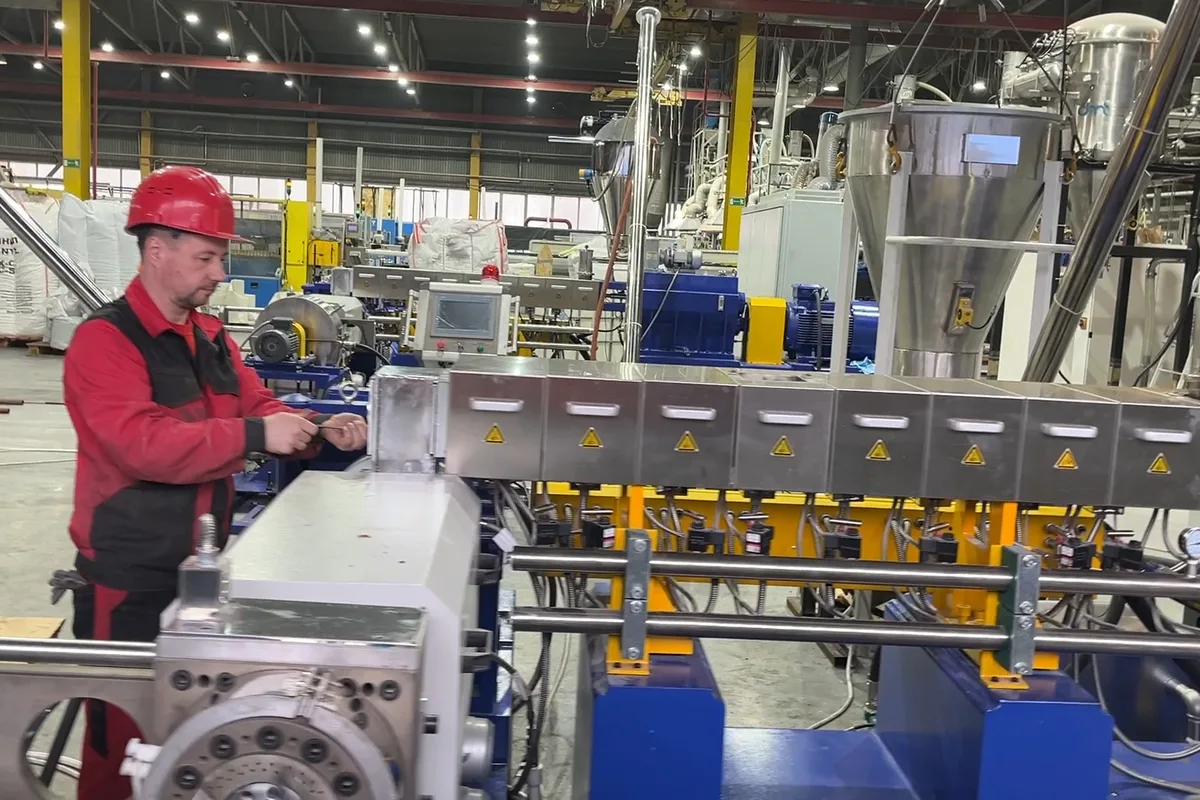 Two-stage KTE SE — workshop photo 1, Kerke workshop, Nanjing
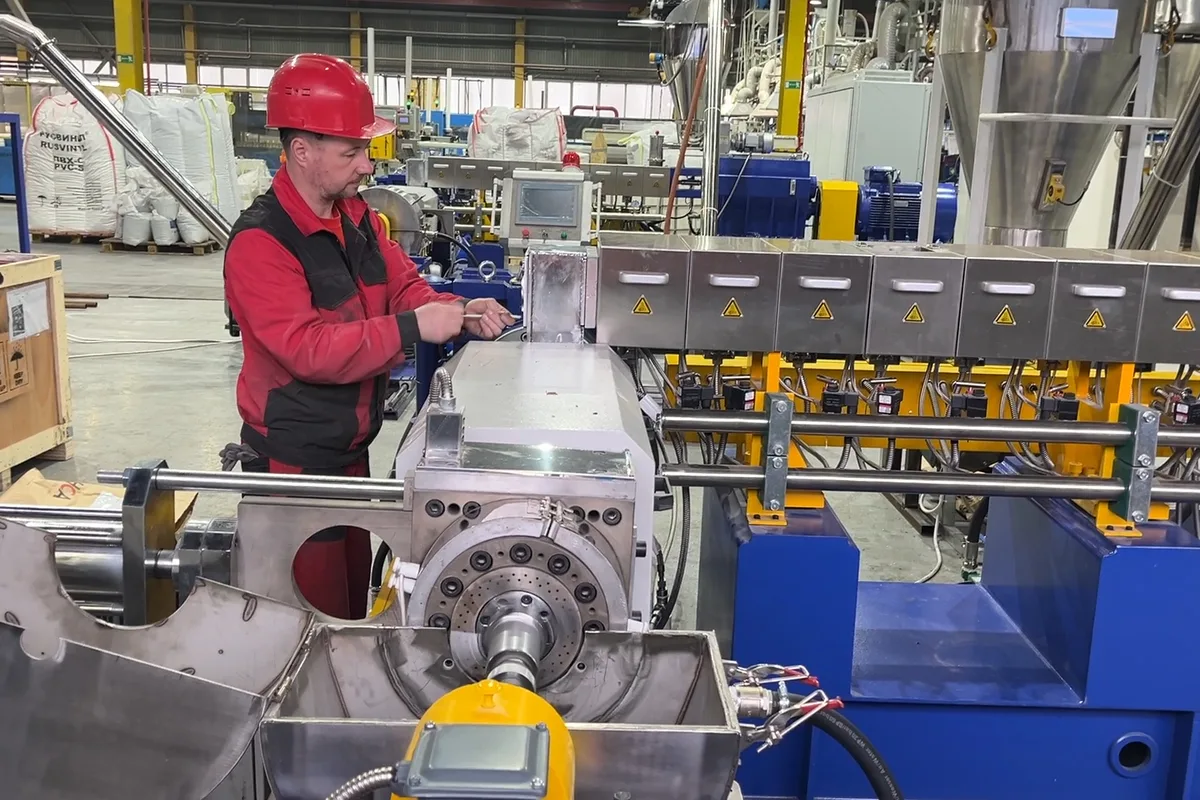 Two-stage KTE SE — workshop photo 2, Kerke workshop, Nanjing
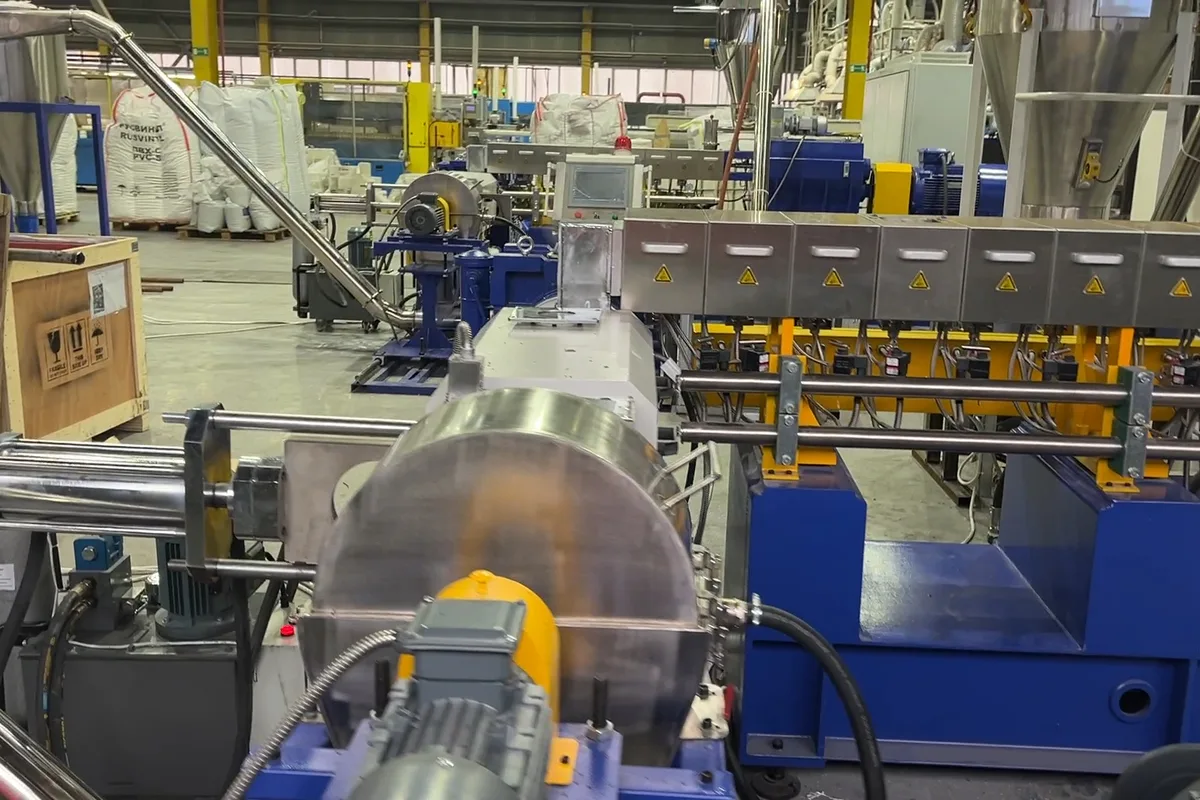 Two-stage KTE SE — workshop photo 3, Kerke workshop, Nanjing
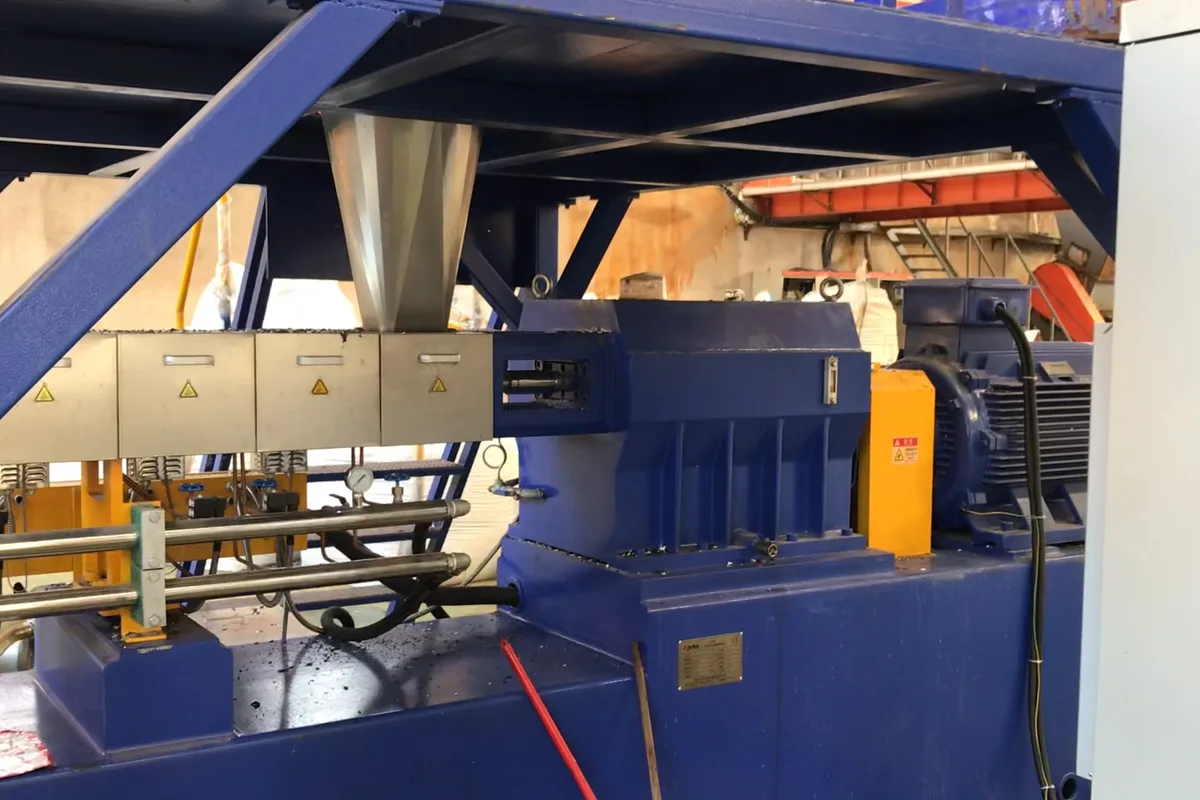 Two-stage KTE SE — workshop photo 4, Kerke workshop, Nanjing
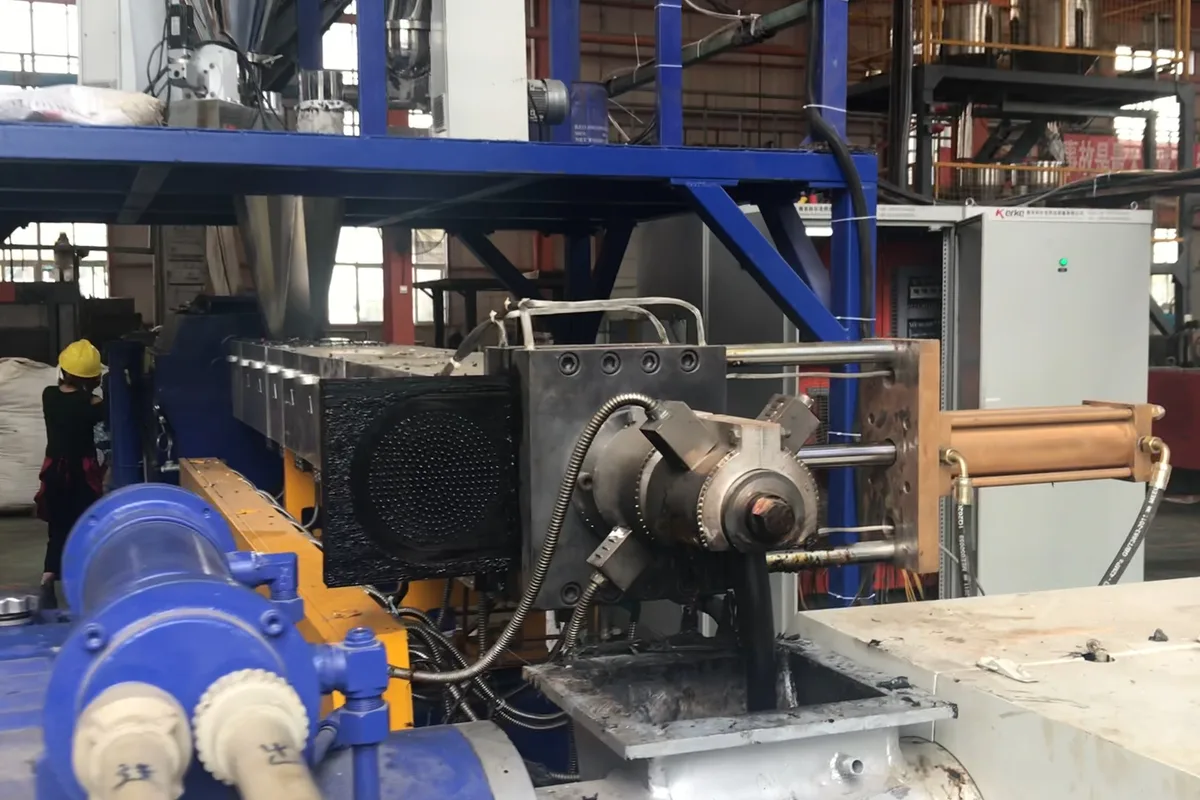 Two-stage KTE SE — workshop photo 5, Kerke workshop, Nanjing
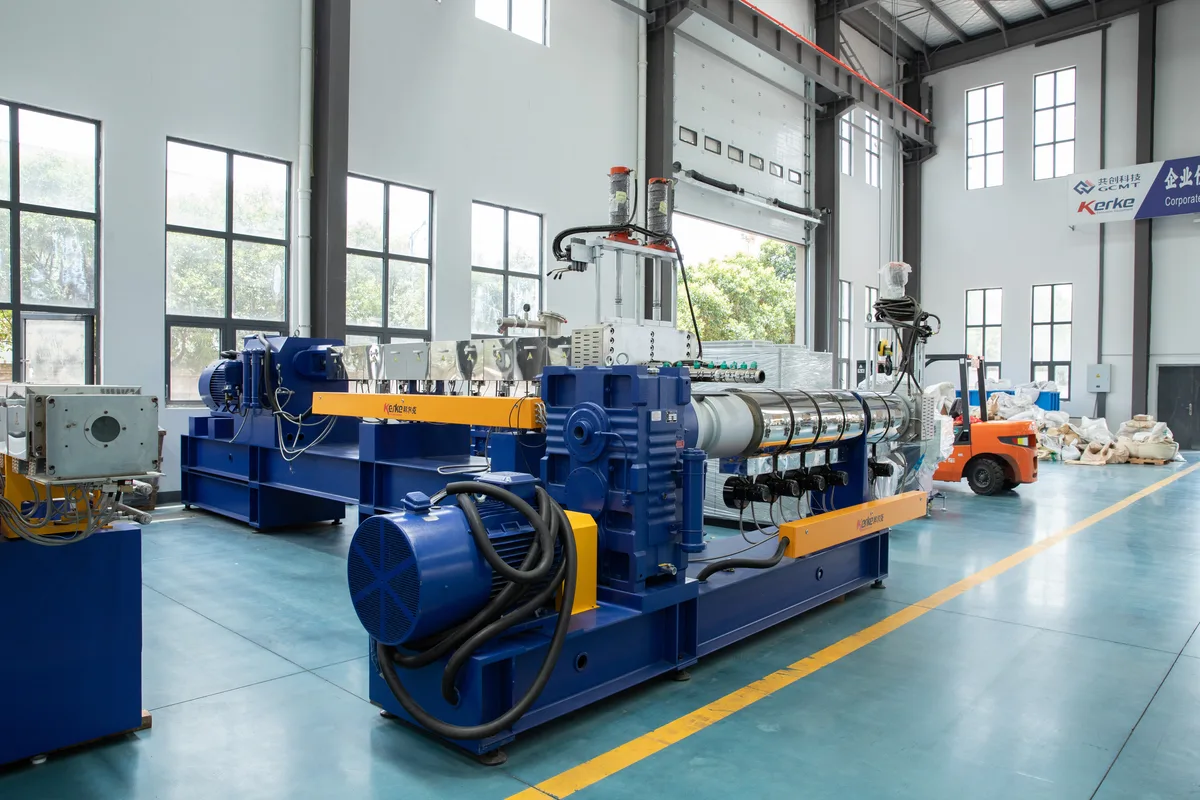 Two-stage KTE SE — workshop photo 6, Kerke workshop, Nanjing
Quick answer
A two-stage KTE/SE line pairs a twin screw (compounding, devolatilization) with a single screw (pressure build-up). It is the standard answer for 85–90% filler masterbatch, PVC compound and HFFR cable compound, at 300–2,000 kg/h. The split protects the gearbox and flattens output variation.
Workshop photos and a running video — shot on our own lines, not stock images.
Parameter table
| Configuration | Stage 1 (twin screw) | Stage 2 (single screw) | Output (kg/h) | Typical product |
|---|---|---|---|---|
| KTE-50B / SE-120 | 50.5 mm | 120 mm | 300–500 | Colour / filler masterbatch |
| KTE-65B / SE-150 | 62.4 mm | 150 mm | 500–800 | Filler masterbatch 85%, PVC |
| KTE-75B / SE-180 | 71 mm | 180 mm | 700–1,200 | High filler 88–90%, HFFR |
| KTE-95B / SE-200 | 93 mm | 200 mm | 1,000–2,000 | High filler, cable compound |
Reference output measured on the stated material family; subject to a material trial. Motor and torque values are per machine, not per screw shaft.
Why not just a bigger twin screw?
Because the limit is torque, not diameter. At 88% CaCO3 the melt is a paste; the twin screw must disperse it, and the single screw only has to push it through the die. Putting both duties on one twin screw means oversizing the gearbox by 40–60% and still running at reduced output.
Three products where the two-stage wins:
- High filler masterbatch 85–90% — output stays flat as filler content climbs; the single screw absorbs die pressure variation.
- PVC compound — the twin screw gels fast, the single screw pressurizes without extra shear, which is exactly what PVC needs to avoid degradation.
- HFFR / LSZH cable compound — 55–70% ATH or MDH; low shear in stage 2 protects the filler from decomposing.
Pelletizing
Water ring for filler masterbatch, air-cooled hot die-face for PVC and HFFR (water causes hydrolysis), strand where pellet shape matters. See the pelletizing comparison.
What this machine is normally bought for
High Filler Masterbatch Line
Above 85% the melt stops behaving like a polymer. Output no longer follows screw speed, and the machine that held 82% …
Black Masterbatch Extruder Line
Carbon black at 40% costs 20–25% of the output of a general colour masterbatch on the same machine — dispersion eats t…
PVC Compounding Line
PVC is heat-sensitive and water-sensitive at the same time, which rules out both long residence time and water contact…
HFFR / LSZH Cable Compound Line
HFFR compound carries 50–60% metal hydroxide, which starts decomposing around 180 °C. The line has to disperse it thor…
FAQ
When is a two-stage line unavoidable?
Three cases: filler masterbatch above 85%, PVC compound where shear must stay low after gelling, and HFFR with 50–60% metal hydroxide. In all three, mixing and pressure build-up on one shaft costs 30–40% of output.
Can I upgrade a single twin screw later?
Yes — the SE discharge stage can be added to an existing KTE installation if floor space allows. It is cheaper than replacing the gearbox, and it keeps the twin screw you already own.
Which pelletizer goes with a two-stage line?
Water ring for filler masterbatch, air-cooled hot face for PVC and HFFR, strand where pellet shape matters. The choice is set by the polymer, not by the line type.
Where these numbers come from
Screw diameters, speeds, motor ratings, torque and reference output come from the Kerke parameter table and the product master data sheet, and are cross-checked against commissioning records. Where a catalogue value and a trial value disagree, the trial value is the one we quote.
Reviewed by the Kerke process team, Nanjing. Page updated 6 November 2026.
Send 25–50 kg — we return pellets, a video and a report with the parameters we used, in 3–7 days.
Two-stage extruder — the short version
Note on two-stage extruder: what separates one machine from another is torque class, L/D and the wear package matched to your material, not the build standard. Shortlist from the tables, then confirm the choice on a trial with your own powder.
Planning an upgrade this quarter? Send the material and the target output — the configuration comes back within one working day.
Every quotation lists the wear package as a separate line, so its cost is visible from day one.
Questions are answered the same day, in English or Chinese.
Note on two-stage extruder: the data on this page was last verified on our own test line in Nanjing.
Not sure which two-stage extruder configuration fits? Describe the material and the pellet shape required — we answer with a recommendation, not a brochure.
A two-stage extruder from Kerke ships with CE documentation, a test-run record and a recommended spare set.
Related on this site: Extrusion lines by application · Extruder selection guide · free extrusion line quotation · Wikipedia: Twin-screw extruder